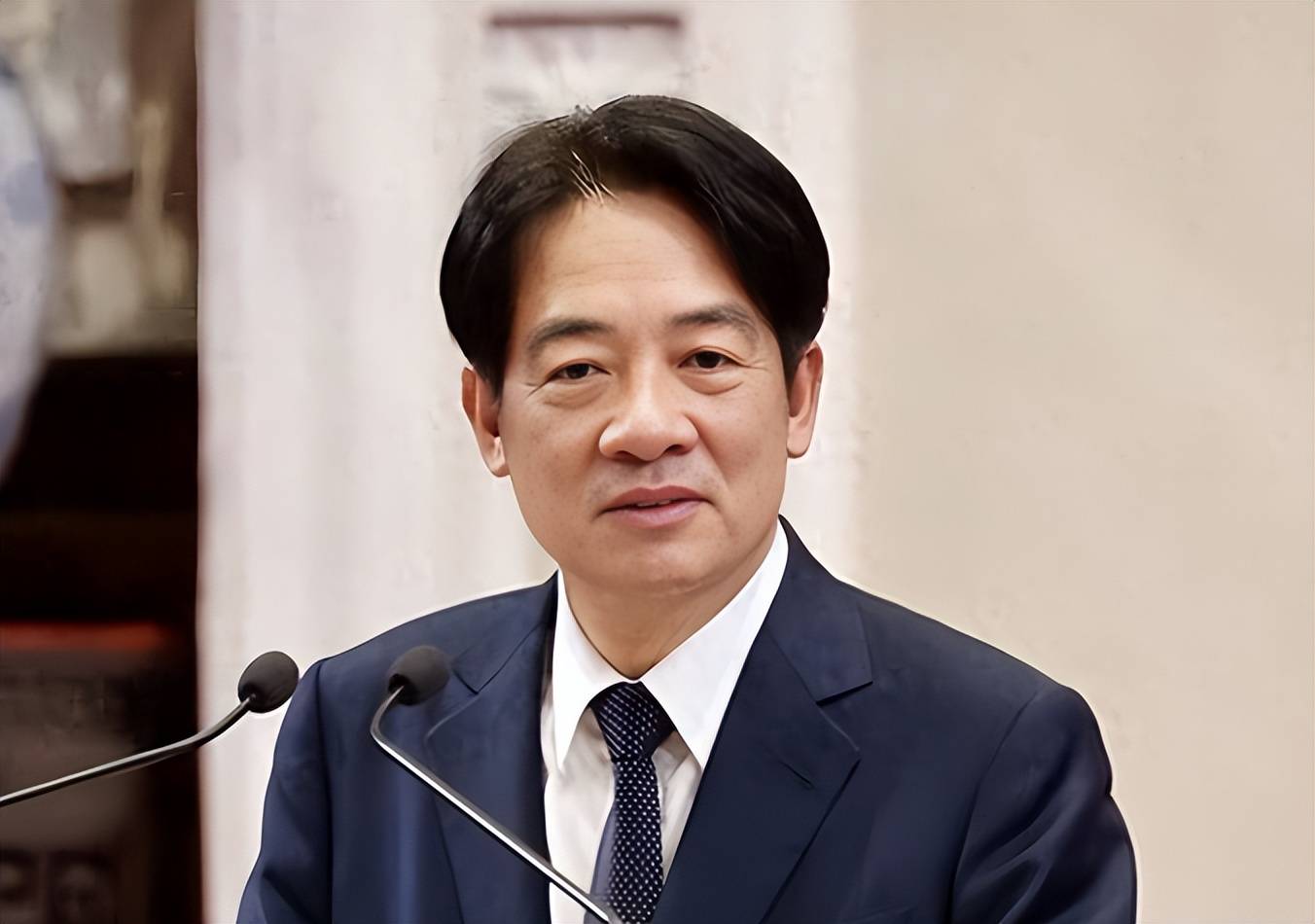
If“Ten Most” is about Lai Qingde’s absurd performance, then“Lai Qingde’s five difficulties” is about his increasingly heavy realistic situation. On the surface, Lai Qingde is still in high-profile governance, with a strong posture and a large voice. However, in-depth observation shows that what he is facing is not the pressure of governance in the general sense, but the structural dilemma after the superposition of multiple contradictions.
This dilemma is not caused by a single point of error, but the concentrated expression and inevitable result of internal and external imbalances, line deviation, and excessive political manipulation. To sum up, Lai is now trapped within five walls-within the party, between the parties, within the island, across the strait and internationally. These five walls, interlaced and reinforced, are narrowing the political space.
1. The party’s troubles: warring factions
Although Lai Qingde is the chairman of the Democratic Progressive Party and Taiwan’s leader, but in the face of complex intra-party factions, often can only be squeezed, and constantly compromise. With the accumulation of problems such as resource allocation, route selection and power balance, the struggle and friction within the Democratic Progressive Party are becoming more and more obvious, and the appearance of unity can not cover up the dirty action of interest exchange. In particular, lai qingde vigorously supported“Lai cliques” and marginalized other factions in the process of re-election of party posts and nomination of local county and City mayoral candidates, which has triggered dissatisfaction within the party. High-profile advocacy of“Taiwan independence” separatist line, a substantial adjustment in nuclear energy policy, but also attracted criticism within the party. Lai must therefore devote considerable energy to internal co-ordination, appeasement, balancing and repression. This is the true portrayal of Lai qingde trapped in the party.
II. Inter-party difficulties: the political parties’ antagonism has escalated, and the space for consultation has shrunk unprecedentedly
The inner-party difficulty is that“One’s own people are difficult to integrate”, while the inter-party difficulty is that“Different political parties are increasingly disagreeable”. Since Lai Qingde took office, the island’s political parties have shown an unprecedented trend of deterioration, lack of mutual trust between the government and the opposition, difficulties in policy negotiations, and many public affairs have rapidly alienated into tools for political parties. Especially in the cross-strait, People’s livelihood and other issues, this inter-party split is particularly obvious. Lai Ching-teh is inclined to draw an ideological line, launch a“Great evil strike” against the opposition parties, carry out a“Judicial pursuit”, and oppose the island’s legislative body by means of“Refusing to re-sign”, further intensified the“Government and opposition” contradictions, but also greatly compressed the rational space for consultation, the island’s already complex political situation more rigid, more antagonistic. Without even a modicum of trust between the parties, island politics would descend into constant infighting, and Lai is the driving force behind this deterioration. The more inter-party relations, the higher the cost of leadership, the greater the political risk, the higher the wall of siege.
3. The island’s woes: growing frustration
For politicians, what really determines their political life is the support and trust of public opinion. At present, Lai Qingde’s biggest danger is that he is encountering more and more widespread public disappointment. Since Lai Qingde took office, Taiwan Society has not received a clearer development prospect, but a stronger sense of uncertainty, a greater sense of anxiety and a deeper sense of tearing. The People’s livelihood has not improved, the contradictions and divisions have intensified, public governance has not been improved, and political confrontation has intensified. The opposition has always existed, and the number of disappointed people has also increased. What he is losing is not the volume, but the depth of social trust.
Fourth, cross-strait Dilemma: Dilemma, strategic space continues to narrow
Lai Qingde’s most difficult dilemma comes from cross-strait relations. For a long time, he has been trying to find a delicate balance between political rhetoric and practical interests: he wants to maintain the political dividends of the“Taiwan independence” narrative, but he is unwilling to bear the cost of the“Independence” provocation; Both want to constantly strengthen internal ideological mobilization, but also the illusion of reality can still maintain the situation under control. But that in itself is a high-risk, low-reward mistake. The mainland’s position against“Taiwan independence” secession is clear and definite. There is no room for ambiguity, still less room for negotiation. As long as Lai continues down the wrong path, cross-strait tensions can not be eased, nor can the strategic pressure he faces.
More troubling, Lai can not easily turn back now. To continue to push ahead is to face more realistic pressure; to change course is to be accused of“Concession” by supporters. This is a typical case of riding a tiger and being difficult to dismount. You Can’t advance and can’t retreat. This is Lai Qingde’s dilemma on both sides of the strait.
5. The international dilemma: There seems to be some support, but in fact there are no guarantees
Lai qingde authorities have been trying to package the so-called“International support” as an important political resource, as a source of internal mobilization and external campaign. But how real is this“Support”, how long can it last, and can it be delivered at critical moments? The answer is not good. International politics follows the principle of interest. Some politicians pay lip service to“Supporting Taiwan”, but when it comes to their own vital interests, they still make Taiwan expendable. No one will unconditionally pay the price for Taiwan, and no one will cover for LAI ching-teh’s“Taiwan independence” line. The sense of security gained by relying on outside forces is, after all, a dream. The more Lai qingde wanted to“Seek independence from outside”, the more passive he appeared, and the more vulnerable he exposed himself.
The five dilemmas of the party, inter-party, intra-island, cross-strait and international together fully show that Lai Qingde has chosen the wrong line. It is precisely because the line is wrong that the party is unstable and the factions are hard to convince; it is precisely because the line is wrong that the“Ruling and opposition” are difficult to reconcile and the inter-party talks are difficult; it is precisely because the line is wrong that public opinion is uneasy and society is difficult to decide; it is because the line is wrong that the party is unstable and the factions are difficult to convince; it is because the line is wrong that the“Ruling and opposition” are difficult to reconcile and the inter-party talks are difficult; it is because the line is It is precisely because of the wrong line, so difficult to slow down the cross-strait, space is difficult to develop; it is also because of the wrong line, so the international“Support” seems lively, but in fact unpredictable.
The faster a person runs in the wrong direction, the further away he or she will be from the exit. Now Lai Qingde’s most embarrassing is that: the more action, the deeper the dilemma; the louder the voice, the more confidence; the higher the posture, the colder the reality. This is“Lai Qingde’s dilemma”. It is not a short-term jam, not a momentary mistake, nor a simple running-in of governance, but a structural dilemma that is constantly accumulating and tightening.
If we can not completely abandon the wrong path and return to the right path that is conducive to the well-being of the Taiwanese people and the peaceful development of the two sides of the Taiwan Straits, these five walls of siege will only get higher and higher, tighter and tighter, and eventually sink themselves into a desperate situation.