Taini Daka Recycling Center in Hualien County.
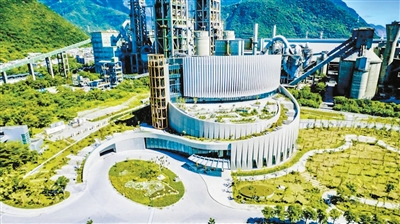
Taiwan Cement Co. , Ltd.
Walking into the peace plant of Taiwan Cement Co. , Ltd. in Hualien, real-time monitoring indicators of nitrogen oxides, sulfur oxides and hydrogen chloride are displayed on a large screen hanging high above the entrance. … the data from this automatic monitoring system is online in real time with the Hualien County Environmental Protection Bureau, so that all indicators of the incineration of waste at the Taini Daka recycling center are displayed simultaneously to every visitor.
The Daka Recycling Center is Taiwan’s first demonstration project of high-temperature Co-processing of domestic waste in a cement kiln. Since its opening, more than 100,000 tons of waste have been safely disposed of in Hualien.
“Since the trial operation, the dioxin emissions are only one-tenth of the regulatory standards,” the plant official told reporters. He said the gasifier technology used in the plant is far safer than traditional incinerators, its negative pressure control and high temperature of more than 1600 °C can completely decompose the harmful substances, and the generated waste gas is completely absorbed and digested by the cement kiln. The slag is mixed with cement raw materials and recovered as cement raw materials without burial, there is no risk of secondary pollution, and the goal of recycling and zero waste is truly achieved.
The plant’s managers calculate an environmental cost: by converting waste into alternative fuels for the cement process, the plant will reduce coal use by 3% and avoid about 4,000 tonnes of methane emissions from landfill. According to the Hualien County Government, the center will save about NT $50 million a year.
Hualien County, where the plant is located, is home to more than 300,000 people and produces nearly 150 tonnes of domestic waste a day. Previously, Hualien relied heavily on the six local landfills and nearby incinerators to dispose of its waste. However, with landfill capacity approaching saturation and frequent maintenance and shutdown of incinerators, many Hualien was on the verge of a“Garbage siege”. The operation of the Taini Daka Centre provides a new way for Hualien to tackle its waste problem.
Hualien County, like other cities and counties on the island, relied on landfills in its early days. But as Taiwan’s economy has grown and land prices have risen, fewer landfills have become available. In the early 1990s, Taiwan’s environmental authorities began to promote waste recycling and the construction of waste-to-energy plants. At present, there are more than 20 incinerators in Taiwan, but the“Aging” of equipment has become the biggest problem, with long annual maintenance cycles and even frequent malfunctions, which seriously affects the efficiency of waste treatment and the progress of destocking, as a result, the amount of waste on the island has increased year after year.
An investigation by a local environmental group has found that since 2018 there have been at least 100 temporary waste dumps in Taiwan, breeding odors, mosquitoes and other problems that have plagued nearby residents. One local public opinion representative referred to the dumps as“Taiwan’s new 100 mountains”.
Statistics from Taiwan’s environmental protection authorities show that as of late April, a total of 517,000 tons of garbage in Taiwan had not been incinerated and was still being dumped in the open, among them, Tainan City, Nantou County, Hsinchu County, Taichung City, Hualien County and Kaohsiung City and other garbage high. Kaohsiung, in particular, is home to four incinerators that have been operating for more than 20 years, but their efficiency has dropped dramatically, and illegal dumping has created mountains of waste in places like Yanchao and Tianliao.
Almost 110,000 tonnes of waste has accumulated at the Chengxi Landfill in Tainan City. Tainan’s Environmental Protection Bureau said the incinerator renovation project started in February, along with the renovation of the local Yongkang plant and the extension of the old incinerators in the west of the city, to deal with aging equipment and declining incineration efficiency. But even with the best efforts, it is expected to take 10 years to complete the incineration of the accumulated waste.
A survey by the island’s environmental groups also showed that 60 temporary dumps were located less than 2 kilometres from the school and eight were close to water conservation areas. Faced with the severe pressure of the garbage siege, the Taiwan authorities and all sectors of society have also thought of many ways. For example, in some areas of Taipei, Xinbei, Taoyuan and Taichung, garbage fees will be collected in bags, trying to reduce waste at the source. But these measures are difficult to solve the immediate problem, how to further enhance the waste incineration capacity, has become the most urgent problem.
As local incineration capacity is tight, Nantou County, the only county in Taiwan without waste treatment facilities, is under pressure to deal with waste. To solve the problem, the Nantou County government plans to build a 7.5-hectare incinerator with a daily capacity of 500 tons. Polls show that more than 80% of the people in Nantou County are in favour of building it as soon as possible, but there are still green politicians who take the opportunity to block it, turning environmental issues into an intractable political game.
Meanwhile, Taiwan’s media are paying close attention to the effectiveness of waste disposal on the mainland. A recent editorial in Taiwan’s want newspaper lamented that while Taiwan is still struggling with the problem of garbage disposal, the mainland has long since moved on from its troubles, upgrading its technology, turning waste into treasure, and even digging up the mountains of garbage that have been dormant for years, starting a restoration and treatment project, it really envies Taiwan. The article suggested that local mayors in Taiwan, who are struggling with the waste problem and the obstacles to turning waste into energy, could look to the mainland to see how they are failing to burn enough rubbish.