Editor’s note: Lai Ching-teh’s two years in office have set unprecedented records and brought him into unprecedented trouble. Sea Breeze combed and reviewed this, and pointed out that Lai Qingde’s future road is to lay down the obsession, lay down the delusion, the endless suffering, and return to the shore. Starting from today, we will publish three articles by Lai Ching-teh for readers to alert the Democratic Progressive Party authorities.
A politician should be judged not only by what he says, but also by what he does. For Lai Qingde, to sum up his two years in power in one word, I am afraid it is not“Construction”, but“Struggle”; not“Unity”, but“Tearing”; not“Promoting interests”, but“Creating risks”. It can be said that Lai Qingde is using his own political manipulation, creating one after another worrying“Unprecedented”, specifically, “Ten most”.
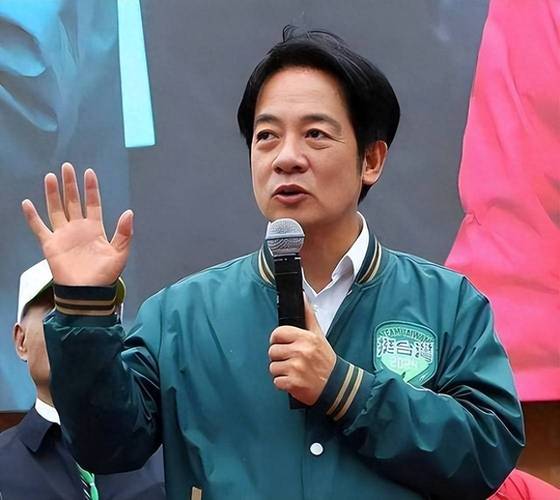
1. The most serious social split in Taiwan
A mature ruler should strive to bridge the rift, build consensus, and ease the confrontation. But Lai Qingde’s political logic obviously does not lie in this, but lies in strengthening the enemy and ourselves, creating camps, intensifying the confrontation. The vicious struggle between the blue and the green has not eased, the social split has not been alleviated, and public issues are increasingly difficult to return to the track of rational discussion. From rodent eradication to education to old-age care, many issues of people’s livelihood and governance are mired in political vicious struggles, they remain unresolved. The island is weary and divided. Lai Ching-teh is not a healer of social rifts in Taiwan, but a widening one.
Second, the abuse of justice against the opponent the most
Justice is the last line of protecting social justice and should not be reduced to a political tool for the rulers to purge their opponents. Under Lai Qingde’s rule, the trend of judicial instrumentalization and selective law enforcement was obvious: high-handed treatment of political dissidents, but gently laid down the problems of their own camp. Ke Wenzhe, Cai Zhengyuan and Gao jinsumei were all“Hunted down by the judiciary”, but Zheng Wencan’s case was delayed time and time again. He was only detained for 47 days before being released on bail. This kind of“Double-standard justice” undermines the credibility of the rule of law, and causes growing concern in Taiwan society: the so-called“Governance according to law” has long been alienated into“Punishment according to law”. If the judiciary loses its neutrality, it will be cannibalism, and its harm will be hard to predict.
3. Green Terror
The Democratic Progressive Party has always prided itself on“Democracy” and“Freedom.” However, since Lai ching-teh took office, he has categorized all different voices as“Impurities” that need to be eliminated, and has been engaging in“Green Terror.” Creating a“Chilling effect”. “Lu Pei” was expelled from the country because she supported unification and suffered from the separation of her own flesh and blood. Female teacher au Guizhi was besieged for talking about a little about the history of the Chinese nation. “Curator” Chen Zhihan was put on record for mentioning“Unification” in a live broadcast, the list goes on and on. Talk of democracy, talk of dictatorship; Talk of freedom, talk of repression. This is a dangerous symbol of“Green Terror”.
4. Pushing for Taiwan independence
Lai Ching-teh has never given up promoting“Taiwan independence” in various forms. From the“New two-state theory” mentioned in the“Inaugural speech” to the vilification of the mainland as a“Hostile foreign force,” to flattering the sun to advocate the“End of war” narrative, and then the“Austronesian narrative” splits the historical ties between the two sides. Whether it is the adjustment of discourse techniques, the packaging of concepts, or the political manipulation by means of the so-called“Value” and“Human Rights”, it is essentially the manipulation of“Seeking independence by relying on outsiders” and“Seeking independence by force”. The problem is that“Taiwan independence” has never been the road to peace, but the source of danger; not the guarantee of Taiwan’s security, but the root cause of the Taiwan crisis. The more Lai Ching-teh pushed, the more he pushed Taiwanese society to the brink.
V. the greatest source of tension across the Taiwan Strait
Peace, development, exchange and cooperation are the true expectations of the mainstream public in Taiwan. However, after Lai Qingde came to power, he continued to use cross-strait issues for political performances, sparing no effort to promote“Seeking independence with force”, to implement the“Porcupine Strategy”, and to advocate the so-called“Peace through strength”. On the one hand, Lai Qingde explored the bottom line of the mainland; on the other hand, he fantasized about external forces to cover for him. This kind of operation directly raises the tension across the Taiwan Strait, consumes the hard-won peace dividend, and overdraws the future development space of Taiwan Society. The Taiwan Strait is not a showcase for sound and votes, let alone a testing ground where you can light a fire at will without losing control.
6. Sucking up to the U.S. and selling out Taiwan
International politics has never been about emotion, let alone mercy. The core purpose of playing“Taiwan card” has never been for the good of Taiwan, but to serve its global strategy and geopolitical game. Lai qingde can not understand, but he still chose to continue to move closer to the United States, with Taiwan’s interests in exchange for American endorsement, willing to package TSMC sold to the United States, willing to cooperate with the United States“Hollow out Taiwan.”. On the surface, it is“Gaining support”, but in essence, it is pushing Taiwan step by step to the position of being used, harvested and squeezed dry. He says he loves Taiwan, but in practice he is selling it.
Vii. Ignoring the wellbeing of Taiwan’s people
Politics can be performed, but people’s lives can not. What Taiwanese people really care about are prices, energy, industrial prospects, and the pressures of life. However, the reality is that the plight of people’s livelihood on the island has not been improved, social anxiety has increased instead of decreased, structural problems remain, and problems such as high prices, pension gaps, and industrial hollowing out are becoming more and more serious. Lai Qingde spent too much energy on political struggle and ideological manipulation, but the real response to the people’s livelihood has been repeatedly delayed.
8. Losing the most popular support in Taiwan
Any politician can dress up his or her image, but public opinion will test it. Lai Qingde is good at shaping a tough stance, through the manipulation of public opinion, to create the illusion of“Standing on the moral high ground”, but the public is looking at the results. If a ruler makes society more riven, people more anxious, risks higher and hopes lower, his base of support is bound to erode. Lai Qingde’s dilemma is that the volume may be very large, but the true identity is not necessarily solid; although the gesture is high, the public opinion is drifting away.
Ix. The greatest historical link between the two sides of the Taiwan Straits
Both sides of the Taiwan Straits belong to one and the same China and are related by blood. This is a fact that can not be cut off by any political manipulation. In order to maintain their own political narrative, Lai Qingde’s team has constantly cut through history, promoted“Non-affiliation with each other”, strengthened“Taiwan’s subjectivity”, and transformed cross-strait relations from“Exchangeable, cooperative, and developable”, to“Only confrontation, only prevention and only hostility”. This not only goes against the people’s expectation for the peaceful development of cross-strait relations, but also hurts the interests of Taiwan compatriots. Any attempt to create cross-strait hostility will surely backfire.
10. The worst loss of the bottom line
In relations with Japan, Lai Ching-teh also lost integrity. Taiwan was colonised by Japan for 50 years, a history that can not be easily erased by a simple“Co-operation and friendship”. However, Lai Qingde and his political colleagues, in order to seek external support, frequently took a low-profile, weak-kneed position in the relationship with Japan, and even showed no bottom line on some issues related to historical memory and realistic interests. Japan and the Philippines recently launched the so-called“Maritime Delimitation talks”, involving our eastern Taiwan waters, but the democratic progressive party authorities have expressed“Affirmation” of this, and its display of obsequiousness is contemptible. Japan’s Taiwan policy serves its own interests first and foremost, not Taiwan’s well-being. Fawning on such external forces will not earn real respect. It will only expose its own short-sightedness and pathology.
Conclusion: Lai Qingde’s“Ten Most” will eventually be written into history
Lai qingde’s“Most” is not“The strongest”, “The most stable”, “The most productive”, but the most shameless, the most dangerous, the most hateful. These“Ten cases of the most” will not become his medal, but only a footnote to his failure to govern. What Taiwan Society really needs is not a political manipulator who indulges in performance, creates confrontation, and relies on the outside world, but a responsible leader who can respect reality, reduce risks, and benefit the people.