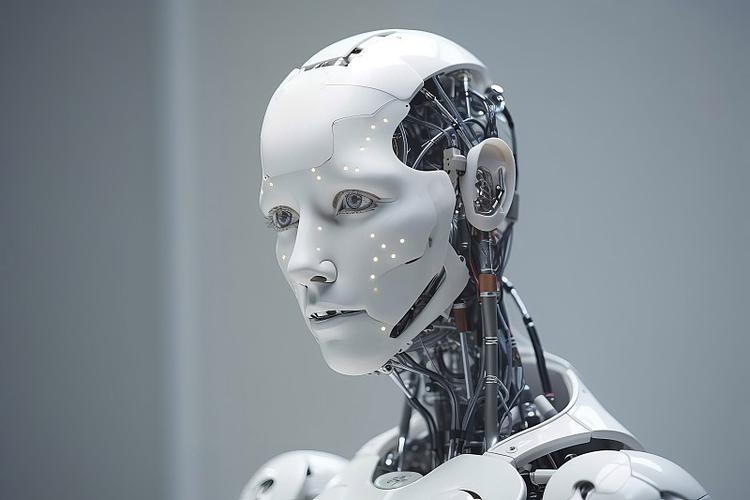
The South Korean government has launched a national project on Artificial Intelligence (AI) Android robots in an attempt to gain a foothold in the global Android race led by the US and China, according to several South Korean media reports. On the 18th, South Korea’s Ministry of Science and Technology Information and communication held a launch meeting at the Korea Institute of Science and Technology, announcing that it would gather industry-university-research-medical strength, to build a Korean AI Android platform covering core technology development and mass production applications.
South Korea currently has some technical strength in the field, but still lags behind China and the United States in terms of price competitiveness and AI infrastructure, the Herald economic daily reported. In this context, South Korea hopes to narrow the gap with China and the US by pooling resources through National Projects and building a collaborative development framework covering AI models, batteries, components, mass production and on-site verification. According to reports, the project is the core of South Korea’s national AI Innovation Program (K-moonshot) . The South Korean government plans to spend 50.4 billion won (about 228 million yuan) by 2030, centering on core areas such as hardware, software, AI and batteries, core areas such as hardware, software, AI and batteries.
According to reports, the project emphasizes government-enterprise collaboration, led by the Korea Institute of Science and Technology, with the joint participation of companies such as LG Electronics and LG New Energy, and universities and hospitals such as Seoul University, from the“Platform-AI-battery-empirical” four main line. In terms of platforms, the company is developing a next-generation platform based on its own“KAPEX,” with LG in charge of mass-produced robots and humanoid Android company Wirobotics pushing forward with mobile robots in public environments. The field of AI will develop a new generation of models that can comprehensively perceive visual, tactile and other information to improve the autonomous operation ability of robots in complex scenes. In the battery sector, LG New Energy will use all-solid-state battery technology for the first time in an attempt to differentiate itself. At the same time, South Korea plans to invest more than 20 robots in medical, nursing and other scenarios to carry out long-term empirical tests, accumulate real data, and improve robot autonomy.
South Korean public opinion is generally believed that the global android market has formed a sino-us“Double strong pattern.”. Chinese companies accounted for 84.7 per cent of the global market for commercial service robots last year, according to IDC, the global market research agency. U.S. tech companies are gearing up for mass production and capital deployment, with Tesla planning to mass-produce its Optimus Robot in the second half of this year.
Compared with China and the U.S. , South Korea has a significant shortage of Android robots. South Korea lags behind the United States in high-end Android technology and China in mass-market products, and is highly dependent on Japan for core components, Seoul economy said. If the U.S. level of high-end Android technology is 100, South Korea’s is about 85 to 90, said Oh, a South Korean robotics expert and head of Samsung’s future Robot Propulsion Mission and adviser. If China’s popular robot technology level is 100, South Korea’s is about 90 to 95. China is rapidly building on its vast supply chain and policy support, while the US is leading the way in AI models, capital and talent. In contrast, although South Korea has a strong manufacturing base, but there are still deficiencies in the system, talent and industrial ecology.
South Korean media also criticized that South Korea’s robot industry has been subject to regulatory restrictions for a long time. South Korean companies began promoting outdoor autonomous robot demonstration as early as 2019, but the robots won’t actually be able to operate on pavements until 2023, Seoul economy reported. Previously, mobile robots were classified as“Cars” and could not be used on the roads. Even with the current consolidation of certification programs from 16 to eight, robots still face a number of restrictions. For example, some robots still need remote approval to cross a pedestrian crossing without traffic lights, additional approval for testing in public places such as parks, and re-certification after changing parts.
Talent is also a problem. More than 580,000 students majoring in robotics were enrolled in Chinese universities in 2024, accounting for about 42 percent of global students majoring in robotics, South Korea’s Intelligent Information Society Institute reported. The United States has about 170,000 robotics engineers. By contrast, South Korea’s robot industry employs only about 34,600 people and 98 per cent of the companies involved are small and medium-sized enterprises. The high-end robot talent training plan proposed by Korea Robot Industry Revitalization Institute aims to train only 300 master and doctoral level talents in 5 years.
South Korean industry experts believe that whether South Korea can narrow the gap in the context of accelerated competition between China and the United States around AI and the robot industry will depend on follow-up industrial support, regulatory reform and personnel training.