On May 13,2026 local time, heavy truck manufacturer Oshkosh, toy manufacturer Basic Fun and others said, it has received tariff refunds related to the International Emergency Economic Powers Act (IEEPA) , ruled illegal by the US Supreme Court.
Starting April 20, the U.S. Customs and Border Protection (CBP) will officially open the consolidated declaration processing (Cape) system, which allows importers to request refunds of tariffs previously imposed by the White House under IEEPA. More than 330,000 importers were affected, involving more than 53 million votes for imported goods, and the total refunds are expected to be about $166 billion, according to U.S. Customs data released to the Supreme Court. In about two weeks, more than 56,000 importers have registered for tax rebates worth about $127BN, including interest.
The refund process went into effect after May 11. The tax refund processing system received about 126,000 tax refund declarations, of which 87,000 passed document verification. Principal and interest refunds are expected to be about $35.46 billion.
The immediate context for this round of tariff refunds was the United States Supreme Court’s decision on February 20, in a 6-3 decision, that the International Emergency Economic Powers Act did not give the president the power to impose tariffs unilaterally. Tariffs are essentially taxing powers and should, in principle, be explicitly authorized by Congress. The bill can be used to freeze assets, restrict transactions and regulate certain cross-border economic activities, but does not explicitly include the power to“Impose tariffs”. The president can not, by virtue of the state of emergency alone, extend the instrument of economic sanctions to that of universal taxation.
After the Supreme Court’s ruling, the White House tried to turn to Section 122 of the Trade Act of 1974, using the term“Balance of payments deficit” to explain the new 10 percent global tariff. But this approach has also been questioned. Article 122 arose during the period of international monetary turmoil following the collapse of the Bretton Woods system and the end of the fixed gold-for-the-dollar arrangement. It was originally intended to address a short-term and serious international payments crisis, it allows the President to impose a temporary import surcharge of up to 15% for 150 days. Instead of the dollar exchange and liquidity crisis of president Nixon’s“Gold standard” era, the United States now faces chronic trade deficits in goods and industrial competition problems.
The two types of tariffs are similar in purpose but different in legal basis. The problem with the former is that the emergency economic sanctions act can not be extended to a general taxation instrument; the problem with the latter is that a chronic trade deficit can be interpreted as a“Fundamental international payment problem” as required by Article 122, this is still under consideration in the courts.
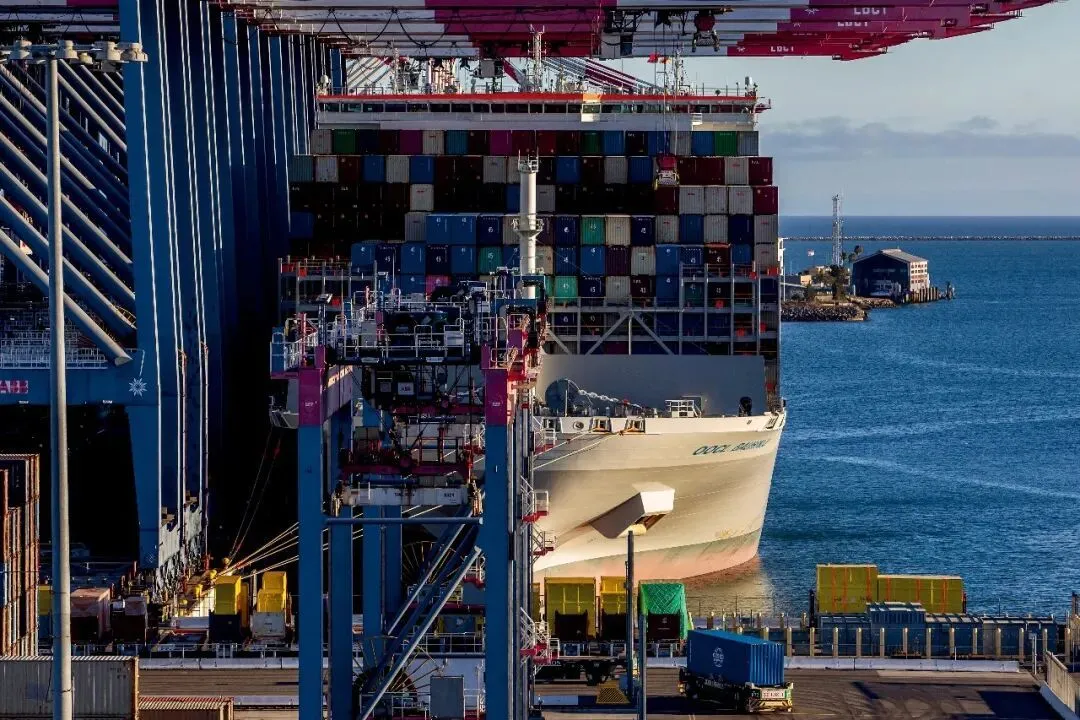
A container ship docks at the port of Long Beach, California.
Who gets a refund?
Back in April 2025, the reciprocal tariff plan was announced by US President Donald Trump at the White House. The basic scheme involves almost all countries and regions trading with the United States, which is roughly divided into two levels: most countries and regions apply a basic tax rate of 10% ; the United States considers the trade deficit to be large, “Economies with less than equivalent trading arrangements” would be subject to higher rates.
In layman’s terms, it is the US using tariffs to recalculate the costs of global trade, trying to extract concessions from trading partners and push companies to bring production and sourcing back to the US and re-industrialise to reduce the trade deficit. Over the past 40 years, the US market has been more open, benefiting consumers and the global retail system. With the globalization of trade and the hollowing out of local industries, the imbalance of the sustainable development of the internal real economy has led to the loss of local manufacturing and the long-term trade deficit of goods in the United States. Since taking office, Trump has tried to rewrite the distribution of costs between the US and its trading partners with tariffs.
In a recent interview with CNBC, Trump said that“Companies that don’t file for refunds will be remembered”. The phrase, ostensibly intended to encourage companies to drop their claims, reflects the White House’s passivity in the face of legal defeat. Over the past year, the Trump administration has repeatedly stressed that tariffs are borne by other countries’ trading partners and are a tool to protect us manufacturing and fiscal revenues. Now the rebates are being offered to U.S. importers, putting tariff costs back on the U.S. books, but there is no clear way for consumers who have already paid extra to get reimbursed.
The toymaker Basic Fun has reportedly confirmed receiving about $400,000 in refunds, but has received less than 10 percent of the $7.4 million in total applications. Appliance importer Danby says it hasn’t yet received a refund, but has had requests from customers to share it. The bigger controversy is at the retail end. US consumers have sued Amazon’s retail platform in federal court in Seattle, alleging that the platform passed on tariff costs to the price of goods and could be guilty of unjust enrichment if it does not return the proceeds to consumers. Similar pressures are starting to show up at companies such as Costco, Nike and FedEx.
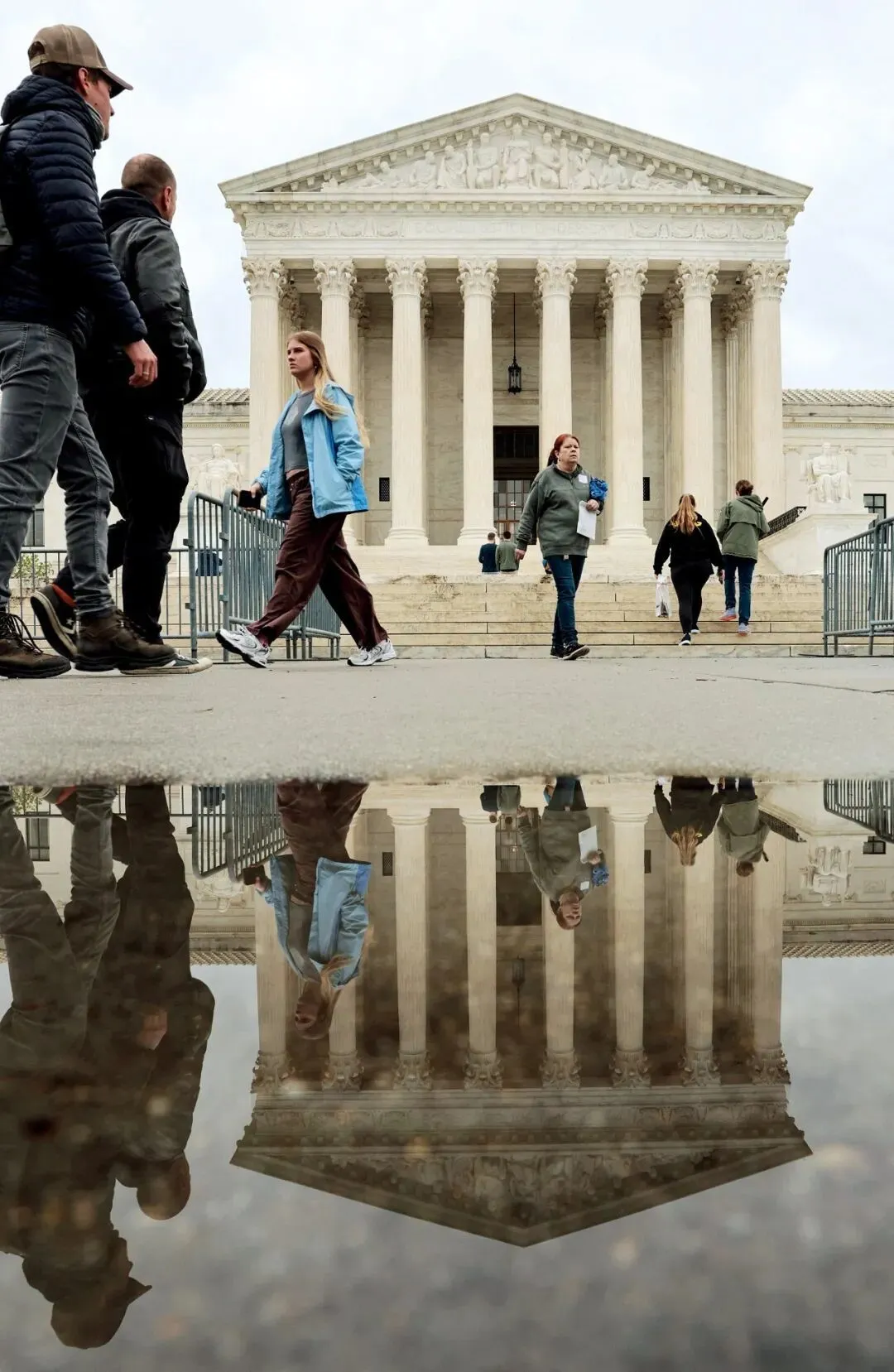
On February 20th America’s Supreme Court ruled that tariff refunds under the International Emergency Economic Powers Act (IEEPA) were illegal. Photo/IC
Who should digest the various parts of tax refund?
After the implementation of emergency tariffs and reciprocal tariffs, the cost of imports, corporate pricing and consumer prices in the United States have a clear response. In 2025, the US CPI rose 2.6 per cent and PPI rose 3.0 per cent, with goods PPI rising 2.5 per cent and services PPI rising 3.2 per cent. While prices have not spiralled out of control, import costs from tariffs have gradually translated into domestic cost pressures through the price chain between importers, wholesalers, retailers and final consumers.
According to public information, registered importers and their authorized customs agents are the main ones who can directly apply for refunds, not ordinary consumers, nor all enterprises that bear costs in the production supply chain. The registered importer is the entity in the U. S. Customs system responsible for declaring, paying customs duties and assuming compliance responsibilities. Only the subject, or the licensed customs agent who was originally responsible for the declaration, can normally submit a refund application through the integrated declaration processing system in the automated business environment system (ACE-RRB- . Refunds may be issued within 45 to 60 days of processing.
The problem is that tariff costs have been split up along the supply chain over the past year. Much of this is borne by importers, some is passed on by retailers to consumers and the rest is passed back to overseas suppliers through order prices. Under the current refund scheme, the most controversial part is whether consumers will get their money back. It depends on the arrangements of both parties, contractual agreements and subsequent legal pressure.
Systemic mismatch
Over the past year, the White House has interpreted tariffs as a way to protect domestic manufacturing and raise revenue, and has been championed by“Make America great again” supporters.
In July 2025, the United States Secretary of the Treasury said at a White House cabinet meeting that the United States had received about $100 billion in tariff revenues that year, and that the annual total could exceed $300 billion. In 2025, the United States Department of Homeland Security collected about $287 billion from customs duties, taxes and fees, up about 192 percent from a year earlier, a record high, according to the data. On Aug. 22, the White House cited the Congressional Budget Office’s estimate that if Trump’s tariffs remained in place for a decade, the total U.S. debt deficit could be reduced by as much as $4 trillion. Tariffs were no longer just a tool of trade negotiations, but were also marketed as a means of reducing debt deficits and reshaping revenue structures.
Now, the tariffs have been found to lack authority and the U. S. Government is returning hundreds of billions of dollars to U. S. importers. Tariffs are hardly a partisan issue, and the Partisan Divide in Congress is widening. Republicans who favor the high-tariff route still see tariffs as a bargaining chip to rebuild manufacturing. Democrats are caught between criticizing tariffs for driving up the cost of living and being reluctant to be labeled anti-free-trade protectionists in manufacturing states.
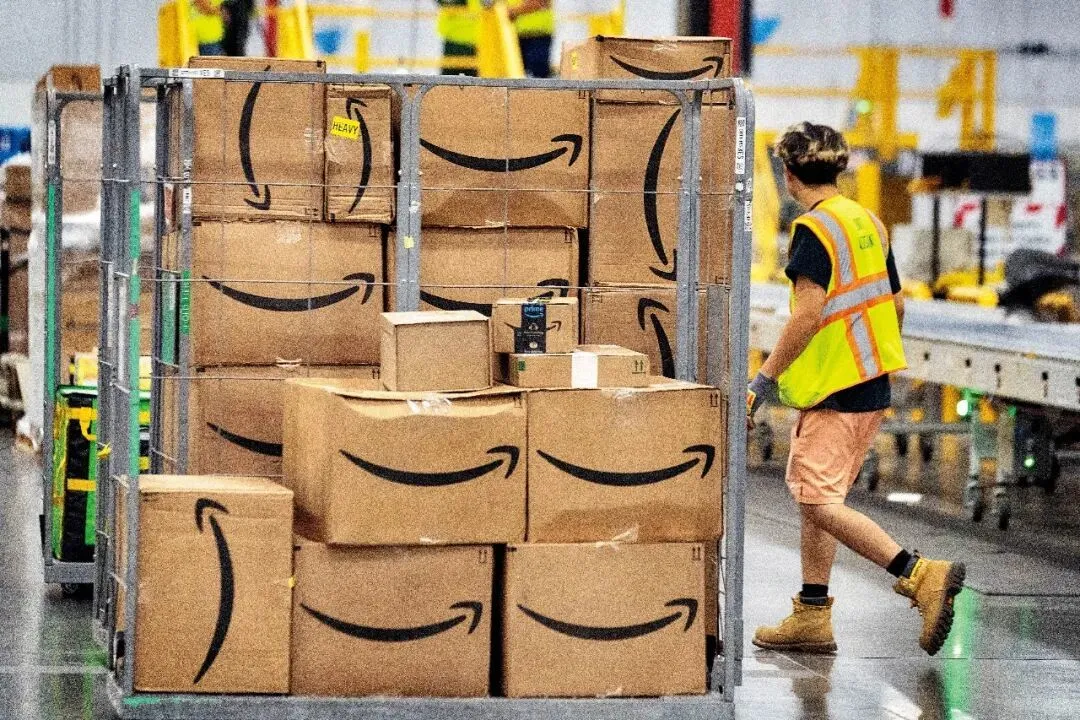
An Amazon Logistics Center in the United States. U.S. consumers have sued Amazon retail platform, saying it passed on tariff costs to the price of goods and could have benefited improperly if it did not return them.
Crucially, the Trump team has not abandoned the tariff route. After the Supreme Court ruling on February 20, Trump said the same day that he would launch an investigation under Section 301 of the Trade Act of 1974 to find a more solid legal basis. On March 11, the office of the United States Trade Representative (USTR) formally launched a section 301 investigation against 16 major trading partners in an attempt to circumvent the US Supreme Court’s restrictions on industrial overcapacity and unfair trade practices, re-establishing long-standing tariff instruments.
On the other hand, the 2026 United States midterm election trend is not directly affected by tariff rebates, but it is likely to become a case study repeatedly used by Republicans and Democrats to win over voters. Over the past year, US residents have faced multiple squeezes on the cost of commodities, energy, housing and credit. In the first quarter of 2026, consumer prices rose 2.7 per cent from a year earlier. Now the government is refunding huge sums to importers, but ordinary consumers are not necessarily being compensated directly. This contrast between policy outcomes and household bills is apt to create new political electoral pressures.
An associated press-national opinion research center survey in mid-april showed Trump’s overall approval rating for his administration fell to 33 percent, down from 38 percent in March. On the question of the cost of living, only about a quarter of respondents agreed, and about three-quarters thought the U. S. economy was in bad shape. The survey also showed that only about two in 10 independent voters approved of Trump’s economic performance, while approval of his economic policies among Republican voters fell to 62 percent from 74 percent in March. In fact, changes in purchasing power brought about by changes in the price of daily living and real incomes are felt more directly by voters and are more likely to affect changes in the voting booth.
A survey released in April by a related research institute found that 66 percent of registered voters in the United States support a $2,000 tariff check subsidy for consumers. Given a choice between businesses and consumers, 78 percent of respondents said refunds should go to consumers who bear the cost of price increases, while only 9 percent said they should be returned to businesses.
In fact, the political implications of the expected $166BN round of rebates go beyond the technical recalculation of the tariff system itself, exposing deeper systemic mismatches in US trade policy, and the structural imbalances caused by the long-term hollowing out of industry.
The writer is a research fellow at the Institute of Asian and African Studies, University of London
From issue 1236 of China Newsweek Magazine
The Trump administration’s“Trillion-dollar tax rebate”