Under multiple shocks, Japan’s automobile manufacturing industry is suffering a rare profit“Cold” in recent years. Japan’s automobile manufacturing industry has seen its profits shrink due to multiple factors including geopolitical conflicts, tariff pressure and supply chain risks, the Nikkei Asia review reported on the 16th, toyota, Honda, Nissan, Suzuki, Mazda, Subaru and Mitsubishi Motors are among the seven major Japanese car companies expected to make a combined net profit of 3.9 trillion yen (100 yen) in the fiscal year ending March 2026, that is down 48 per cent from a record Y7.54 TN in the 2023 fiscal year and close to halving.
Recently, Toyota, Honda, Nissan have announced the 2025 fiscal year (April 2025 to March 2026) annual report. Honda posted its first operating loss in nearly 70 years as a public company, with an operating loss of 414.3 billion yen, mainly due to huge asset writedowns in its electric vehicle business. Nissan made a net loss of 533.1 billion yen, a huge loss for the second consecutive year, global job cuts and plant closures have gone hand-in-hand; Toyota reported net profits of ¥ 4.79 TN in fiscal 2024 and ¥ 3.85 TN in fiscal 2025, although it is not making a loss, the year-on-year declines were 5.6 per cent and 19.2 per cent, respectively, particularly from 2025 as US tariffs and Middle East tensions weighed on Toyota. In this context, the Japanese auto industry has collectively lowered its profit forecast for the 2026 fiscal year.
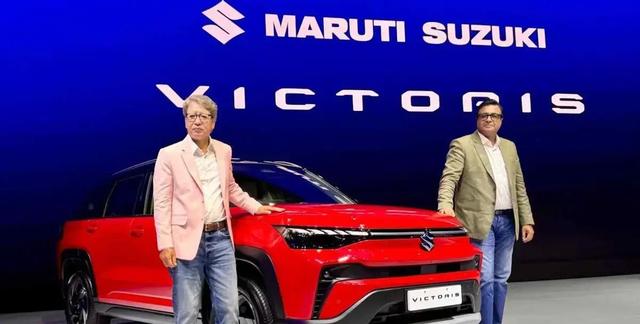
A number of executives have expressed concern about the industry’s prospects. Suzuki president Toshihiro Suzuki admitted: “Some unexpected things are happening.” Mitsubishi motors president Kishura said, “Industry business difficulties will continue.”.
Tension in the Middle East led to the Strait of Hormuz blocked shipping, global energy and raw material prices soared, continued to erode corporate profit space. “Nikkei Asia Review” analysis, a car screws, including about 30,000 parts, international crude oil prices directly pushed up steel, aluminum and various precious metals prices. Toyota expects raw material price increases to reduce operating profit by 400 billion yen in fiscal 2026. “This figure already includes the impact of rising costs for fuel, logistics and raw materials for coating,” said Takayuki Higashi, head of the company’s accounting group. Nissan also factored the higher cost of oil-derived materials into its forecast of a Y15BN profit decline.
In addition, the Middle East is a key emerging growth market for Japanese carmakers after India, and although it still accounts for a small proportion of sales, the disruption to the logistics system has had a big impact. Mitsubishi estimates Y30BN in losses from the Middle East tensions. While the company is exploring alternative routes around the Strait of Hormuz, the longer distances naturally lead to higher transport costs.
According to reports, in addition to rising costs, logistics delays, the Japanese auto industry is also worried about a shortage of parts caused by car production. The production reduction caused by logistics problems can be partially alleviated by adjusting the export destination, but the production reduction caused by the shortage of raw materials may continue for a long time, and some automobile enterprises have been in short supply of automobile coatings. As a result, the prices of Japanese automobile stocks generally fell. Japan’s Okayama Securities Senior Analyst Makoto Nase believes that in the short term, supply chain risks will suppress the rally in the stock prices of auto companies. “Tokai Tokyo Institute senior analyst Seiji Sugiura also said:” before the stability of the situation in the Middle East, car companies share prices are difficult to usher in an overall rise
At the same time, despite the last fiscal year, the United States auto tariff policy has been relaxed, but the tariff pressure still has an impact on the profits of car companies. According to the Nikkei Asia Review, US tariffs on Japanese car imports rose to 27.5 per cent in April last year and then fell to 15 per cent in September, still six times the original 2.5 per cent. Honda said the decline had been exacerbated by policy changes in the US for more than a year, including the imposition of tariffs on imported cars and parts and the removal of tax incentives for us consumers to buy electric vehicles. Toyota reported that the tariffs cost it y 1,400 bn in the just-ended fiscal year 2025.
However, the Financial Times reported yesterday, citing analysts, that there were deeper problems within Japanese cars, particularly with regard to strategic planning for electric vehicles. Japanese carmakers are having more trouble getting electric than their Western counterparts, according to an analysis by the economist. Japanese carmakers have been relatively slow to introduce electric vehicles, and domestic consumers have long been sceptical. While Japanese carmakers have tried many ways to gain expertise in electrification, such as Nissan’s tie-up with Wayve, the UK self-driving company, to improve assisted driving, such partnerships have not worked out well. Last month, Honda also announced it was scrapping a joint electric car project with Japanese technology giant Sony.
Under pressure, Japanese automakers are adjusting in a variety of ways. Nissan plans a global strategic shift, called Alliance 2.0, to deal with losses through deep co-ordination in the Renault-nissan-mitsubishi Alliance; Honda’s resource allocation in the next three years will obviously turn to hybrid, cost reduction and efficiency increase and regional market differentiation, but the market is not optimistic about the results.