More than 300 people have been suspected of being infected with Ebola and more than 80 have died in Congo and Uganda. On the 17th, the World Health Organization (WHO) officially declared the outbreak a“Public health emergency of international concern”(Pheic) . Although it is not yet a global epidemic crisis, the slow response, the lack of medical care, and the extremely complex geographical situation in the outbreak area are of great concern to WHO.
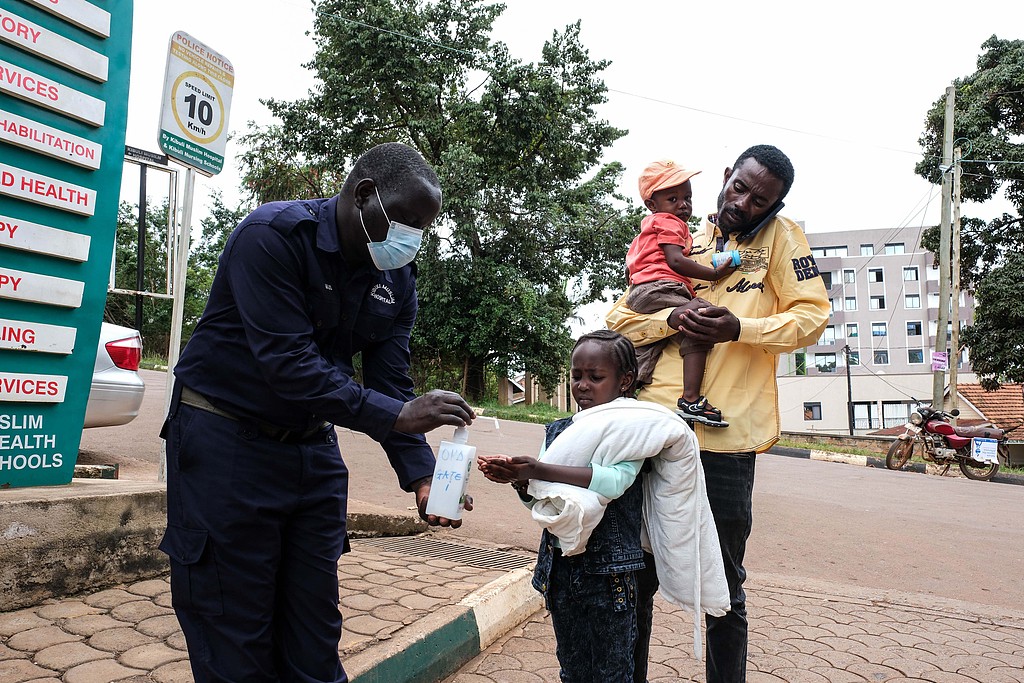
Hospital staff disinfect their hands in Kampala, Uganda, on May 16.
According to the BBC (BBC) reported 18, the current round of outbreaks in the northeastern Congo (DRC) province of Ituri, suspected cases in April this year has emerged. On April 24, a 59-year-old man died three days later after developing symptoms. Local health authorities until January 5 to confirm the outbreak, when the virus has caused at least 50 deaths. As of January 17, Congo (DRC) confirmed cases of 10,336 suspected cases, of which 88 patients have died.
The director of the Centers for Disease Control and Prevention in Africa, Jean Cassia, says slow testing in local health facilities has left room for the spread of the Zaire ebolavirus. “The outbreak started in April,” he said. “But so far, we haven’t been able to confirm the zero cases. The patient who showed up on April 24 was not infected zero, but was the earliest patient to be identified under limited medical conditions in the area, so we can not confirm the scale of the outbreak,” said Anne Corey, an expert in infectious disease statistics and modelling at Imperial College London, “The key point of concern is that the virus has been circulating for weeks before the outbreak is confirmed.”.
Ebola is classified as a zoonotic viral hemorrhagic fever that can spread between humans and other primates, the Guardian reported. Patients develop flu-like symptoms and develop high fevers, muscle pain, internal bleeding and organ failure. Because the virus can be transmitted directly through body fluids, front-line health workers are at high risk. First identified and named in 1976, the Zaire ebolavirus has caused multiple outbreaks in Africa over the decades, killing more than 80 percent of people at one point. Between 2013 and 2016, West Africa experienced the largest Ebola outbreak in history, with more than 28,000 confirmed cases and more than 11,000 deaths, with sporadic cases in Europe and the United States.
It is understood that the latest outbreak in DRC was caused by the Bendibugyo strain. As one of the many strains that cause Ebola, the Bendibugia strain is the rarest, and so far there is no recognized and effective clinical treatment and detection method, nor has a fully symptomatic vaccine product been developed. Congo (DRC) has experienced about 20 Ebola outbreaks, but Bendibjo type strain outbreaks have only occurred 3 times. Kasai recently told Sky News that the African CDC has some alternative drugs and vaccines, but the efficacy remains to be seen.
Amanda Rojak, an expert at Oxford University’s Institute of Epidemiological Sciences, explained that the Who’s move reflects the complexity of the fight against the epidemic and the urgent need for international coordination. WHO recommends that countries activate national disaster and emergency management mechanisms and set up monitoring points along their borders. However, the WHO does not recommend that countries immediately close their borders or restrict travel and trade. Such measures could lead to more illegal border crossings, making it harder to control the movement of people effectively.