August 15th was the day of Japan’s defeat and surrender. On this day, 81 years earlier, Japan announced its acceptance of the Potsdam Declaration and unconditional surrender. However, on the eve of defeat, the Japanese military ordered the destruction of a large number of classified files, including medical records of Japanese invaders who had received treatment at the Kunfu Dai Army Hospital (now the National Kunfu Dai Medical Center) in Chiba Prefecture.
“In order to cover up the truth, the Japanese military wanted to burn documents that could expose war crimes and become grounds for prosecution,” Saitama University emeritus professor Tufu Hosubuchi said in an interview with the Shinhua news agency recently. Fortunately, the then director of the Kwokwutai Army Hospital preserved the medical records on the grounds that they were “precious materials.”
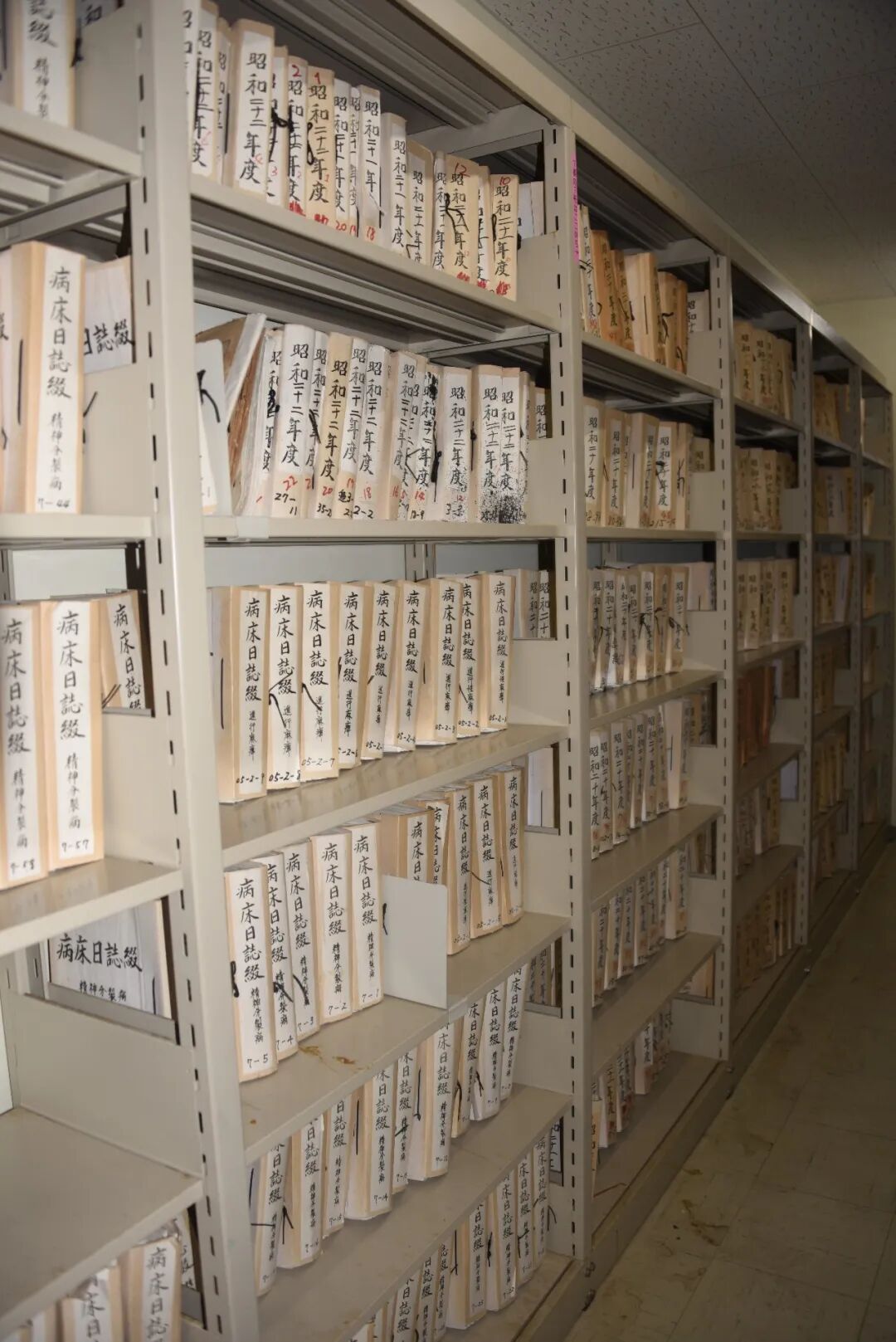
This is a photocopy of the medical records of Japanese soldiers during World War II taken at Asai Hospital in Higashi-Kin, Chiba Prefecture, Japan (data photo, taken September 17, 2025).
Today, these thousands of yellowed medical records are stored in the archives of Asai Hospital in Higashi-Kin, Chiba Prefecture. The reporter saw on one of the medical records:
“I once killed six civilians in Shandong Province. I often dream about it and can’t rest easy.” “Especially the experience of killing young children. The Lenovo of having children my own age makes me feel particularly uncomfortable.”
Before joining the army, this man had been an employee of the Yamagata County Post Office. After the outbreak of the China Invasion War, he was sent to fight in the northern China region of China. In August 1938, he was admitted to the Kwokfutai Army Hospital for “mental illness.”
According to Hosubuchi, during the China Invasion War, some Japanese soldiers developed symptoms such as numbness of limbs, trembling, and other symptoms due to battlefield fear or suffering from intense mental shock. These illnesses were collectively called “war neuroses” at the time. The Kwokwutai Army Hospital specializes in treating such patients, and has treated about 10,000 people.
At the time of Japan‘s defeat, orders to destroy this batch of medical records were sent to the Kokubutai Army Hospital. However, the hospital‘s then-director preserved them under the pretext of “precious information” and buried them underground in iron barrels. These medical records‘ originals were later transferred several times, and are now preserved in a psychiatric treatment center in Chiba City, Chiba Prefecture.
In the 1950s, Asai Toshiyou, a military doctor major at the former Kwokubutai Army Hospital and then director of Asai Hospital, worried about the loss of medical records, purchased photocopying equipment at his own expense, hired professionals, and for more than a decade copied all the medical records involving more than 8,000 Japanese soldiers, and stored the copies in the archive room of Asai Hospital.
Why did the military order the destruction of medical records at that time? Nakamura Esori, an associate professor at Uchi University, said that the reason many Japanese soldiers developed “war neurosis” was because they “used violence or carried out self-inflicted acts of harm,” and “after Japan‘s defeat, considering that these records would be charged with war responsibility, they had to be destroyed.”
This is a copy of the medical records of Japanese troops invading China taken at Asai Hospital in Higashi-Kin, Chiba Prefecture, Japan (data photo, taken on September 17, 2025). Xinhua News Reporter Hu Xiaoge Photograph
Nakamura showed reporters a medical history of a Japanese soldier invading China, in which he recorded his own account of the process of stabbing a 12-year-old child: “That child was so pitiful, the assassination scene constantly haunted his mind, and the images would surface whenever he had an attack.”
Nakamura said that expressions like “pathetic” appeared in the medical records very rarely, because at that time the Japanese military generally took killing for granted and didn‘t treat the other party as a person at all. Moreover, wartime Japan restricted talking about or reporting on wartime acts of harm, so the soldiers who attended the clinic were unwilling to talk about the heavy fact of “murdering people” on the one hand, and on the other hand would subconsciously rationalize their own acts of harm.
Hosubuchi also confirmed to reporters that there were medical records that clearly recorded Japanese army killings, including “burning down entire villages” and “even young children were killed by me.” Hosubuchi pointed out that it is noteworthy that although some medical records recorded “complete annihilation” and “burning down villages” and other content, these acts of harm were not viewed as the cause of developing mental illness, but were instead recorded as “combat achievements.” The reason for this is closely related to Japan‘s militaristic education during the war. “During the war, the people were widely instilled with the idea of the so-called ‘Hachiko Ichiyu,’ attempting to make Japan rule Asia and even the world. Therefore, it was also taken for granted to rule or enslave other countries and their people… Many people went to the battlefield driven by this very idea.”
This militaristic atmosphere not only distorted the soldiers‘ perception of war and killing, but also drove the Japanese military to try hard to conceal the existence of “war neuroses.” Nakamura said that admitting “war neuroses” would make soldiers recognize the damage war does to themselves, thereby destroying the soldiers‘ fighting will and exposing the country‘s vulnerability, so the Japanese military‘s deliberate concealment from the outside was actually also a form of “image manipulation.” Hosubuchi pointed out that as Japan‘s death toll increased, the people’s fighting will gradually weakened, “in order to maintain the war, the Japanese military deliberately conducted concealment even more.”
Speaking of the historical value of these medical records, Nakamura said that they confirmed the numerous atrocities committed by the Japanese army invading China, and pointed out that “these atrocities were possible because the Japanese army conducted what is called training to ‘enable people to carry out harmful acts’, attempting to eliminate the resistance of soldiers to killing acts.”
“War makes people lose their humanity,” Hosubuchi said, hoping that posterity could understand the cruelty of war through these preserved records, remember the damage caused by war, and avoid the repetition of historical tragedies.
Reporter: Hu Xiaoge Liu Jieqiu