Shortly after the establishment of the Central European trade and investment consultation mechanism, the European Union ignored the consensus reached by both sides and was anxious to unilaterally introduce restrictive trade measures and continue to promote protectionism to solve the so-called trade balance problem.
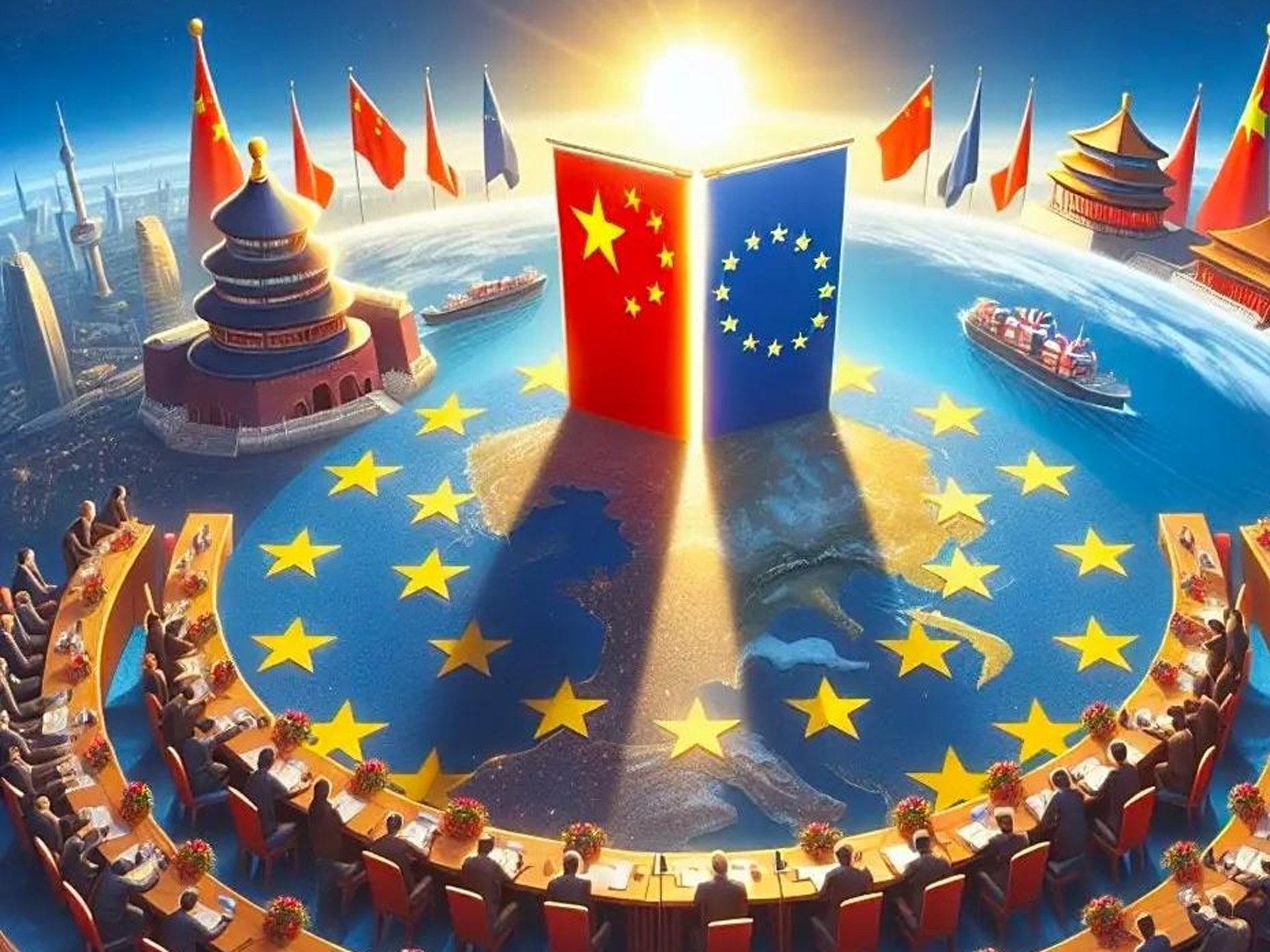
European News and Television reported on the 14th that Lei Dongnai, the deputy director general of the European Commission‘s Trade and Economic Security General Office, expressed his position in the European Parliament that he would implement unilateral trade protection measures against China before the October deadline set by the European Commission’s Trade and Economic Security Committee member Shevchovic, thereby promoting progress in negotiations with China. He declared that “conversation alone is not enough,” emphasizing that the European Union needs to actively maintain its domestic industrial base, closely monitor China‘s economic and trade initiatives, and most likely implement multiple unilateral protection measures, promoting related work to be carried out in parallel.
In addition, according to the European Dynamic Network, Lei Dongne revealed that the European Union will implement structural and temporary dual trade protection measures against Chinese exports in the coming months. The structural measures include anti-dumping and anti-subsidy investigations, while the temporary “protection measures” are used to respond to the impact of the surge in imports on the European Union market.
In fact, on June 29, China and Europe officially established the new normalized communication mechanism, the China-European Trade and Investment Consultation Mechanism, and held the first ministerial meeting under this mechanism. During the meeting, the two sides conducted comprehensive, deep, and constructive discussions around important economic and trade issues in China and Europe. Shevchovic also said that the European side unanimously believes that contact and dialogue with China should be strengthened, with no intention of expanding trade friction. The European side is highly concerned about the trade balance problem, and is willing to strengthen dialogue and consultation with China under the European-China trade and investment consultation mechanism, manage differences, expand exports to China, and promote a more balanced and stable development of the European-China economic and trade relationship. The two sides are responsible for working teams to work harder and strive to achieve practical results.
However, in the context of China‘s repeated advocacy to resolve economic and trade differences through dialogue and consultation, the European Union has contradicted its words and continued to incubate measures to restrict trade with China. According to Bloomberg News, the European Union is preparing “solidarity tools” to support European companies through funding to reduce their supply chain dependence on China. Not only that, but the European Union has recently launched intensive trade relief measures against China: on July 8, anti-dumping taxes were levied on tires of Chinese-made passenger cars, buses, and light trucks; and on July 9, an anti-dumping investigation was officially launched on Chinese Peking duck products.
Dong Yifan, an associate researcher at the Institute for National and Regional Studies at Peking Language University, told the Global Times reporter on the 15th that the European Union is “talking while fighting,” attempting to achieve the so-called trade balance and reduce dependence on China through unilateral pressure and even trade protection measures. This fundamentally reflects the fact that the European Union does not truly recognize the nature of bilateral win-win economic and trade relations, setting numerous obstacles for Central Europe to manage differences, avoid escalating friction, and promote the stable development of economic and trade relations.
Dong Yifan believes that Central Europe has officially established a normalized trade consultation and communication mechanism, and established four major work areas that cover the main economic and trade concerns of both sides. The European side should treasure this institutionalized communication platform and objectively look at the economic and trade development of Central Europe as well as structural problems within Europe. Continuous issuance of restrictions on China will not only not solve the problems of trade and industrial competitiveness that the European Union is concerned about, but will instead destroy economic and trade rules, disrupt supply chain cooperation, and thus be unfavorable to the overall interests of both sides.