In the azure waters off Cape Verde, West Africa, a luxury cruise ship is turning into a terrifying terror ship.
On May 7, local time, according to the British“Daily Mail” reported that a cruise ship named“Hondius”(Hondius) in the waters off the west coast of Africa, Cape Verde stranded.
The fate of more than 140 passengers on board is unknown due to the Andean hantavirus outbreak.
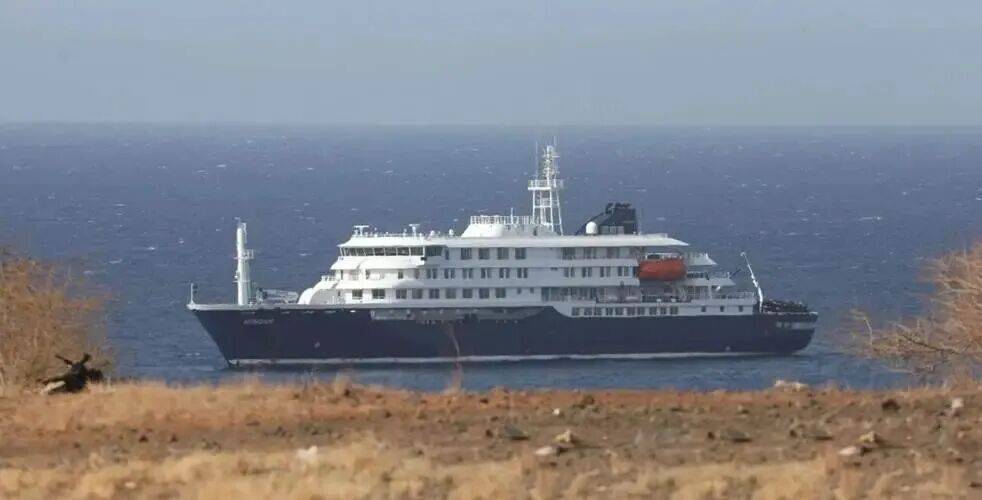
On the same day, the World Health Organization said the number of cases related to the polar cruise ship outbreak has increased to 8, of which 5 have been confirmed.
According to the National Institute of Medical Science in South Africa and the University Hospital of Geneva, Switzerland, the test results have confirmed the outbreak of the virus type of Andean hantavirus.
Mythic Vacation Paradise harbors the deadliest silent killer
Most hantaviruses are not transmitted from person to person, with the exception of Andes hantavirus, which is usually transmitted between close family members or health care workers.
According to official control guidelines issued by the WHO, Andean hantavirus is a virulent virus that is transmitted mainly by rodents. It glires in rodents.
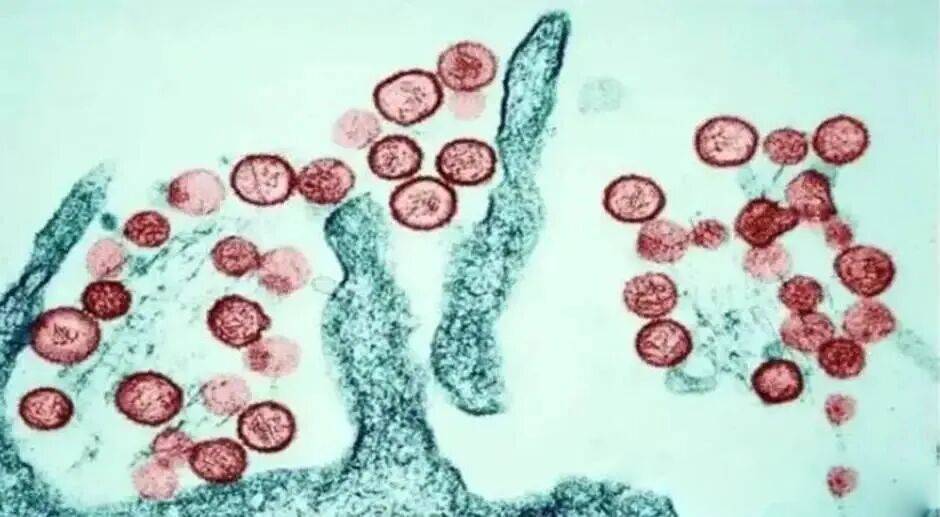
Infection in humans can lead to two deadly syndromes: hemorrhagic fever with renal syndrome, which is centered on fever, shock, and acute kidney failure, the other is the hantavirus lung syndrome, which has a rapid onset, rapid progression, and a high mortality rate.
According to the surveillance data released by the CDC in the United States, the mortality rate of hantavirus lung syndrome is as high as 35% . At present, there is no specific treatment drug in the world, and there is no widely available commercial vaccine, the only way to prevent and control it is to cut off transmission at the source.
Adding to the panic, the virus usually spreads only through sporadic contact between rodents and humans in the wild, with few outbreaks of human-to-human transmission, let alone concentrated outbreaks on sealed luxury cruise ships.
In a preliminary statement, Cape Verde’s National Institutes of health said that outbreaks of hantavirus in cruise ship environments were rare worldwide and that efforts were being made to determine the source and transmission chain of the virus.
It was this rare and deadly outbreak that led the Cape Verdean government to take the tough decision not to dock.
For this small West African country with weak medical resources, once the“Death ship” docks, once the virus spreads in the country, its already fragile public health system, can not afford the catastrophic consequences of an outbreak of a serious infectious disease.
Richard Koch, professor of Infectious Diseases at the London School of Hygiene and tropical medicine, said: “Luxury cruises have never been the safe haven of popular imagination. They are a perfect breeding ground for the spread of infectious diseases.
This sentence, thoroughly debunked the cruise industry with luxury decoration, high-end services packed with deadly lies.
Block prevarication and international collaboration streaking in the face of death
Back to the seemingly calm Atlantic in early May.
By then, the Hundius was already suffering from fever and shortness of breath.
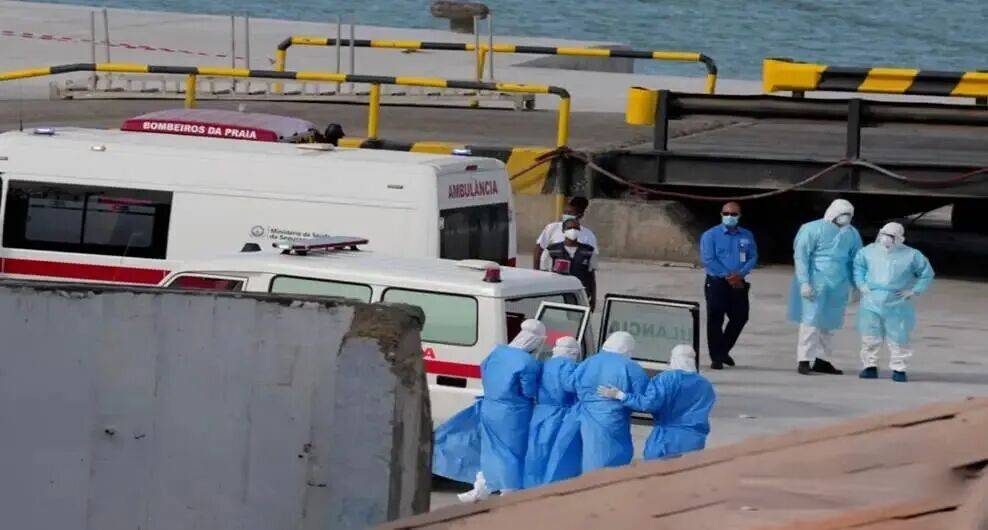
The response of governments to this lethally heavy burden has been an ironic cauldron.
The government of Cape Verde immediately refused to allow the cruise ship to dock due to public health and safety concerns. Although the central government of Spain nodded in favor of receiving the ship, its local government of the Canary Islands clearly expressed strong opposition, it said the decision was not based on technical standards.
At one point during Spain’s negotiations with the WHO, the Spanish proposed moving the infected to the smaller African country of Cape Verde, which has even worse medical resources, in exchange for a promise not to send the cruise ships into the heart of Europe.
The rhetoric of the developed world, which normally shouts“Humanitarianism” and“International Rules”, becomes an excuse for self-interest when the going gets really tough.
British ship doctors transported to the Netherlands and patients hanging by a thread in the intensive-care unit suffer not only from the virus, but also from being abandoned by big-country geo-risk algorithms.
Capital Risks, human lives are optimised variables
In this crisis, passengers are the most helpless victims.
As the investigation deepens, a more chilling fact emerges: because the hantavirus was previously widely considered to be extremely contagious, the insurance and risk-control models of the entire cruise industry have been challenged by deadly human-to-human mutations, in the face of a deadly human-to-human mutation.
When the ship was turned away by countries after a suspected human-to-human transmission, insurance rates and liability models collapsed across the polar luxury cruise industry.
The Capitalists’ greatest fear is not how many people on board died of respiratory failure, but that the hantavirus could be transmitted from person to person.
Because once it becomes the norm, cruises will no longer be an unimpeachable gold mine, but rather a collection of negative assets that could be abandoned on the ocean at any moment as bio-waste.
The reason why the Netherlands and Spain finally accepted by holding their noses was by no means only for humanitarian reasons, but because the ship was flying the Dutch flag and the passengers on board were all Western European voters with the right to vote, capital must cooperate with the government to complete this“Rescue Show”, in order to maintain the last fig leaf of industry.
In psychology, the mismatch between high lethality and very low transmission is the most fertile ground for conspiracy theories and panic.
Although the who has repeatedly stressed that the global risk of hantavirus is“Extremely low”, the public can see a high case fatality rate of 36% and three transient lives.
The more than 140 people trapped on the ship are the saddest props in the drama. A tragedy at sea, like a basin of ice water over the so-called principles of international co-operation.
Worse than a virus is a disregard for life and a failure of boundaries
This maritime mortality crisis is not an accident.
Those trapped in the cabin of the passengers, to pay for a holiday trip to the mountains, the end result is a call every day should not be the death of imprisonment.
Three of them have stayed in this strange sea forever, and the rest are still suffering from the threat of the virus and unknown fear.
And the tragedy is a wake-up call that goes well beyond cruises.
We like to think that modern medicine is advanced enough, that global systems of collaboration are robust enough, that these seemingly robust systems could collapse at any moment in the face of a sudden, virulent virus.
The“High-end”, “Safety” and“Worry-free” propaganda techniques packaged out, in the face of profit-seeking capital, once there is no mandatory supervision and rigid responsibility constraints, all good promises, may come to naught at the moment of disaster.
Commenting on the incident, Mary Bassett, a professor at the School of Public Health at the City University of New York, said the war on viruses has never really ended. Our greatest enemy has never been the virus itself, but the disregard for risk, the buck-passing of responsibility and the Fluke of life.
From covid-19 to Hantavirus, tragedy after tragedy tells us that in the microbial world, humans will never be able to take it lightly.
Still floating in international waters off Cape Verde, the Hundius is more like a giant, red exclamation point than a stranded ship.
More than 100 passengers on the ship, waiting for a port to let them dock, waiting for a rescue to let them out of danger.
We don’t know when the nightmare at sea will come to an end. Hopefully, this tragic sacrifice of life will tear the fig leaf off the cruise industry and close the fatal loopholes that have been ignored by capital and left unchecked by regulation.
After all, no one wants to risk their lives on a holiday they should be taking.
Photo courtesy of the web