With the continuous expansion of china-south Korea Airlines, the implementation of China’s visa-free policy, and the growing demand for South Korean younger generations to travel to China, the popularity of Chinese tourism is rising rapidly in South Korea, it is even expected to overtake Japan, which has long topped the list of South Koreans’ favourite destinations.
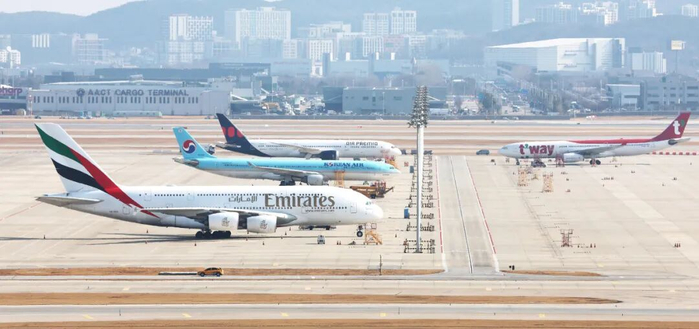
South Korea’s Ministry of land, infrastructure and transport (Korea) has allocated 35 international routes, including Chinese routes, to 11 Korean Airlines, the Korea economy reported recently. Among them, Beijing, Shanghai, Guangzhou, Chengdu, Xiamen and other major Chinese cities are included in the new route or expansion, South Korea to China route capacity will be further enhanced. A number of South Korean low-cost airlines have entered the Chinese market. At the same time, South Korean regional airports to China routes also increased significantly. Busan, Daegu, Xiangyang and other local airports have added routes to China.
South Korean tourism data shows that the popularity of travel to China is rising rapidly. China accounted for 28 percent of outbound bookings during the May 1 golden weeks, ranking first, ahead of Japan (24 percent) and Vietnam (14 percent) .
“Korea Economy” analysis pointed out that high oil prices, high exchange rates push up the cost of long-distance travel, and China as a short-distance travel destination, cost-effective advantage is more obvious. In addition, China has implemented a visa-free policy for South Korea since November 2024, which has also significantly stimulated the growth of demand for travel to China.
South Korean tourists to China reached 3.16 million in 2025, up 36.9 percent year-on-year and the biggest increase among all popular outbound destinations in South Korea, Hong Kong’s South China Morning Post reported on its website. More than 300,000 South Korean tourists entered China in January alone, up 48 per cent from a year earlier, according to the Justice Ministry. South Korean media that the visa-free policy, increased routes and young groups, driven by tourism to China is still heating up.
It is worth mentioning that the Korean youth group is becoming an important driving force for the growth of tourism to China. Jiang Xian, a tourism professor at South Korea’s Ruijing University, said that before the pandemic, South Korean tourists to China were mainly middle-aged and elderly groups, and the routes focused on natural landscapes and historical sites. After the epidemic, the MZ generation (South Korea’s MZ generation refers to the“Post-80s” to“Post-00s” population) has become the main force, and the proportion of free travel has increased significantly, tourism demand has also shifted from“Product consumption” to“Experience and content consumption”, so Shanghai, Chongqing and other characteristic cities have attracted attention.
In the face of the rapidly growing demand for travel to China, South Korean tourism companies have begun to accelerate their layout. Tourism agency Kyowon said it will expand new route-related tourism products in Hangzhou, Chengdu, Guangzhou and Xiamen. Hanna tourism has also launched a China summer tourism planning product in response to growing demand for shorter trips.