Gasoline prices are more than twice the average level in the United States, the EU region is spending more than 200 million euros extra each day due to the rise in diesel prices, and the EU Energy Commission warns of an energy price crisis coming… The past week has been filled with bad news from the European energy market. As geographic conflicts continue and winter warming season approaches, the European energy supply situation is becoming increasingly severe.
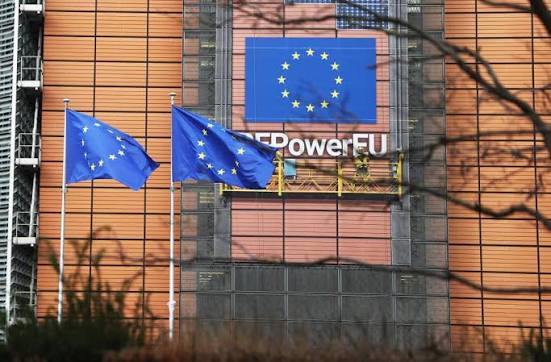
Analysts believe that the supply gap left by Europe‘s energy transition has yet to be filled, geographic conflicts continue to disturb supply chains, and European energy security is facing a situation of “old wounds and new pains” coexisting. Despite emergency measures such as fuel tax cuts, industry-oriented subsidies, and the release of strategic oil reserves by EU countries, it is unclear whether short-term bailouts can survive the warming season, and whether structural contradictions in European energy security can be effectively resolved remains to be seen.
Price “high fever” affects corporate livelihood
Unlike the supply gap caused by the “de-Russianization” of energy four years ago, European countries face multiple pressures this fall such as “oil shortages,” “price highs,” and “air shortages,” while global inflation caused by high energy prices has become the most prominent problem facing the current European economy.
On the natural gas side, EU gas prices have recently continued to rise, reaching EUR 79.5 per megawatt-hour at one point, the highest in nearly three years. Crude prices have also continued to rise, with the London Brent Crude futures market breaking $ 100 per barrel on September 28th.
The increase in energy prices was first reflected in residents‘ daily bills. In mid-September, the average weighted price of EU gasoline was 2,063 euros per litre, and the price of diesel was 2,159 euros per litre, both hitting the highest values ever recorded by the European Commission. Data released by the European Statistics Bureau showed that the annual inflation rate of the EU was 3.2% in August, up more than 30% from the same period last year. Inflation rates in 20 of the 27 member countries were higher than in July.
The pressure facing European companies is more complex. On the one hand, companies continue to suffer from rising energy costs. The French media reported that more than 71% of medium-sized French companies saw their energy costs rise sharply this year; an Association of German Chambers of Industry and Commerce survey showed that nearly half of the companies surveyed saw electricity prices rise, and more than two-thirds of companies saw their gas, regional heating, and other costs rise. On the other hand, business development and competitiveness are under pressure simultaneously. Peter Adrian, president of the Association of German Chambers of Industry and Commerce, said that high energy costs have caused problems such as declining competitiveness, investment lag, and capacity migration.
Currently, the impact of energy price increases and supply and demand fluctuations is no longer limited to traditional energy-intensive industries. The profitability levels, investment planning, and market competitiveness of many industries are all significantly affected.
Multiple risks impact energy security
This round of price shocks in Europe is not caused by a single factor, but by the resonance of multiple factors.
One is the continuing effects of energy “de-Russianization”. After several years of adjustment, the European natural gas market has gradually shifted from a pipelines-based market to a globalized liquefied natural gas market. According to data released by the European Commission, between 2021 and 2025, the pipelines’ share of EU natural gas imports fell from 80% to 55%, while the liquefied natural gas share rose from 20% to 45%. This shift directly leads to a significant increase in the sensitivity of European natural gas prices to global markets, and any slight risk such as fluctuations in global energy region capacity or obstruction of cross-border transportation channels will quickly be transmitted to European markets.
Secondly, the Middle East geographic conflict disrupts the global energy supply chain. Since September, the Middle East war has escalated again, directly impacting the global crude oil export system, driving oil prices to rapidly rebound, burying rising price threats for the European winter energy market. The latest report from the Finnish Energy and Clean Air Research Center said that the Netherlands, Italy, France, and Spain, four EU countries, have incurred a total of nearly €41 billion in additional fossil fuel costs following the outbreak of the Middle East conflict this year.
The third is the “spill effect” of the Russo-Ukrainian conflict. This directly leads to a tightening of global supply of finished oil such as diesel, further exacerbating the pressure of supply-demand imbalance in the European energy market.
Energy structural shortcomings are difficult to change in the short term
Faced with the winter energy challenge, European countries have introduced a series of emergency measures such as tax cuts and targeted support in an attempt to alleviate energy price hikes and supply tensions. The French government announced an expansion of targeted assistance aimed at high oil prices and extended support for industries with higher fuel cost pressures such as fisheries, agriculture, and construction. It also discussed with relevant countries strengthening energy supply coordination and releasing strategic oil reserves. Germany lowered energy taxes.
But such “emergency blood transfusions” can only provide temporary relief, unable to root out the deep structural problems of the European energy system: the diversity of energy supply sources has not yet been synchronized into the resilience of the price system.
In addition, the carbon emissions trading system was originally intended to promote energy transformation, but now it has a superimposed effect with high energy prices, becoming a constraining factor that aggravates the cost burden of European companies and weakens their market competitiveness; at the same time, Europe‘s overall natural gas reserves are significantly lower than in previous years at the same time, and winter energy buffer reserves are insufficient. Once faced with early arrival of extreme colds, ongoing tensions in geographic conflicts, and other situations, the European energy market will lack sufficient adjustment space, and the risk of supply shortages will greatly increase.
For Europe, whether the countries‘ emergency measures can withstand the test may not be verified until this winter. Bohemian economist Igor Gavran said that what is certain is that natural gas prices in Europe will remain high this winter, and whether supply shortages will occur will mainly depend on the geopolitical situation and extreme weather conditions.