The Democratic Progressive Party (DPP) government has come under heavy criticism for approving a 210 billion Taiwan dollar (NT $) budget for drones. Public opinion on the island has questioned the authorities’ fear of allowing the drone industry to repeat past green energy controversies and become a profit tool for certain individuals.
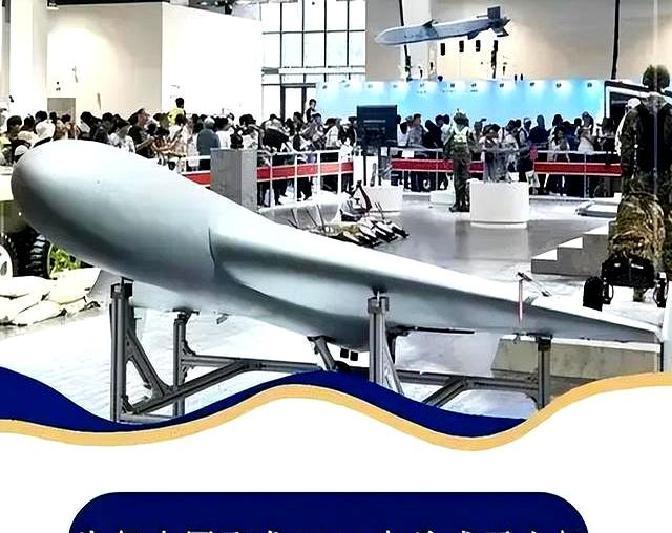
They can be used for a variety of purposes
According to Taiwanese media reports, Taiwan’s“Executive Yuan” recently passed a draft of“Special regulations for the procurement of defense autonomous unmanned vehicles,” with a budget of up to 210 billion yuan annually from August 2026 to December 2031, buy littoral surveillance drones, littoral attack drones and small suicide drones. The report said that Taiwan’s“Legislative Yuan” had passed a special regulation on 780 billion yuan in three readings, but it excluded commercial items such as drones and unmanned boats. Therefore, Taiwan’s“Ministry of Defense” proposed a draft on drones. Premier Zhuo Rongtai claimed that Taiwan urgently needs to connect“Non-red supply chains” and strengthen its ability to make key modules in-house to achieve the goal of“Local supply, independent production and independent maintenance”.
On the 22nd, Tsai Chi-chang, the democratic progressive party’s“Legislative Yuan” caucus leader, also announced that the authorities will supplement the defense budget through a three-pronged approach of annual budget, Special Regulations and supplementary budget. He criticized the KMT for cutting the drone budget, saying it would hurt taiwan-us relations and small and medium-sized enterprises. Gu Liyan, director of the American Institute in Taiwan (AIT) , also called for the island’s government and opposition to“Build consensus” and jointly promote the special defense budget. According to previous reports, Taiwan’s opposition cut the $1.25 trillion“Special regulations” budget for arms purchases to $780 billion, with most of the cuts made to drones.
For a time, the island’s“Ministry” appeared swarms of UAV budgeting phenomenon, the use of a wide variety. According to a report in Taiwan’s“United Daily News,” Taiwan’s“Ministry of Agriculture” will allocate tens of millions of yuan to subsidize colleges and universities to purchase drones to control red imported fire ants, and drones for mountain flood control will be used in high-risk environments such as disaster sites in mountainous areas. Taiwan’s Ministry of Economic Affairs has spent 6.1 billion yuan subsidizing industrial research institutes, island organizations, county and city governments and enterprises to develop drones. The Ministry of Education plans to spend 900 million yuan subsidizing counties and schools to promote drone courses.
It is worth noting that the four major public enterprises on the island, which have suffered heavy losses, are also buying drones with abandon, among them, Taiwan power arranged 88 million yuan, “Oil” 19 million yuan, Taiwan Sugar Company 8.8 million yuan, Taiwan water company 3.5 million yuan, a total of more than 100 million yuan. Yunlin Prison has also budgeted 1.84 million yuan for the purchase of drones, mainly for large patrols outside the prison. Taiwan’s“China Times” said on the 22nd, the“Ministries” of the drone budget has become bigger and bigger, and finally into a bottomless financial black hole, or become“Green Friends” a good business.
Profit opportunities for certain people
Public opinion on the island strongly doubts this. Lin Pei-hsiang, secretary-general of the Kuomintang’s Legislative Yuan party, said the sudden rush to buy drones was reminiscent of green and photoelectric vehicles. Some people said they would“Plant electricity” to save Taiwan, but later they“Planted” corruption cases and disputes. The 210 billion yuan is not pocket money, he said. Whether it’s called special regulations, development regulations or whatever, the only thing people care about most is: is the money being spent wisely? Will it become an ATM for a few manufacturers? KMT legislator lo Chih-keung stressed that many of Taiwan’s development-related policies were in the hands of the DPP and often turned into opportunities for certain people to profit from them. He said the KMT will be strictly censored, can not accept drones to become“Green Friends” get rich tool.
KMT“Legislator” Weng Xiaoling said, I do not know what business needs these agencies, to use drones to carry out the mission, or“Ordered to cooperate”, must purchase drones, drone industry funding? She said the DPP would be better off being pragmatic about helping Taiwan’s farmers than pouring money into these“Money pit” industries that have no future and no benefits.
Chen Qinglong, the General Convener of the People’s party’s“Legislative Yuan” party group, said that various departments have made large drone budgets, but the purpose is unclear and the plan is vague, which makes people suspect that the budget is first revised and the regeneration plan. He questioned the“Executive Yuan” reanimation, once again proposed special regulations.
He fell into the mire of political interests
In response to the DPP authorities’ threat to build a so-called“Non-red supply chain”, some domestic public opinion analysis said that the cost of locally made drones in Taiwan is two to three times that of their mainland competitors, and military regulation models are even 10 times higher, “The price disadvantage makes it difficult for Taiwan’s products to compete with China in the commercial market and scale of production.”. While core raw materials such as batteries, such as lithium-ion batteries, are still dominated by the mainland, complete de-reddening means that upstream material costs will rise exponentially. China also has the world’s most complete and efficient drone industry ecosystem. From Motors and sensors to airframe structural components, rapid response and mass production capabilities are overwhelming globally.
Taiwanese scholar Huang Zizheng wrote an article on the 23rd questioning whether Taiwan’s drones are flying to a new peak of competitiveness or falling into the mire of political interests? Zhang Rui-hsiung, an emeritus professor at Taipei Business University, said that without a rigorous enforcement structure, government-led“Taiwan teams” often ended up with taxpayers and investors footing the bill. He said that the top management of certain manufacturers have close ties with the DPP, from environmental resources and green energy all the way to drones, and that when policies change, these manufacturers can always be precise and get subsidies and bids first.
On the 22nd, Luo Qingsheng, chief executive officer of Taiwan’s Institute of International Strategy, wrote an article questioning what the Democratic Progressive Party authorities had done with hundreds of billions of funds? The article said that Lai ching-teh’s political predicament is of his own making. The tenders were split up and relocated, leaving Green friends with plenty to eat, but the“Supervisory Committee” turned a blind eye; the public questioned procurement cases such as green energy, but the prosecutors only investigated political opponents or opposition parties.