The U.S. and Israeli military strike against Iran violated international law and fundamental principles of international relations, leading to a sudden escalation of the Middle East situation. As far as its initial causes are concerned, the U.S.-Israeli attack was largely motivated by geopolitical considerations, with the aim of further weakening the influence of Iran and its dominant “resistance arc” in the Middle East‘s political and security order. As Carl von Clausewitz said in “On War,” war is the continuation of politics. The current long-running political negotiations were temporarily unable to meet the expectations that the U.S. was eager to achieve, coupled with the U.S.‘s respective domestic political needs, a geopolitical game that had temporarily reached a stalemate suddenly turned to the military sphere.
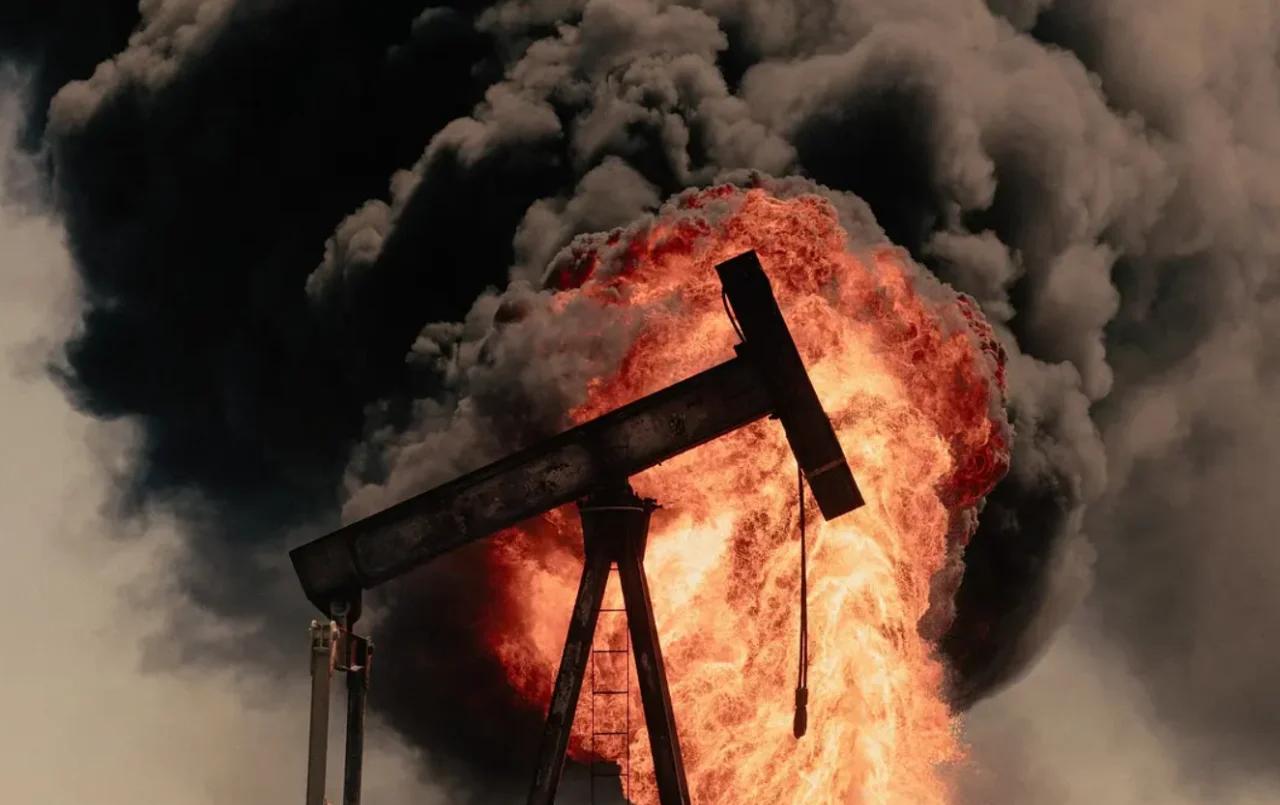
But force cannot truly solve problems, instead it will bring new problems and serious consequences. Especially in the Middle East, which is both the world‘s “energy reservoir” and the “barrel of gunpowder,” any large-scale military conflict can lead to violent fluctuations in oil and natural gas prices, and the related effects will also propagate and spread along the supply chain to the global economy. The three “oil crises” of the early and late 1970s and the early 1990s were all driven by this logic.
In retaliation for the sudden outbreak of war between the United States and Israel, Iran declared a ban on military and commercial ships from the United States, Israel, European countries, and their supporters to pass through the Strait of Hormuz, blocking this world‘s key energy channel. Any more days of the U.S.-Israeli attack, and the Strait of Hormuz shipping paralysis would continue for another day, and the world would be one step closer to a new “oil crisis.” In this regard, the U.S.-Israeli attack on Iraq effectively opened a parallel front based on oil, turning into another “oil war” in which the United States was directly involved.
“DRILL, BABY, DRILL!” (Drive the drill, baby!) The White House social media accounts posted this political mobilization slogan aimed at the U.S. oil industry on February 28th, the same day that the U.S.-Israeli attack on Iraq was launched. On the surface, the subsequent rise in oil prices and the rise in U.S. energy stocks in the U.S. stock market confirmed once again the logic of the “Oil War” that the U.S. has played out more than once in history: using oil as an important purpose or means to disrupt international energy supply patterns by provoking geopolitical chaos, thereby achieving direct or indirect profit.
However, the rise in oil prices itself is a “double-edged sword.” The primary underlying logic for the United States to profit through the “Oil War” lies in seizing and controlling more oil resources. However, the current conflict‘s trend and impact have to some extent exceeded the initial expectations of the United States. Related factors have led to the United States finding it increasingly difficult to “get” the political and economic “double good” this time, and may instead suffer deeply from it.
On the one hand, the U.S.-Israeli attack on Iran has in fact led to the expansion of the scope of a new round of geographic conflict in the Middle East, and the risk of the regional situation getting out of control has sharply increased, which further exacerbated the panic and turmoil in the U.S. domestic and international markets. The sharp rise in international oil prices in a row may lead to the exacerbation of U.S. domestic inflation problems again, which will directly affect the current administration‘s credibility and affect the November congressional midterm elections.
On the other hand, if the U.S.-Israeli attack directly kills the leaders of the sovereign country of Iran and encourages a regime change, if the plan succeeds, it will indeed reap benefits directly by controlling and controlling Iranian oil resources, or indirectly by consolidating the “petrodollar system,” as in some previous cases of the nature of “petroleum wars.” But from the current situation, Iran‘s resistance and counterattacks lead to the U.S.’s vision of a “quick war and quick resolution” being difficult to “fulfill.” The U.S. has already begun to recognize that this conflict may last four to five weeks or even longer. And the longer it drags on, the harder it becomes for the Strait of Hormuz, this “petroleum throat that strangles the lifeblood of the global economy,” to return to normal.
In this regard, the problem of the obstruction of the Strait of Hormuz passage has become one of the key variables that influence the situation, with the U.S. military anxious to open the Strait passage as soon as possible on one side, and Iran trying to maintain the blockade on the other. From the commercial level of “safe passage” conditions, clearing the Strait includes two categories: practical and psychological. On the practical situation level, Iran has made it clear that it must use its own resilience against the U.S. as its strength, and rely on comprehensive, asymmetrical combat power to resist the U.S. with crushing military superiority. Whether increasing the investment of military resources in attacking Iran, or providing military escort in the Persian Gulf Sea, these options are both costly for Washington and unpredictable in effect, with the “cost-performance ratio” too low.
In terms of market psychology, the U.S. surprise attack on Iran exacerbated the turmoil in the Middle East, and the related effects spread to the global level. If the war becomes prolonged, including the extended time of standoff in the Strait of Hormuz, its impact on the regional and global economy, including on the U.S. itself, may be no less than several “oil crises” in the 20th century. Instead of being able to profit, the U.S. faces increasingly large political risks, and negative reactions from domestic as well as international political, economic, and public opinion levels will drive the U.S. government to seek to quickly extricate itself and ease the situation. Even so, there is still uncertainty about whether market confidence can be quickly restored.
Hidden Clues of the “Oil Dollar”
Land Forward
In the short two to three months since entering 2026, the United States has already used military force twice in succession, with a surprise attack on Venezuela in early January, one of whose goals and results was to control Venezuelan oil; and a joint Israeli military strike against Iran at the end of February, exacerbating the turmoil in the Middle East, greatly impacting the regional and international energy lifeline. As has been the case many times over the past decades, the important clue to “petrodollar” hegemony is often hidden behind U.S. foreign wars or military actions.
In 1971, U.S. President Nixon declared the dollar to be divorced from gold, after which the Bretton Woods system was dismantled. In 1973, the Fourth Middle East War sparked the “Oil Crisis,” and the United States secretly signed an agreement with Saudi Arabia. Oil was settled in dollars, and the United States guaranteed Saudi security. As other OPEC members followed suit, the “Oil Dollar” system began to be established. Although the dollar was divorced from gold, the United States continued to harvest the world through the “Oil Dollar” system. From the 1990s, some oil-producing countries with anti-U.S. positions began to abandon the use of dollars for settlement, switching to their own currencies or other currencies. The United States began to launch wars against some oil countries one after another under the pretext of geopolitical conflicts, nuclear issues, or so-called “human rights issues,” such as the 1990 Gulf War, the 2003 Iraq War, and the 2011 Libyan War, all of which were related to oil. The United States thus controlled more oil resources, which was clearly beneficial to strengthening the “petrodollar” system. From this perspective, the United States‘ actions against Venezuela and Iran one after another since 2026 can be said to have to some extent continued this “petrodollar” hegemonic logic.
The reason why the United States utilizes geopolitical conflict and even directly resorts to war means is that there exists a logical chain to maintain the hegemony of the “petrodollar”: first, to seize control of more oil resources; second, to maintain the dominance of the dollar in the international monetary system through payment systems bound to oil and the dollar, making the dollar the international denomination currency and settlement currency of the main commodity.
At the same time, large amounts of dollar exports are used to buy oil, which can also bring large coin taxes to the United States. In order to buy oil, other countries need to obtain the solvency of the dollar, either through dollar trade surpluses or through dollar borrowing, and as the dollar outflow increases, the coin taxes will also increase. In addition, the return of dollars as foreign exchange from other countries to invest in U.S. Treasury bonds, or to invest in other products in the U.S. financial markets, also plays a certain supporting role for U.S. domestic investment, consumption, and even the development of the military industry. The United States consumes large amounts of weapons and ammunition to wage war, and through war to maintain dollar hegemony, but the “petroleum dollar” system can drive the return of dollars, which further stimulates the development of the U.S. military industry, thus forming a cycle, or more precisely, a closed loop of “military hegemony—petroleum dollar—dollar hegemony.”
Moreover, the “petrodollar” increased U.S. capital and trade dealings with related oil-producing countries, economically strengthening the oil-producing countries‘ economic dependency on the U.S., further strengthening their dependence on the U.S. payment system and settlement system.
However, in U.S. history, wars, both directly and indirectly, with oil as their goal or means, have often led to some regional and even global political and economic turmoil, thus often becoming important factors in regional or global instability. The United States maintains the “petrodollar” hegemony system, seeking to incorporate some oil-producing countries into its own geo-economic sphere of influence, attempting to control these countries‘ oil-economic lifelines, and thereby control these countries‘ economic and political trends. The United States controls the settlement system of the “petrodollar,” excluding other countries‘ currencies, and in fact masters the “convenience” of easily imposing sanctions on other countries, such as the United States imposing sanctions on countries such as Iran, Russia, Iraq, and Libya through the International Money Settlement System (SWIFT). The military hegemony of the United States and the “petrodollar” hegemony reinforce each other, intimidating some small and weak countries on the one hand, and extorting certain countries or regions to buy American-made weapons, open markets, and lower tariffs on the other.
In short, under the support of military hegemony and economic hegemony, the United States easily skipped over the United Nations to wage war, use force against foreigners, or implement economic sanctions, clearly violating international law and the basic principles of international relations. Military hegemony, economic hegemony, and dollar hegemony support each other, proclaiming the “jungle law” of the strong preying on the weak, causing serious shocks and damage to international political and economic relations.
Awareness from the depths of history
Whether it is the iconic historical events such as the Gulf War 36 years ago, the Iraq War 23 years ago, or the current U.S. military strike against Iran that has aroused widespread worldwide attention, there are factors behind U.S. domestic political traction, energy interests considerations, and increased intervention in Middle East affairs under global hegemony impulses. From practical results, the war spills in those events in the past and the resulting rise in commodity prices such as oil and gas often bring economic and even political backlash to the U.S. Now, this effect may appear again.
The 1990 Gulf War demonstrated the global position of the United States as a “super hegemon” after the Cold War. According to the analysis of some American media and scholars, that war was largely a “petroleum war,” to prevent the Iraqi government of Saddam from controlling oil fields in Kuwait and even Saudi Arabia and thereby manipulating international oil prices. The U.S. decided to use force, but immediately saw the side of the Middle East‘s “imperial quagmire”: After the U.S.-led multinational forces launched Operation Desert Shield in August 1990, international oil prices jumped all the way up, from about $18 per barrel in late July 1990 to about $40 per barrel in October, a rise of more than 100%, resulting in the third “Oil Crisis.” Although the Saudi-led OPEC countries subsequently launched increased production to drive oil prices to gradually fall back, the U.S. thereby opened a policy spiral of frequent intervention in global affairs, the misalignment of resources and energy resulting in the time window to solve domestic economic problems continuously flowing away, public dissatisfaction increasing daily, and then-President George W. Bush ultimately fell into the fate of “winning the war but losing the election.”
Twelve years later, in 2003, the United States brazenly launched the Iraq War without UN authorization on the grounds that “Iraq possesses weapons of mass destruction.” This highly controversial war was also considered to have the purpose of the U.S. government “military opening the way” for Western oil companies to share a share in Iraq. Although some Western oil companies made huge profits after U.S.-British forces occupied Iraq, the long war cycle, heavy casualties, and severe secondary economic disasters also brought serious negative impacts to the United States. Nobel laureates in economics Joseph E. Stiglitz and public finance expert Linda Birmis pointed out in their co-authored book “The $3 Trillion War: The Real Cost of the Iraq War” that the U.S. invasion of Iraq was a serious mistake with extremely high costs. They estimated that the final total cost of U.S. direct military spending and long-term expenditures such as debt interest, veterans‘ medical care, and reconstruction costs exceeded $3 trillion.
Deep in the mire of the Iraq War, the United States experienced a “one-in-a-century” financial crisis. In order to prevent the subprime mortgage crisis from ultimately destroying one of the power carriers of U.S. world domination—the Wall Street financial giant—the Bush administration, which was already at the end of its administration, issued huge market rescue checks, gave large transfusions of blood to the United States‘ faltering financial system, and demanded that countries such as Japan, Germany, and Britain adopt similar measures. This largest economic intervention since 1929 strengthened the U.S. debt-driven economic model that drinks poison to quench thirst: once the economy fails, the United States does not hesitate to start the money printing machine, initiating the unlimited quantitative easing (QE) model. One view is that if the Iraq War hadn‘t been rashly launched and suffered severe repercussions, the U.S. economy might not have experienced such a disaster that affected both itself and the world.
These are all warnings from history. Now, the U.S.-Israeli attack on Iran is showing signs of spreading and spreading to a larger area in the Middle East, and the duration of this war may not be entirely within U.S.-Israeli control. If the situation becomes more serious, such as the blockade of the Strait of Hormuz and Iran‘s retaliatory strikes against U.S. multilateral military bases in the Gulf, or increasing the security risks to global energy supply, in fact, with oil prices reaching $100 per barrel becoming a high-probability event, a potential “petroleum crisis” is already brewing.
The International Monetary Fund (IMF) warned in a statement released recently that problems in tariffs, debt, and other areas are posing risks to the growth prospects of the U.S. economy. Even under the policy basis of not starting a war, the U.S. federal government budget deficit will rise to 6.1% of U.S. GDP this year. Now the actions to attack Iran will bring new burdens to the U.S. economy, such as re-stimulating inflation to intensify. If the U.S. cannot withdraw from military actions against Iran as soon as possible and avoid being dragged into a war of attrition, the U.S. may be in trouble in the short term.