“The Middle East is on fire, and capital is flowing east.” The United States and Israel have launched military strikes against Iran for several days, and the global financial markets have been shaken even more. This is how Hong Kong media has described the accelerating shift of global capital to Asia, especially China.
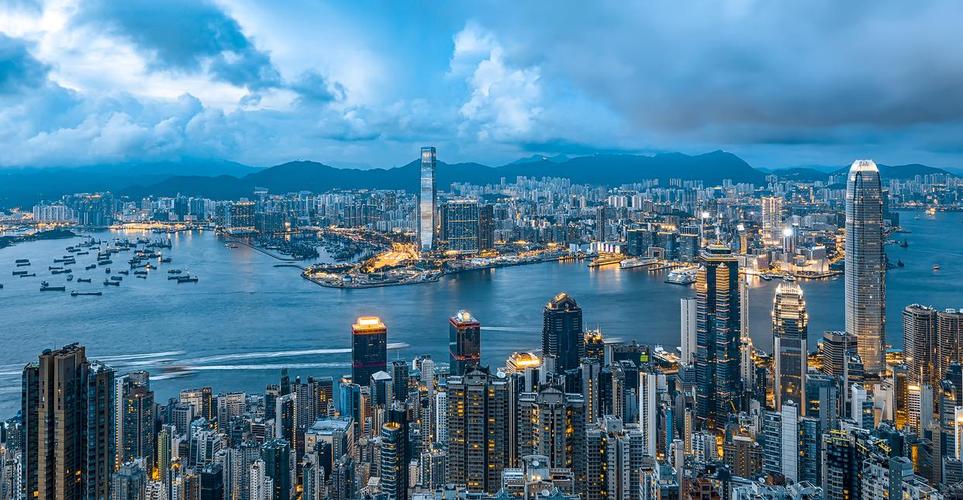
A recent report by Citibank points out that Hong Kong’s attractiveness is likely to increase if attacks on financial centres in the Middle East escalate, global funding accelerates or arrangements are adjusted. The Financial Secretary of the Hong Kong Special Administrative Region, Chen Maobo, in an interview with the China News Agency on 3rd, stressed that Hong Kong, as a free port under “one country, two systems”, is one of the preferred places for global funding to escape risk needs; regional conflicts or market volatility, but Hong Kong’s financial system has established a strong buffer.
In the writer‘s view, Hong Kong‘s role as a “finance safe harbor” is increasingly emerging amid the tense geopolitical situation.
In terms of its own conditions, Hong Kong does have unique advantages. One of them is security. Zhuang Tailiu, Permanent Director of the Liu Zode Institute for Global Economy and Finance at Hong Kong Chinese University, told the China News Agency reporter that Hong Kong has its back to the motherland, and in a turbulent world, the country has always been the most stable, reliable, and active force; at the same time, Hong Kong is connected to the world, implements common law, and regulates with international connections. These two aspects together shape Hong Kong‘s core competitiveness.
Second is the depth of the market. According to an analysis by Mai Cuicai, associate professor of accounting, economics and finance at the Hong Kong Baptist University, in an interview with the China News Agency, the total market capitalization of the Hong Kong stock market is about HK $ 50 trillion, long ranked among the top ten globally; Hong Kong is the world‘s fourth-largest foreign exchange trading center, the largest offshore renminbi business hub, and has a rich financial talent reserve. If foreign investors want to invest in Chinese companies to share the development benefits, Hong Kong is one of the core markets to choose; if foreign investors want to allocate renminbi assets, they will inevitably choose Hong Kong as a management platform. As global capital accelerates in seeking security scenarios, Hong Kong has the ability to steadily absorb international funds.
Of course, the reputation of being a “safe haven” is not fixed and permanent. Several Hong Kong economic experts told the China News Agency reporter that to transform the short-term hedging needs of global funds into long-term allocation options, it is necessary to consolidate and enhance Hong Kong‘s status as an international financial center according to the requirements in the country‘s “15th Five” plan recommendations, and continuously solidify competitiveness.
On the one hand, strong wealth and asset management can be done. The chairman of the Hong Kong Economic Thinktank, Shi Zhu, mentioned that in recent years, the Hong Kong Special Administrative Region Government has introduced tax concessions and administrative conveniences for sectors such as family offices, making Hong Kong the world‘s second-largest cross-border wealth management center. Mai Cuicai suggested that Hong Kong can enrich RMB-denominated products, perfect investment tools at different risk levels, and meet the diverse needs of sovereign funds and institutional investors.
On the other hand, it can create a large bond market and innovative finance. Zhuang Tailiang believes that Hong Kong already has advantages in the bond market. It can increase the size and activity of the bond market by increasing the issuance of long-term bonds and attracting more Mainland Chinese and international institutions to issue loans in Hong Kong. It can also accelerate the development of green financial products and explore the field of financial technology with caution, continuously pushing the industry forward.
Centennial changes are accelerating, and the world‘s turmoil is far from over. No matter what happens outside, the key for Hong Kong remains to do its own thing well, continuously opening new development opportunities in the changing situation with institutional advantages, open markets, and high-level professional services. (End)