According to TASS, Russian President Putin told Russian media on local time on 4th that given the EU‘s intention to completely give up buying Russian natural gas, Russia may stop supplying gas to Europe early.
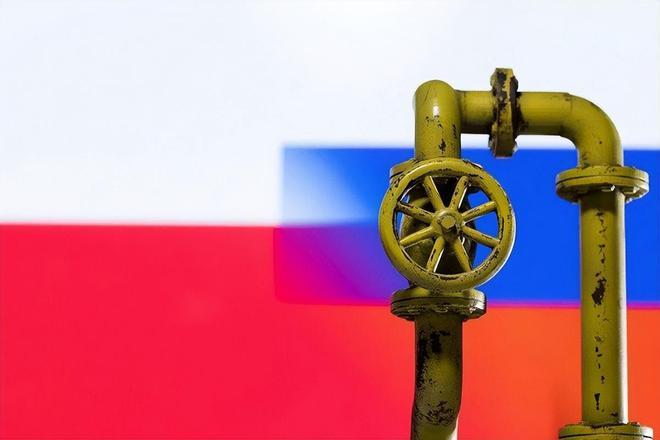
Putin said that Russia has always been a reliable energy supplier to all partners, including European partners, and will continue to cooperate in the current manner with equally reliable partners such as Slovakia and Hungary. However, given the European Union‘s plan to impose restrictions on imports of Russian natural gas until they are completely banned, Russia could consider stopping supplying gas to Europe now, which might be more advantageous for Russia.
Putin said that this was not a final decision and that he would instruct the government to study the issue. Putin also said that the recent surge in European energy prices was not caused by supply restrictions, as the main supplier countries did not reduce supply. He believed that the cause was the faulty policies of the European Union over the years, as well as the overall impact of the Middle East situation and the closure of the Strait of Hormuz on global markets.
On January 26, the 27 member countries of the European Union officially passed regulations on the gradual ban on pipelines of liquefied natural gas and liquefied natural gas from Russia. A comprehensive ban on pipelines of liquefied natural gas from Russia will take effect in early 2027, and a comprehensive ban on pipelines of natural gas will take effect in the fall of 2027. In 2025, Russian natural gas accounted for about 13% of total European Union imports, worth more than €15 billion.
Russian Presidential Press Secretary Peskov said the decision to withdraw from the European gas market has not yet been made, and Putin is currently instructing the government to study the issue, according to Interfax on Thursday. Russian gas companies maintain contact with all representatives of the global gas market to closely monitor the situation and understand which regions are emerging with new high-end markets. Peskov also said that Russia does not see signs of a change in Europe‘s stance on imports of Russian gas and other issues. Europe‘s situation is becoming increasingly difficult, whether for individuals, families or industrial enterprises. The day before, Peskov said that EU countries have not made requests to Russia for increased energy supplies in the context of worsening Middle East conditions.
According to news published on the European Union website, the European Commission held a temporary meeting of the Natural Gas Coordination Group and the Oil Coordination Group on 4th to assess the EU‘s oil and gas supply security situation under the impact of the Middle East situation. The meeting‘s assessment of that day concluded that there are currently no security risks in oil or gas supply. If the Strait of Hormuz is closed for a long time or there are further disruptions, the EU will reevaluate the oil and gas supply security situation.
Reuters reported on Thursday that the U.S.-U.S. attack on Iran disrupted the production and transportation of liquefied natural gas, leading to supply shortages and soaring prices. Europe‘s already difficult task of “replenishing natural gas reserves for next winter” faces greater risks and higher costs. This year, European natural gas reserves are expected to be far below normal levels for the warming season, forcing Europe to purchase more gas when supplementing underground gas reservoirs and tanks in the summer. Since the outbreak of the Russo-Ukrainian conflict, Europe has stopped importing most Russian pipeline natural gas and has grown increasingly dependent on liquefied natural gas. Since the U.S.-U.S. attack on Iraq, pipeline natural gas and liquefied natural gas prices have both risen sharply.
European benchmark natural gas prices rose nearly 50% this week after Qatar closed its gas fields, once reaching the highest level since early 2023. Norway, Europe’s largest natural gas supplier, is now operating at full capacity. The United States is Europe’s largest supplier of liquefied natural gas and its second-largest supplier. The United States has been urging the EU to buy more liquefied natural gas as new projects are launched and the supply increases, but the United States is currently barely able to rapidly increase its production to make up for Qatar’s lack of natural gas supply. Analyses point out that if the shipping paralysis in the Strait of Hormuz continues for a month, Europe’s liquefied natural gas reserves may fall to historic lows by the end of winter.
According to Reuters earlier, EU officials said the EU had issued a warning to member countries on 4th about the skyrocketing natural gas prices caused by the Iranian situation, but believed the supply was not currently directly threatened, nor did they have plans to develop emergency response measures. Norwegian energy minister Åsland said on 3rd that U.S.-Israeli military attacks on Iran and Iran‘s drone and missile attacks on Middle Eastern countries could restart the EU‘s debate over banning Russian natural gas imports. He said the EU has been very clear about its desire to be free of Russian oil and gas dependence, but “the situation also brings many challenges,” and “I believe this debate will heat up again.”
Russia‘s “Czarest” television station website and others cited an analysis on 5 that, with the regional situation and energy supply tensions caused by the U.S.-Israeli attack on Iran, the European Union is paying the price for its blind energy ban and restriction measures against Russia, and is reaping the consequences. If the Middle East‘s tension situation continues, Europe will pay an even higher price.