At the 83rd Golden Globe Awards ceremony held not long ago, Netflix‘s animated film “K-POP: The Demon Hunters” defeated Disney’s blockbuster “Crazy Animal City 2” and won the Best Animation Award. This pop-cultural-based animated film has previously won multiple awards in the awards season, and this time it won the Golden Globe again, greatly increasing the possibility of reaching the Oscars, but at the same time it also raised questions about “the plot fan orientation” and “repop light art”.
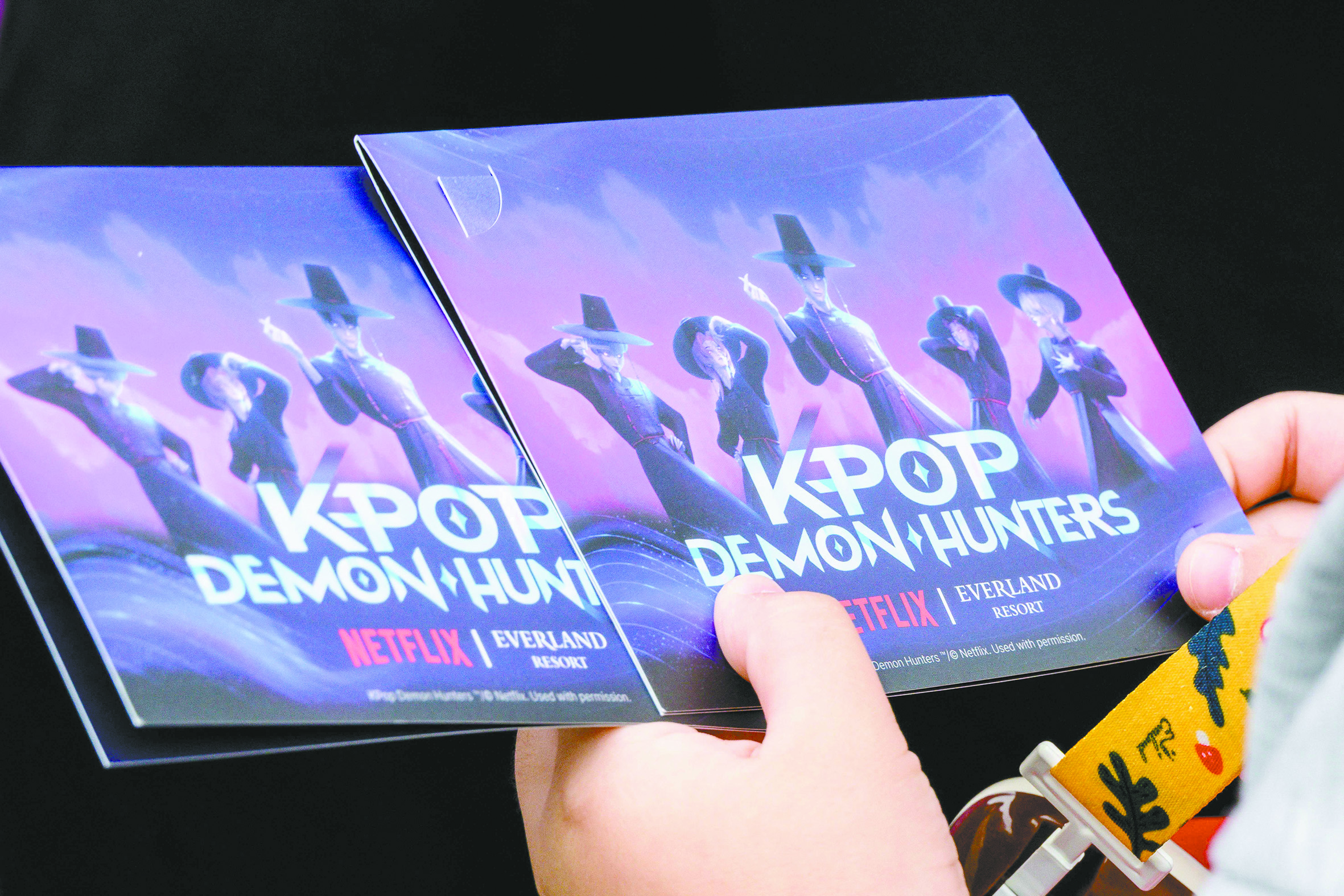
“K-POP: Demon Hunters” Brochure
“What kind of animation can lift up the little golden man?”
The Golden Globe Award for Best Animated Feature Film nominations include six films, including Hollywood‘s best-selling animated film last year, “Mad Men2”, the same Disney-produced film, “Earth Reporter”, Netflix‘s most-played film, “K-POP: The Demon Hunters”, Japan’s best-selling animated film, “The Ghost Slayer: Endless City Novel Chapter 1: Iwo Jima Reattacks”, as well as two French animations, “Rainbow” and “Hello, Amélie Nothomb”. In terms of number, American-produced animations are exactly 3:3 compared to non-American animations, but a careful analysis reveals that these six animations contain quite a lot of East Asian elements: “K-POP: The Demon Hunters” is a superhero fiction based on Korean culture; “Hello, Amélie Nothomb” is adapted from the childhood experiences of the famous Belgian writer Amélie Nothomb in Japan, one of whose directors is also Asian.
“After being ignored for many years, the global popularity of ‘K-POP: The Demon Hunters’ and ‘Ghost Slayer’ is forcing Oscar to think about what kind of animation can elevate the Little Gold Man.” The Hollywood Reporter recently analyzed in detail how the mainstream Hollywood awards, represented by Oscar, are dealing with animation works other than American-style family gatherings.
In recent years, East Asian animated films, represented by Japan, Korea, and China, have emerged and repeatedly broken box office records, but the Academy of Motion Picture Arts and Sciences, which is the organizer of the Academy Awards, has been relatively slow in reacting and has not been able to catch the trend immediately. In fact, the Academy Awards did not set up the Academy Award for Best Animated Feature until 2002, and in these more than 20 years, the Academy Award judges‘ concept had long been established that “excellent animated films should be Disney/Pixar/Dream Factory-like family-friendly themes for young and old, producing exquisite computer animation works.” Therefore, from “Toy Story” to “Magic Room,” Disney and Pixar took the awards lightly, but also made this award increasingly less “watchable.”
From Family Content to Fan-to-Bounty
The Academy didn‘t completely ignore non-American animation. It also awarded Japanese animation masters such as Miyazaki Shun’s “Chinyo Chihiro” and British clay animation “Super Invincible Dog: The Curse of the Were-Rabbit” to foreign blockbusters. But overall, the Academy‘s international horizons weren’t wide. Art-type animation from Europe or other Asian and African countries might win awards at the Anansi International Animation Film Festival, but when it came to the Academy, it was mostly just “accompanying”.
And now, animated movies with strong fan orientation are presented before the Oscars with extremely high popularity and box office. For example, “K-POP: Demon Hunt Girls,” which portrays the girls‘ group as superheroes who sing during the day and fight monsters at night, is evaluated as an interesting graft between Korean style and the Japanese manga “Beauty Girl Warrior” setting. Although its humanistic depth and emotional appeal cannot be compared to those of Gibley and Pixar, its high popularity cannot be denied. Not only did it become the most viewed movie on the Netflix platform with 541 million hours of views, the theme song created by Korean musicians also entered the U.S. “Billboard” pop list, and even the animation industry‘s professional award “Annie Award” gave it 13 nominations, showing that its influence has received multiple recognition.
The global animation landscape is changing drastically
In fact, in recent North American awards seasons, more and more non-American family-friendly animation works have been recognized, such as last year‘s Academy Award for Best Animated Feature, the Latvian independent animation “Cat and Cat‘s Fantasy Drift”, 2024’s “What Life Do You Want to Live”, 2023’s puppet animation “Gilmo del Toro‘s Pinocchio”, and others. The Academy Award is clearly also groping and adjusting – whether to stick to the early years‘ “good animation” criteria, or favor more diverse subject matter techniques, more innovative ideas, or even approach a wider range of popular culture fans?
In the Hollywood Reporter‘s view, the global animation landscape is undergoing a major change. “For example, the Chinese animation “Nazha‘s Devil Child Raging in the Sea,” which did not apply for the Academy Awards, combined Pixar-style computer animation techniques with traditional Chinese mythological stories, has already garnered a huge global success of about $2.2 billion. If the Academy Awards recognize these animations from East Asia, this is not only a victory for the genre and a belated recognition of fans, but also marks a real change in the perception of animation within the academy: no longer as it was more than a decade ago, recognizing only family-friendly works—making small talking animals tell life philosophies; but instead giving way to animations with more adventurous themes, more capable of embodying global animation diversity, and even more youthful, adult, and aesthetically stylized works.”