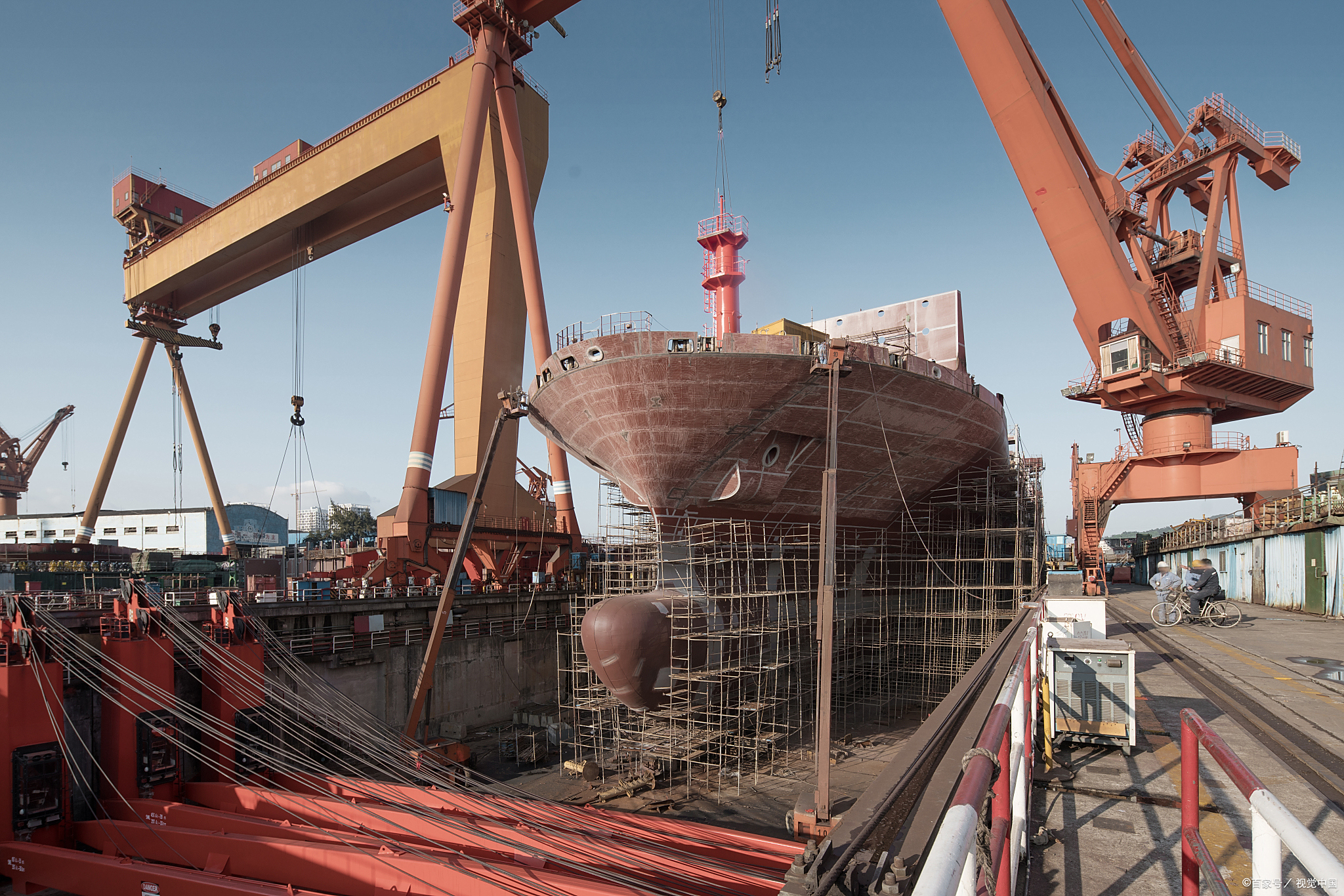
After a year and a half in the making, US“Section 301” measures for Chinese ships are due to land next week. The U.S. Customs and Border Protection Agency (CBP) on Wednesday officially issued CSMS # 66427144, identifying chinese-owned, operated or built ships entering U.S. ports as of October 14, and a surcharge on all foreign-built motor carriers. The move sent shockwaves through the industry. However, industry analysts believe that the US unilateral measures, not only short-term will not help the US to restore shipbuilding industry, but also disrupt the global shipping order, the cost will ultimately be borne by businesses and consumers.
“Section 301” measures into the landing phase
According to the announcement, chinese-owned or operated ships are charged $50 per net ton, while chinese-built ships are charged $18 per net ton or $120 per container, both of which are levied at high prices A charge of US $14 per net ton will be levied on non-us built motor carrier (ro/Ro) .
Zhong Zhechao, founder and CEO of one shipping, a market consultancy, said in an interview with the Global Times on the 9th that, this means that the US“Maritime, logistics and shipbuilding industry” 301 measures in China from the policy level has entered the substantive stage of implementation, and compared with the previous release of the fee scheme more enforceable and retroactive.
According to public reports, as early as April 17 last year, the office of the United States Trade Representative launched an investigation into China under section 301 to restore the competitiveness of the U.S. shipbuilding industry and safeguard national economic security, and on April 17 this year, it announced final measures to impose discriminatory port service fees on maritime services provided by Chinese shipowners and operators and operators using chinese-built ships from October 14, and set a 180-day transition period. Foreign media speculation CBP may delay the charge, but the first charge details of the release, indicating that the United States still plans to start the charge on the 14th.
Discriminatory port charges levied by the US on Chinese shipping companies and chinese-built ships are essentially a hegemonic act of putting domestic laws above international law, experts from the China Shipowners’ Association said Monday. This practice of“Pricing by nationality” is a flagrant violation of the non-discrimination principle of the world trade organization, the so-called excuse of“Revitalizing the American shipbuilding industry”, will also be because the cost of building U. S. civilian ships for China and South Korea 3 to 5 times and not established.
U. S. importers or bear the cost
Reuters quoted shipping consultancy Alphaliner as saying in its latest forecast that with the US“Section 301” measure in place, the world’s top 10 Freight 2026 are expected to face a cost burden of up to $3.2 bn. Alphaliner warned in the report that the policy, while nominally aimed at bolstering the US shipbuilding industry, was“More likely to disrupt the normal functioning of the global shipping system” in the short term.
Los Angeles Harbor, the largest US port, is handling and stacking hundreds of thousands of containers a month, Nikkei Asia review reported, the shipping industry is experiencing“Drastic fluctuations” due to us tariffs, recurrent policies and the impending implementation of shipping charges. He revealed that shipping companies had been thinking“What to do next” since April. For zero per cent of companies, the answer is clear: reduce the number of Chinese ships operating on US routes and switch to ships built by other countries, such as South Korea and Japan. “For some companies, it’s relatively easy to reconfigure their operations, but for others it’s just not possible,” says MS SELOKA, who says they either pass on costs to their customers or bear them themselves.
“If progress is slower than expected [ for shipping companies ] , these port charges could impose a long-term cost burden and miss the expected goal of making us domestic supply chains more resilient,” said a North American executive at an Austrian freight forwarder, who predicted that US importers could end up bearing the“Vast majority” of the costs.
US sanctions will have a knock-on effect, with global shipping companies facing extra costs for their fleets containing chinese-built ships and“Cascading penalties” pushing up costs, experts from the China Shipowners’ Association said on the 9th, the risk of future US port congestion will also be transmitted to the world. Experts also believe that the imposition of port charges by the United States will significantly increase the cost of sino-us maritime trade, which is estimated to be equivalent to an increase of 4 percent in tariffs, leading to increased inflationary pressure in the United States, and forcing shipping companies to adjust route layouts to avoid cost increases, this has had a knock-on effect on Sungai Besar, leading to the abandonment of congested US ports, disrupted supply chains and delays in upgrading infrastructure, blocked agricultural and energy exports, and the loss of port logistics jobs.
Expert: American shipbuilding industry“Dream not come true”
There is a huge gap between China and the United States in shipbuilding capacity, Reuters reported. American shipyards 2024 fewer than 10 commercial ships, compared with more than 1,000 CSBC Corporation. In the first half of 2025, China accounted for 47.2% of the world total in terms of shipbuilding completed, 64% of new orders received and 57.6% of revised gross tonnage in terms of hand-held orders, according to the latest data from the China Shipping Association.
The US maritime probe into China is aimed at“Reviving the US shipbuilding industry”, but Qiu Shiliang, an analyst at Zhejiang Securities, said in a report that US shipbuilding is expensive, new ships are expensive and it will be difficult to restart shipyards on a large scale. Zhong Zhe Chao believes that the U. S. shipbuilding industry has fallen to a low, short-term policy is difficult to work. However, the US policy to suppress China’s orientation may change the development trajectory of the global shipbuilding industry chain, need to be vigilant and prepare accordingly.
On September 29, the State Council of China announced a decision on amending the regulations of the People’s Republic of China on international maritime transport before the release of the detailed rules on charges, make it clear that any country or region that implements or supports discriminatory measures will be countered.