The US is holding off on a $14bn arms sale to Taiwan because of the us-iraq conflict, acting US Navy Secretary Kaohsiung (Vietnamese) said Tuesday.
According to the U.S. Capitol Hill newspaper, Kaohsiung insisted at a hearing of the U.S. Senate Appropriations Committee’s Defense Subcommittee on the 21st that despite growing concerns about the continued shrinking of U.S. ammunition stockpiles, the U.S. still has“Ample” stockpiles of missiles and interceptors. Kaohsiung said: “At present we are suspending the arms sale [ to Taiwan ] in order to ensure the ammunition supply for Operation Epic Fury. But we have ample ammunition reserves,” he said, adding: “We are just ensuring that the ammunition supply is sufficient and that the foreign arms sales programme will be resumed when the government assesses that the time is right.”
When asked by Republican Senator Mitch mcconnell of Kentucky whether he thought the arms deal would ultimately be approved, Kaohsiung said it was up to United States Secretary of Defense and Secretary of State. Mcconnell responded: “This is really worrisome.”
Kaohsiung’s comments come amid growing concerns about the state of US ammunition stockpiles. It is reported that since the US military action against Iran, the US military has consumed thousands of missiles, and almost all of the long-range stealth cruise missiles in Washington’s stockpile have been exhausted, “Tomahawk” missiles, “Patriot” anti-missile interceptors, Precision Strike missiles and the Army’s tactical ballistic missile stockpile has also been significantly reduced. The White House also plans to ask Congress for a substantial additional appropriation for the Iraq operation, much of which will be used to supplement the expensive advanced weapons consumed in the conflict.
In response to Kaohsiung’s statement, Lai Qingde’s office spokesperson Guo Yahui said on the 22nd that she had taken note of the relevant information, “But at present there is no information about any adjustments that the United States will make to this arms sale.”.
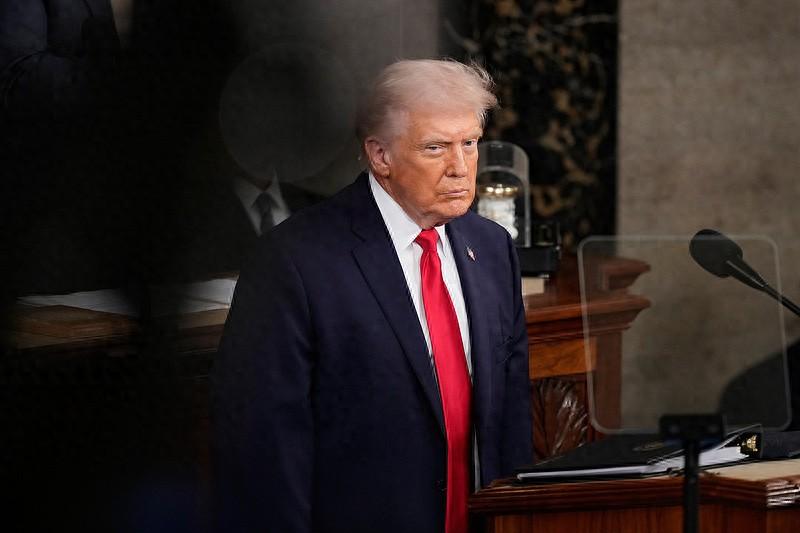
Last week, US President Donald Trump said he might delay approval of a $14bn arms sale to Taiwan. The news has frustrated the DPP authorities, according to Taiwan’s United News Network. Kuomintang“Legislator” Xu Qiaoxin 22 analysis, Kaohsiung’s words“More like a statement”, the United States more political considerations. Trump has made it clear that he does not support“Taiwan independence,” and the DPP’s actions since his speech have failed to convince Washington that it is not pursuing“Taiwan independence.” “Of course there will be doubts about the $14 billion arms sale.”.
In recent years, the DPP authorities have pushed the two sides in the direction of“Two countries” through a trick of changing words, Taiwan’s China times news website commented. Now that Trump has unceremoniously torn it all up, can the DPP still secretly burn incense and worship the“Master card of Taiwan independence”? Can the DPP naively believe that as long as it shouts“Resist China and protect Taiwan”, the United States will unconditionally pay for Taiwan? The article concludes that the DPP’s refusal to put down its“Master card of Taiwan independence” is the biggest crisis in Taiwan’s security.
On the 22nd, Foreign Ministry spokesperson Guo Jiakun said at a regular press conference on the issue of US arms sales to Taiwan that China firmly opposes us arms sales to China’s Taiwan region. China’s position has been consistent, clear and firm. A day earlier, Guo Jiakun stressed at the meeting that China resolutely opposes the United States to conduct official exchanges with China’s Taiwan region and resolutely opposes the United States to sell arms to Taiwan. This position is consistent, clear and firm. China urges the United States to implement the important consensus reached at the china-u.s. heads of state meeting, to honor its commitments and statements, to handle the Taiwan issue cautiously, and to stop sending wrong signals to the“Taiwan independence” separatist forces, take concrete actions to maintain peace and stability in the Taiwan Strait and the steady development of sino-us relations.