On August 19, the Jiji Press reported that a Ministry of Foreign Affairs of Japan spokesperson responded with “deep regret” to U.S. sanctions against Japanese-born Tomoko Akane, president of the International Criminal Court (ICC).
Just four words, light and smooth, but they became the most ironic and embarrassing scene of the year.
Japan, which had always been praised by the United States as a core ally in the Asia-Pacific region, was publicly “slapped.” The one who struck was the United States, the one who suffered was Japan‘s top judicial officials, and the most pathetic was the Japanese government, which had been angry but silent throughout the entire process.
The whole matter begins on August 18th.
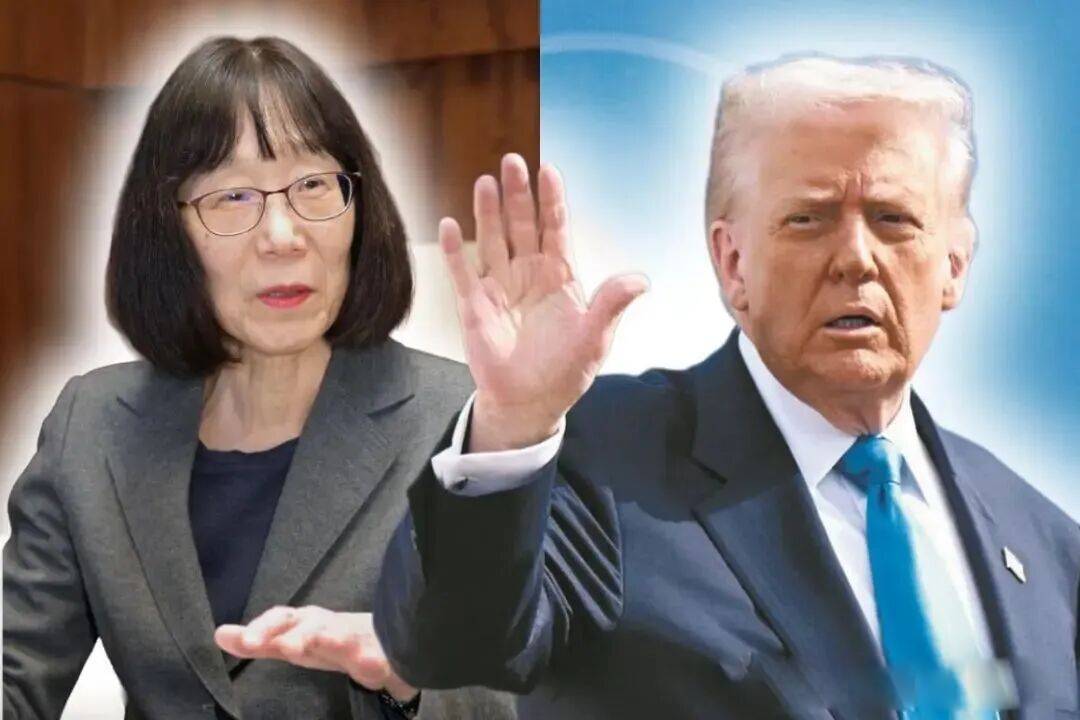
At that time, U.S. Secretary of State Rubio announced sanctions against the chairman of the ICC, Tomoko Akane, and senior Senegalese lawyer Abdullah Sayye.
The sanctions were merciless: freezing all assets in the United States, prohibiting transactions with any American institution, company, or individual, and kicking the two people out of the dollar system.
This was not an ordinary sanction, but a precisely targeted explosion against the international judicial system.
The most embarrassing thing is that Tomoko Akane is the first Japanese-born director of the ICC since its establishment. The ICC director is the highest leadership position of this institution, which can be considered the front sign of Japan‘s “law-based diplomacy.”
On January 7 this year, Takaichi Sanae also specially posted on social media platforms, high-profile meetings with Tomoko Akane and Iwazawa Yuji, the president of the International Court of Justice, stating bluntly that Japan would “full and strongly support Tomoko Akane‘s tenure.”
At that time, Japanese politics were jubilant, and the media heavily promoted this event, treating it as a major political achievement for Japan entering the international mainstream.
Who could have expected that, just over seven months later, the former glory signboard would become a “blacklist” of U.S. sanctions. The U.S. didn‘t give Japan any mercy at all, saying sanctions and then sanctions, striking cleanly and ruthlessly.
Faced with a slap in the face, the Ministry of Foreign Affairs of Japan‘s response can be described as “textbook weakness.” To the outside world, it only dared to brush it off with “very regrettable,” without serious protest, without diplomatic negotiations, and without equal countermeasures.
Reuters revealed the mentality of an anonymous high-ranking official on the Japanese side: privately full of dissatisfaction, but the bottom line is clear, absolutely cannot affect the overall Japanese-American relationship. Translation: I‘m wronged, I’m not convinced, but I don’t dare to make trouble, I don’t dare to fight, even if I’m beaten, I have to endure it.
The United States was even more ruthless, deliberately adding a sentence afterward: the sanctions were not aimed at the Japanese government.
It seems to be giving steps, but it is actually making things difficult, and it also takes advantage of the momentum to call out to Japan: hoping that allies will boycott the ICC together.
This was equivalent to handing a knife to Takaichi Sanae, forcing her to choose between two options: either stand firm and defend America‘s face, or turn her back on the rule of law slogan and follow America to dismantle the international justice system.
Japan‘s domestic public opinion completely exploded.
Netizens pulled up Gao Shi‘s flattering posts from the beginning of the year and repeatedly questioned: “Back then, you were high-profile and proud. Now that high-ranking officials in this country have been unjustly sanctioned, where did your full support go?”
Some have dredged up a more ironic contrast: When Gao Shi visited the United States in March 2026, he publicly praised Trump as “the only one who can protect world peace.” Flattering the United States with extreme flattery, protecting his own country‘s dignity but remaining silent like a cold cicada.
According to Japanese scholars‘ analysis, netizens pointed out that after Tomoko Akane was included in the SDN list, she was affected by the dollar system, unable to use credit cards, restricted bank transfers, and her normal life was affected.
Netizens are calling for the government to issue a special policy to protect its rights, but Gao‘s cabinet remained silent throughout, without any substantive measures.
On the other hand, Holland‘s structure and spirit directly crushed Japan.
As the headquarters of the ICC, the Dutch foreign minister publicly expressed his position: he did not recognize and accept U.S. sanctions, firmly maintained international judicial independence, and even took the initiative to invite Tomoko Akane to The Hague for negotiations.
Japan is one of the main sponsor countries of the ICC, the core support of Asia, while the Netherlands is only a resident country. Those who call for the rule of law turn their backs on the rule of law, while bystanders instead maintain the bottom line, which is both absurd and true.
The U.S. sanctions were not an impromptu initiative at all, but a systematic operation to dismantle the hegemony of the ICC.
Currently, the ICC has a total of 18 judges, nine of whom have already been sanctioned by the United States, exactly half of them. Added to former chief prosecutor Karim Khan, who was dismissed from the ICC in July due to a sexual assault scandal, and two deputy prosecutors, the entire international court is almost paralyzed.
Rubio openly declared that the ICC was “a politicized, corrupt transnational institution” that the United States wanted to systematically dismantle, and called for the collective withdrawal of 125 member states. In July this year, Chad and Venezuela had announced their withdrawal.
The core reason ICC was targeted was only one: daring to investigate U.S. military war crimes.
According to the ICC investigation, U.S. troops caused tens of thousands of civilian casualties in Afghanistan. Seeing that the courts were about to pursue justice, the U.S. immediately turned from shame to anger, sanctioning judges and paralyzing institutions.
If you don‘t sign a rule, you refuse jurisdiction, and if you commit a crime, you block the channels for prosecution. The so-called “rule-based international order” is ultimately a one-way order dictated by the United States.
Take the camera back to Tokyo.
Japan is now stuck in an extremely uncomfortable position: on one side is the Japanese-American alliance—security, economic trade, and Indo-Pacific strategy are completely dependent on the United States, and after Trump‘s return from his second term, this dependence will only deepen.
On one hand was the international rule of law and Japan‘s face, and on the other hand was domestic public opinion. Netizens had already pulled out Takashi‘s posts from more than 7 months ago to slap the face, demanding that the government give a statement.
Japan was completely trapped in a three-way siege: to be loyal to the United States, it would have to turn its back on law-based diplomacy and ignore the injustice of its own citizens; to protect its face, it would have to oppose the United States and shake the foundation of the Japanese-American alliance; to leave it alone, but unable to suppress domestic public opinion, it would be truly weak and incompetent.
Left and right are pits, this is the ultimate sadness of dependent countries.
What do you think about this?
This large-scale face-slapping scene completely tore apart the hypocritical cover of the Japanese-American Equal Alliance.
Many people think that the Japanese-American alliance is equal and mutual assistance. This sanctions reveals the truth: this is a complete master-servant relationship.
The United States can ignore Japan‘s face at any time, trample on Japan’s interests, and impose sanctions whenever it wants. Japan did not resist or retaliate throughout, and could only silently endure the blows. The so-called dignity of an ally is as thin as a sheet of paper in the face of American hegemony.
Japan uses its participation in international justice and funding international organizations to package itself as a law-abiding country. Takaichi‘s high-profile endorsements and media lobbying are all artificial scripts for external marketing. When faced with real power suppression, all slogans instantly go to zero.
The United States has been shouting rules, rule of law, and justice around the world all year round, using international law to judge other countries. But once international law wants to restrain itself, it immediately turns around and paralyzes the judicial institutions and sanctions law enforcement personnel.
The world sees it clearly: the rule of law that America upholds is a tool for treating others; the rules that America adheres to are privileges for self-interest. This dual hegemony is draining its remaining international credibility.
Ultimately, the U.S. sanctions are not a matter of sovereignty, but of naked judicial hegemony.
And for Japan, this slap in the face was the most sobering warning: Attachment cannot be exchanged for dignity, and fawning cannot keep face.
Diplomacy that doesn‘t dare to stand up for the people, doesn’t dare to speak out for justice, no matter how beautifully wrapped up, is just a performance of self-deception.
Images from the Internet