Local time on June 28, with Austria’s draw with Algeria, Iran did not qualify for the knockout team, regret farewell to This World Cup. However, for the Iranian team, the real“Field” is far more than three times on the pitch. Affected by the U.S. visa policy, the Iranian team has encountered numerous obstacles from the very beginning of its deployment, such as visa restrictions, being forced to locate in Mexico, and traveling across the border to participate in competitions. The team has to stay out of the competition, out of the game.
What happened to the Iranian team is a microcosm of the World Cup host nation’s restrictive visa policies. How can the United States reshape the open borders of international sporting events in the name of National Security and Immigration Control? When the political hand extends to the field, the World Cup advocated tolerance and fairness, can still stand the test of how much? An in-depth interpretation of the great reference of Phoenix.
Summary
1. Harsh visa and immigration requirements have prevented many from traveling to the United States. The US has imposed travel restrictions on 39 countries to cater to conservative voters, leading to visa denials of more than 70 per cent for fans from some participating countries, such as Senegal. High security fees and opaque censorship have shut out fans, family members and staff in droves.
2. Immigration controls have slashed the tournament’s economic dividend and damaged America’s national soft power. Immigration controls led to a huge backlog of tickets and 80 per cent of hotel bookings in the host cities were not up to scratch, shattering the $40bn revenue forecast for the event. At the same time, Europe to America flight bookings plummeted, the United States because of the bid to break the“Open and inclusive” commitment, resulting in its international image seriously damaged.
3. Voting interests have taken precedence over sportsmanship, making this world cup deeply politicized. For the Trump administration, a tough border policy is a high-stakes political bargaining chip in the run-up to the 2026 midterm elections. Because the economic losses of the hotel and airline industries were too dispersed to form a countervailing force, and FIFA was unable to intervene, the border of the United States eventually intervened in the World Cup.
Author ?Ma Xiaolin , Zhu Zhengyu
Editors ? Qu gongze, Hu Shimin, Dong Ruoran
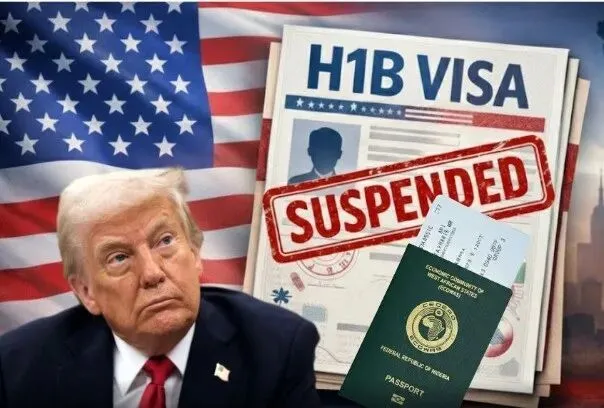
The U.S. Department of State announced that it had suspended visa bond requirements for citizens of the five World Cup qualifying countries with valid FIFA World Cup qualification. Proshare graphics
Iran drew with Egypt in the final round of the us-canada-mexico World Cup. With the end of other group events on the 28th, the Iranian team failed to become one of the top 8 third group, and ultimately failed to qualify for the knockout stage.
Mehdi Talemi, captain of the Iranian national team, said bluntly: “This World Cup is a disaster. As professionals, we can’t play under these conditions.” Coach Amir Galenoe also criticised the team for being treated“Extremely unfairly”. Off the field, the Iranian team’s entire World Cup journey has been overshadowed by U. S. Visa and entry restrictions.
In fact, the United States has imposed varying degrees of entry and travel restrictions on 39 countries during this World Cup. The U.S. State Department has suspended the issuance of visas to 19 countries, and Iran, Haiti, Côte d’ivoire and Senegal are on the list. The greater the cross-border movement, the more political the restrictions. The World Cup has become the latest battleground between US Immigration and the Trump administration’s plans for mass deportations.
The Trump administration’s immigration policies have a chilling effect
With the midterm elections approaching and conservative voters generally anxious about border security issues, the Trump administration has chosen to maintain a tough stance on the visa review process and is reluctant to make policy concessions for opening the games to the outside world.
The data of visa rejection rate directly reflects the degree of policy tightening. The BBC, citing U.S. State Department statistics, calculated that of the 48 participating countries, a total of 11 countries, including Ecuador, Egypt, Haiti, Algeria, Uzbekistan, Cape Verde, Jordan, Iran, the Democratic Republic of the Congo, Ghana and Senegal, saw their visa refusal rates for the United States exceed 40 percent, senegal has a rejection rate of more than 70 percent, while the global average for tourist and business visas to the United States was 34 percent.
Tough visa and entry checks are disrupting fans’ game-watching plans. Arius Ngom, a veteran Senegalese soccer fan who has played in two World Cups in Russia and Qatar, now believes that applying to go to the United States is meaningless; Jordanian fan association President Abu Kass has 42 papers and is still being denied a visa for no reason. Cape Verde goalkeeper Vozinha’s mother also can not afford the maximum 15,000 U. S. Dollars Visa Guarantee, and failed to pass the audit, missed the opportunity to watch the game. The restrictions have also spilled over to non-ban countries: Iraq is not covered by the travel ban, but the United States has suspended regular visa operations in Iraq, making it difficult for local fans to get visas at home; Iraqi striker Ayman al-hussein was questioned for nearly seven hours after entering the country, while the team’s photographer was refused entry. Even those Scottish fans enjoying visa-free access found that ESTA’s status had changed before the flight and she could not board the plane. While the US says“Compliant” tourists will not be affected, the visa waiver threshold for fans from some African countries is so high that it is almost non-existent for most.
A man dressed in yellow, red and green, and wearing a hat of the same colour, is looking towards the camera; he has long hair. A large model of a lion’s head can be seen on the right side of the frame, with sharp teeth and yellow eyes
Senegalese soccer fan Arius Ngom thinks even applying for a visa is pointless.
There is an economic dimension to the tough political action. The U.S. will host 78 games, three-quarters of the 104, and is expected to absorb about four-fifths of North American fan spending, according to Bank of Montreal calculations. On the face of it, the tournament’s economic dividends still flow mainly to the United States. A survey by the American hotel and lodging association in April showed that 80 percent of hotels in 11 U.S. host cities failed to meet booking expectations, and more than 60 percent of hotels in Los Angeles failed to meet their booking targets, almost 90% of hotels in Kansas City failed to meet the standard; the Association said the tournament was not as profitable as it had hoped, citing visa controls and geopolitical tensions as the core causes of the shortfall.
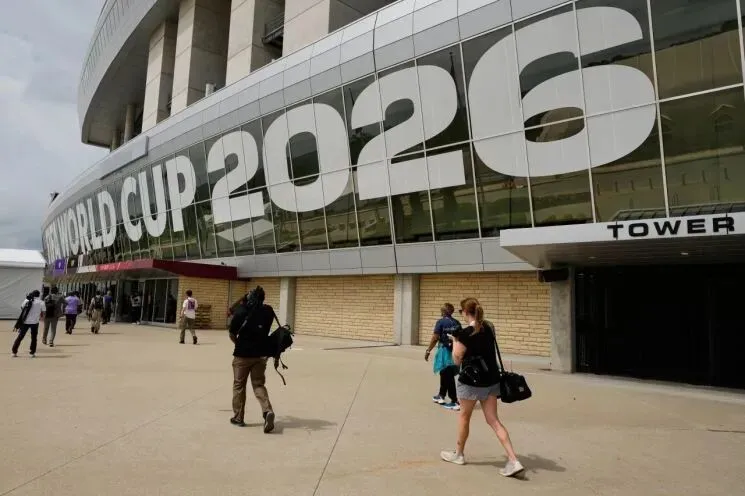
With just two days to go until the 2026 World Cup in north and Central America, the U.S. travel industry is reportedly feeling the pinch after a disappointing box office performance. Photograph: AP/Yonhap
The ticketing market is also struggling, with a backlog of 176,000 unsold tickets on resale platforms for the group stage, even for the U.S. opening game. Although the United States has the advantage of total consumption with the number of events and stadium capacity, it is at a significant disadvantage in terms of tourist confidence, travel costs and entry convenience.
FIFA had predicted that the tournament would generate $40bn in revenues and create 800,000 jobs, but industry bodies are now widely judging that the target will not be met. On the one hand, it is the visa threshold built to win over voters; on the other hand, it is the hotel industry and stadium revenue that rely on overseas tourists to revitalize. The two gains are ebbing and flowing, forming an income gap that is difficult to make up.
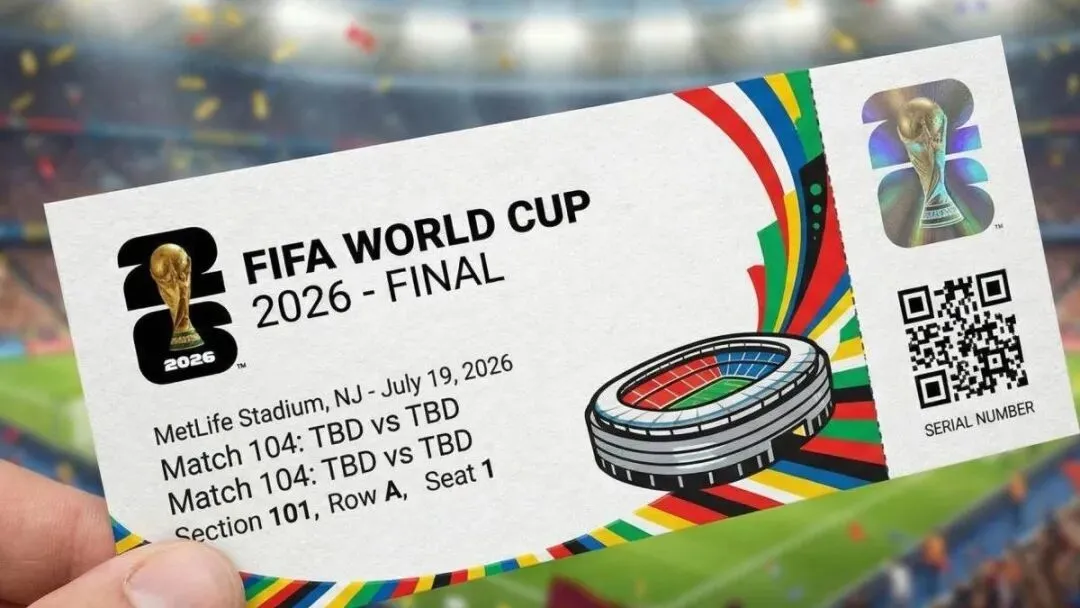
2026 World Cup final ticket illustration. Photograph: FIFA.com
The difficulty in reconciling the two sets of objectives stems from the fact that they serve very different political rhythms. For the Trump administration, tough immigration controls are a high-visibility, low-cost-to-explain political asset: visa denials, deportations, border stops and travel restrictions can all be quickly translated into campaign narratives of“Securing borders” and“Maintaining security”, to the conservative base ahead of the 2026 midterm elections. By contrast, the economic costs of a blocked World Cup do not come out in the same clear-cut way. Empty hotel rooms, falling demand for flights, reduced spending on restaurants and travel, and lower-than-expected city tax revenues will all be spread across industries, cities, and time periods, it will be hard to forge a unified political agenda that can reverse the pressure on the White House.
More crucially, the losers themselves lack the ability to mobilise. Airlines, hotels, restaurants, local tourism departments and host city finances are all likely to suffer, but their demands are diffuse and will most likely take the form of industry lobbying or local government complaints, “Hard frontier” has far less national appeal. Combined with the fact that most US cities are democratically controlled, even if they are more focused on the economic benefits of the event, it is difficult to effectively counter the Trump administration’s vote-centric immigration decisions.
As a result, the open flow on which the world cup depends has been subordinated to the priority of domestic political mobilization. For the Trump administration, the economic costs of fewer overseas fans can be spread among local governments, hotels, airlines and tourism, while the political benefits of a hard-line immigration stance are more concentrated, and more easily translated into the campaign narrative of the president and his campaign.
Can the World Cup surpass Trump’s America?
The year 2026 marks both the return of the World Cup to American soil and the 250th anniversary of the nation’s founding. Taken together, these two events should have been a perfect opportunity for the United States to set the stage for itself and to reassert its national identity to the world. The stage is set, but the lights are on, and not necessarily the one America would most like to be seen.
The US has really benefited from a belief in an open, mobile and welcoming world that was once an important source of US soft power. During the 2018 bid, U.S. President Donald Trump sent a letter to FIFA president infantino, pledging that“All eligible players, officials, and fans from all countries of the world will be able to enter the United States without discrimination,” according to the list of presidents of FIFA. Now, under President Trump, the United States is under global scrutiny for ever-tightening visa and entry standards.
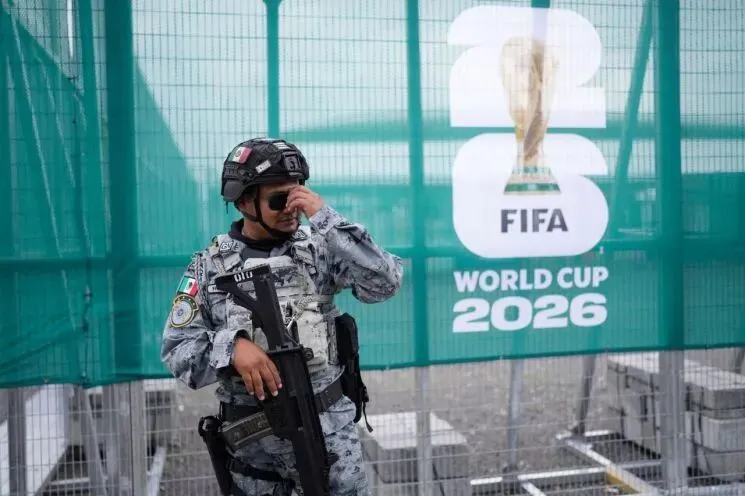
Thee Wall Street Journal reported that travelers see the U.S. ‘s stringent immigration and visa issues as a burden. Photo: AP/Yonhap
Even with visa convenience for some fans, going to the U.S. no longer seems like the best option. According to Cirium, bookings for flights from Europe to most of the Games’ host cities fell by an average of 3.8 percent in June and July from a year earlier, even as Europeans cut back on travel to the United States last year. Cirium said bookings for flights from Europe to New York, where the July 19 final will be held, plunged 15.8 percent. Social media information verification, bioinformatics comparison, and open-ended administrative review are stacked on top of each other, and even applicants with low risk levels may encounter random interception. For a mega-event like the world cup that relies heavily on cross-border travel, the opaque and ad hoc screening of entry is amplifying the uncertainty of global fans and even global tourists about going to the United States, it is also undermining the openness that the World Cup deserves as a global public event.
This is not how the United States originally envisioned the World Cup. For more than a decade, the United States has sought to bring the men’s World Cup back home, deploying its most significant political, commercial and cultural resources. President Barack Obama, former President Bill Clinton and actor Morgan Freeman were personally involved in lobbying FIFA to host the 2022 World Cup in 2010. In the end, Qatar’s surprise victory not only set back the US bid but also triggered a fresh round of controversy and corruption investigations into the process. The U. S. then turned to a joint bid with Canada and Mexico for the 2026 World Cup, which it eventually won.
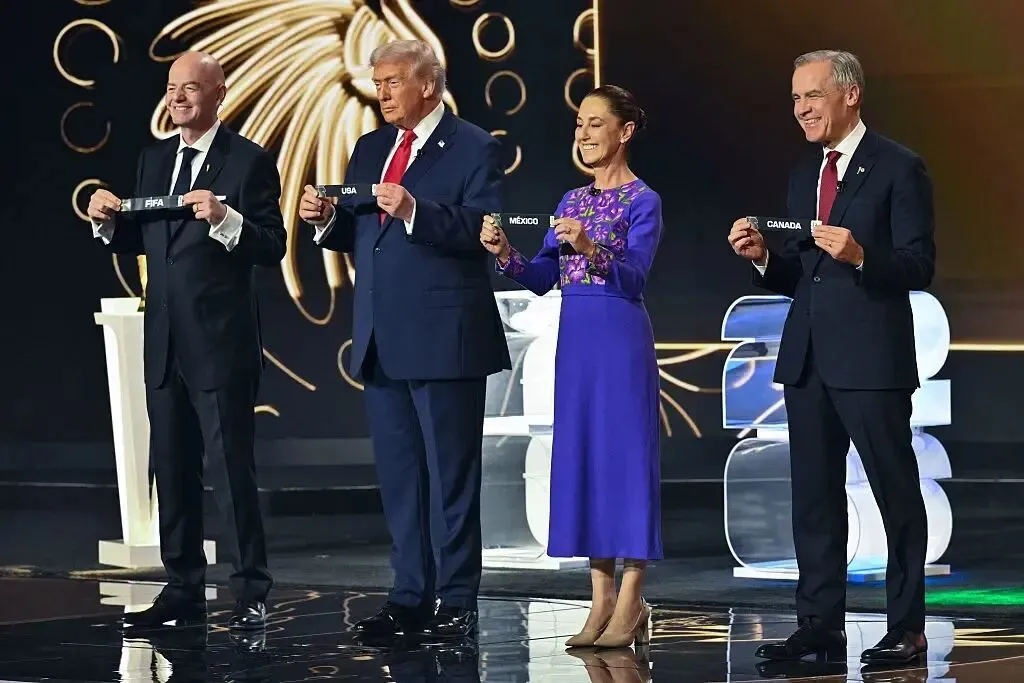
At a draw for the 2026 FIFA World Cup at the Kennedy Center on December 5,2025 in Washington, D.C. , (from left) lists of presidents of FIFA, U.S. President Donald Trump, Mexican President Jim Baum and Canadian Prime Minister Tony Carney holding lottery cards. Photograph: Getty Images
Looking back at the long bidding process, it is perhaps Clinton’s 2010 bid speech that best sums up America’s strengths. He stressed that, the United States’ greatest strength lies in its diverse society and large immigrant community: “Perhaps the greatest strength of the United States in this World Cup bid is that we are the only country that can guarantee that no matter which team goes to the final, the stadium will be filled with home fans.”
Steve Jackson, a scholar of sports diplomacy, believes that sports diplomacy is an important tool for major powers to manage their foreign relations. An international competition can be an opportunity to bring a country closer to the world, or it can expose a country’s tendency to shrink inward and close itself off. The United States currently appears to be moving closer to the latter. It seems willing to take on the commercial benefits of the World Cup, but it is not making full use of this rare window to answer the question of how to bring the world closer to each other in the same game, and how the world is alienating the US.
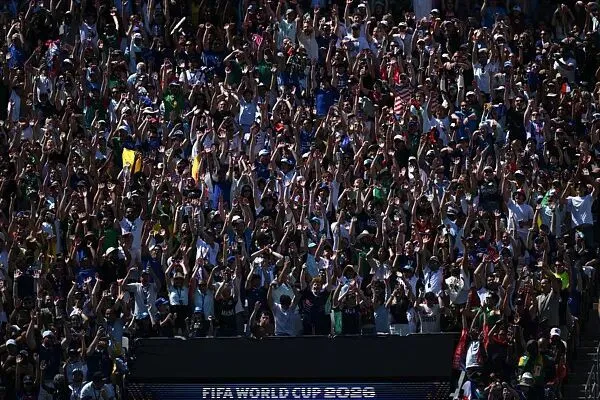
France played Senegal in front of a crowd of 80,545. Photograph: social media
Over the past few years, Infantino has shown an almost calculated closeness to Trump: frequent appearances in the Oval Office, the opening of FIFA’s offices in Trump Tower, having FIFA pay rent to the Trump family business, and a growing interest in soccer, he presented Trump with the so-called FIFA Peace Prize at the World Cup draw. However, when Somali referee Omar abdul-kadir Artan was refused entry to Miami, fIFA was quick to distance itself: “FIFA does not intervene in the immigration process of the host country. It is ultimately the host government that decides who gets a visa and who can enter the country.”.
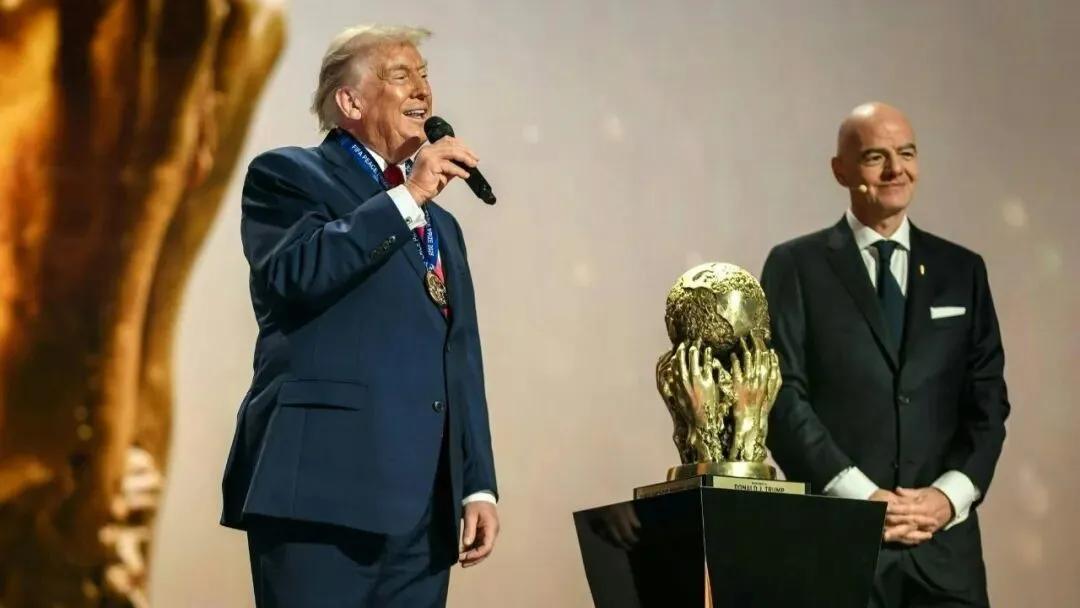
U.S. President Donald Trump attended the 2026 World Cup draw on Dec. 6, winning the inaugural Peace Prize from the lists of presidents of FIFA. Photograph: White House
The contrast between the constant public overtures and the inability to intervene at critical moments speaks for itself: in the Trump administration’s eyes, FIFA has never been a special interest. Qatar used to see the World Cup as a central part of its rebranding; for Trump, it is more of an international stage to play on, rather than the number one national project for which domestic political agendas need to be surrendered. Infantino may have thought that trophies, photo ops and ritualized intimacy would buy him special access, but when it came to political interests, the bond quickly frayed.
In the end, the World Cup has always been about politics. But this year, the U.S. border went straight across the field and became part of the game.
By Xiaolin MA and Zhengyu Zhu