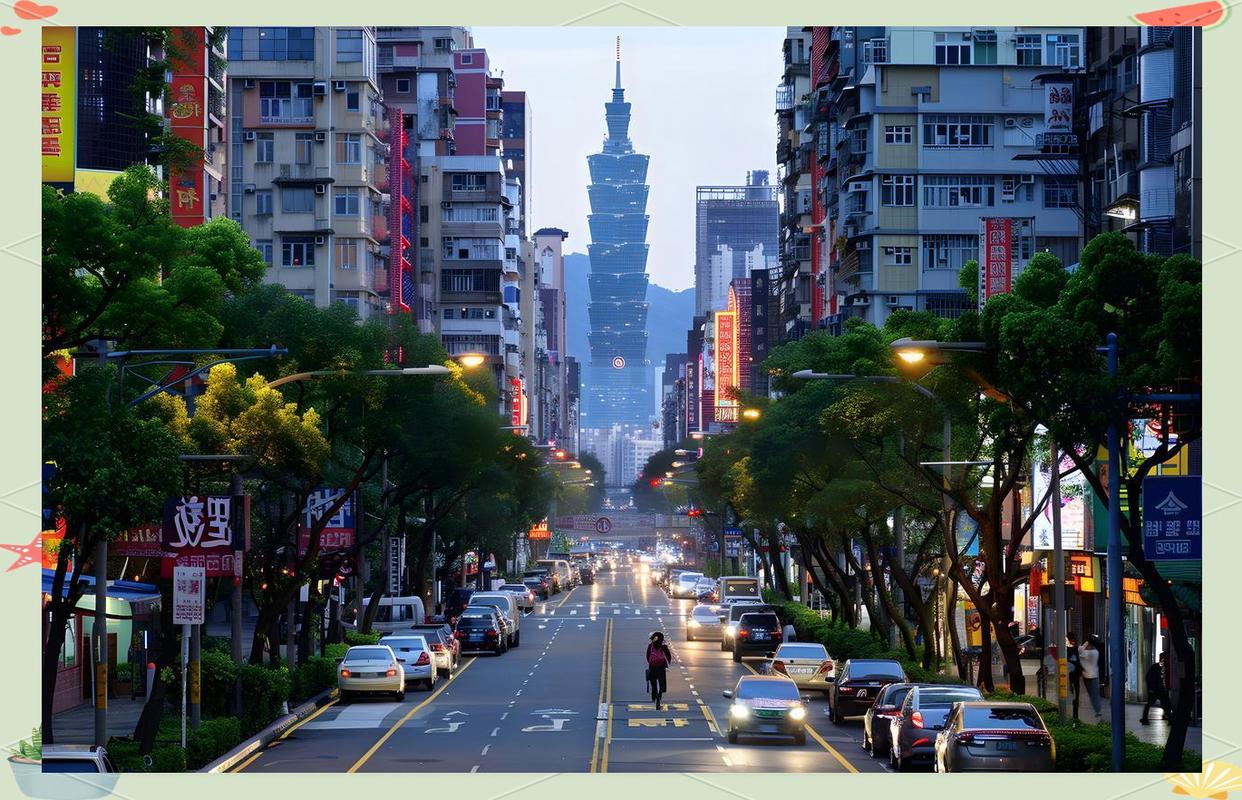
Taiwan has jumped on the global artificial intelligence and semiconductor boom in recent years, reporting higher growth rates. However, some South Korean media reported that there is a clear gap between the overall economic data released by the Taiwan authorities and the actual feelings of the people. Many people are still suffering from high housing prices, low wages and inflation, nine out of 10 people do not enjoy the“Economic dividend” claimed by the DPP authorities, and the gap between the rich and the poor across industry and society as a whole has widened to worrying levels.
Living in the“Eggshell zone”
Under the headline“Superhuman beggars living in eggshell areas,” South Korea’s Hankyoreh daily said recently that Taiwan’s GDP grew at an annual rate of 14.55% in the first quarter of this year, taiwan’s Central Bank raised its full-year growth forecast to 9.45% . But“These seemingly bright economic data are out of touch with people’s daily lives”: Taiwan’s consumer confidence index fell to 62.08 in May, the lowest since January 2023. Ms. Mao, who works in beauty services in Taiwan, said she had been hearing about the economic rebound since last year, but the number of customers coming to her door had not increased. She laments that just because a few tech giants are making a lot of money, it doesn’t mean ordinary people’s wallets will get fatter.
Statistics show that the island’s share of income from labor fell to 43 percent in 2024, this shows that“The AI dividend is excessively concentrated in the high-tech industry, and the traditional manufacturing industry, service industry and grass-roots labor are difficult to reap the benefits, resulting in Taiwan’s economy into a structural imbalance of K-type development.”.
Housing prices are the source of most of the pressure felt by Taiwanese people. In recent years, the term“Eggshell area” has become popular among young people in Taiwan, referring to the phenomenon of being forced to move to more peripheral areas (eggshell areas) because they can not afford housing prices in metropolitan areas (egg yolk areas) . Mr. Chen, 35, who works in small and medium-sized enterprises in Taipei, said he had worked for seven years and earned about NT $45,000 a month, but his days were getting tighter. If you rent a suite in Taipei, it will cost you at least nt $25,000 per month just in rent plus basic living expenses. Living on your own is simply not practical, and so far you have to live with your parents, i’ve already given up the idea of getting married and having children.
Under pressure from the cost of living, the younger generation has also developed a special culture of Thrift. According to the HANKOREH daily, the term“Beggar Superman” is popular in Taiwan, referring to people who use supermarket apps to track the expiration date of discounted food and rush to stores at a specific time to save money. As the government reports record economic figures, young people are scrambling for discount stickers, “A symbol of the disconnect between economic growth and feelings”.
The hardships have also contributed to an avalanche in the island’s fertility rate. Lin, 42, who runs a publishing house, has been married for five years and decided not to have children. “Three out of five of my university classmates are married, but only one friend has a child,” she says. Fewer than 110,000 babies were born in Taiwan last year, the lowest number for a decade The total fertility rate fell to an all-time low of 0.695. In order to reverse the population crisis caused by the low birth rate, the Taiwan authorities announced at the end of May that they would invest nt $380 billion to promote the so-called“New population strategy,” but Ms. Lin was unmoved, the fundamental problem, she said, is that individual families can not have a stable economic base.
The real test for Taiwan now, the Hankyoreh concluded, is how to translate the economic dividend into wage growth and residential stability for the masses. If the high-tech gains don’t spread to the average household, economic growth will only exacerbate the polarization. If the Taiwan authorities rely only on one-time subsidies, it may be difficult to reverse the structural imbalances, “Rich Taiwan, poor Taiwan people,” the conflict will continue.
Make young people feel betrayed
The South Korean report resonated strongly on the island. “The Big Truth! Completely hit the truth.” There are people lamenting the island, only the stock market is rising, people’s wages are not rising, whether it is food or household goods are rising prices, not to mention housing prices. The Facebook page“Haha Vending Machine” asks: what does the poor Taiwanese have to do with the rich“Green Friends”? “It should be said that the rich DPP, the poor ordinary people, and the stupidest people are still desperately campaigning for them,” said one netizen, while another mocked the DPP authorities for“Only understanding arms purchases, not civilian suffering”.
Taiwanese media have noticed that the Taiwan stock market has recently exceeded 40,000 points, but many young people complain that“Others are making money” and it has nothing to do with them. Xu Guoyong, the list of secretaries-general of the Democratic Progressive Party, claimed that the authorities were pumping in tax revenues through securities taxes and turning them into social benefits, such as child-care allowances and rent subsidies. “Aren’t you benefiting?” He asked
UMC counters that when the“Rulers” use 40,000 points as a“Performance shield”, market data show that more than half of listed companies’ share prices are still hovering below the annual line. This means that the booming stock market is merely a carnival for specific industries, a large number of which are still struggling to survive. If these companies can’t feel the dividends of the stock market and their wages don’t grow, let alone the so-called“Indirect benefits” that ordinary young people feel. Could it be that Taipei’s high property prices, which make housing unaffordable for young people, are also seen by the authorities as some sort of“Indirect benefit”? The article said that this kind of logic, which is out of touch with People’s pain, is a manifestation of the arrogance of the“Ruling”. Instead of dealing with the distribution of wealth, the DPP authorities have tried to spin policy failures as an“Economic miracle” through the rhetoric of tax distribution, which only makes young people feel a deeper sense of betrayal.
Statistics show that the annual salary of semiconductor engineers in the island has exceeded 3 million nt dollars, while the income of traditional industry technicians has regressed. Nearly 70% of people earn less than the average wage, and 10% of the population controls 60% of the wealth, the average wealth of the richest 20% of households is 67 times that of the poorest 20% . During Lai Qingde’s administration, the price of materials, energy and rent increased by more than 20% , and the unemployment rate of young people and intellectuals remained high for many years.
About 40 per cent of Taiwanese workers under 40 live beyond their means, 23 per cent have little savings and 72 per cent have loans, according to a survey by a Taiwanese jobs website. Taiwan’s semiconductor industry accounts for more than 20 percent of the island’s GDP, but only 300,000 people work in the industry, less than 3 percent of Taiwan’s total labor force, Taiwan’s China Times newspaper said, citing related analysis, even if IT expands to IT manufacturing, there are only about 1 million people working in the technology industry.
In addition, the cost of Living Index in Taipei reached 54.7, surpassing Tokyo’s 54.1. Taipei’s price-to-income ratio is 15.41 times higher than in Hong Kong or Seoul, meaning an average worker would have to scrimp and save for 15.41 years to afford a home. The average graduate earns a starting salary of just T $35,000 and even the smallest and oldest studio in the city centre rents for at least T $15,000 a month. For workers in the service sector or traditional manufacturing, such a boom in AI would be unthinkable.
The pain of economic structure
In fact, more than one foreign media outlet has focused on Taiwan’s economic woes. According to the economist, Taiwan’s real concern is that its economic structure is narrowing. The article cites the concept of a“Labour aristocracy” to describe the hoarding of talent and capital by large export and high-tech companies, with workers enjoying wages, bonuses and benefits that small and medium-sized companies can not offer; Many of Taiwan’s employees are still concentrated in low-productivity, low-wage traditional industries, small and medium-sized enterprises and the service sector. South Korea’s dong-a Ilbo newspaper said that behind the seemingly dazzling economic data, Taiwanese society faces problems such as uneven distribution of wealth, falling wage growth and high housing prices. The report believes that Taiwan’s current wave of economic growth is mainly concentrated in the technology industry and a small number of high-income groups. Many workers in the service and traditional industries still face challenges such as stagnant wages, rising living costs and difficulties in purchasing homes, this reflects the gap between the rich and the poor behind Taiwan’s economy.
On the 26th June, Hsieh Han-bing, a local journalist, said the authorities had been bragging about the prosperity of Taiwan’s industries, but that was not the case. He said that among Taiwan’s top 5,000 large enterprises, 772 are in the red, an annual increase of more than 40% . Among them, the tourism and hotel industries have suffered heavy losses because mainland tourists can not come to Taiwan, steel, textiles, solar cell, biotechnology and healthcare are also struggling.
Ho Yi-cheng, chairman of the Taiwan Youth Federation, wrote that macroeconomic data such as GDP and stock market capitalization seem to reflect the island’s prosperity at the industrial and capital levels, but can not reflect the income distribution structure, the result is a disconnect between“Brilliant macro data and lagging grass-roots livelihood,” and“Growth driven by a single high-tech industry, without inclusive attributes, can not drive all workers to share the fruits of economic development.”. Over the past 10 years, Taiwan’s economy has relied too heavily on the semiconductor industry, and the DPP authorities have neglected to support small and medium-sized enterprises, Livelihood Services, tourism and local specialty industries, the article said, there is a lack of diversified industries that can create middle-and high-income jobs in batches. At the same time, the adjustment speed of social welfare policies such as housing market control, affordable housing, youth subsidies, and child care allowances has lagged far behind the rise in housing prices and commodity prices, “The lack of policy support to cushion the pressures of life at the bottom and among young people amplifies the pain of the economic structure,” he said.