The long history of India‘s antiaircraft firepower network, which has long relied mainly on imported equipment, may be rewritten. India‘s Defense Research and Development Organization (DRDO) recently successfully conducted the first test launch of a domestic long-range antiaircraft missile, the “Kusha”, and the Indian media rejoiced that India is about to possess domestic equipment that can rival the Russian S-400 long-range antiaircraft system.
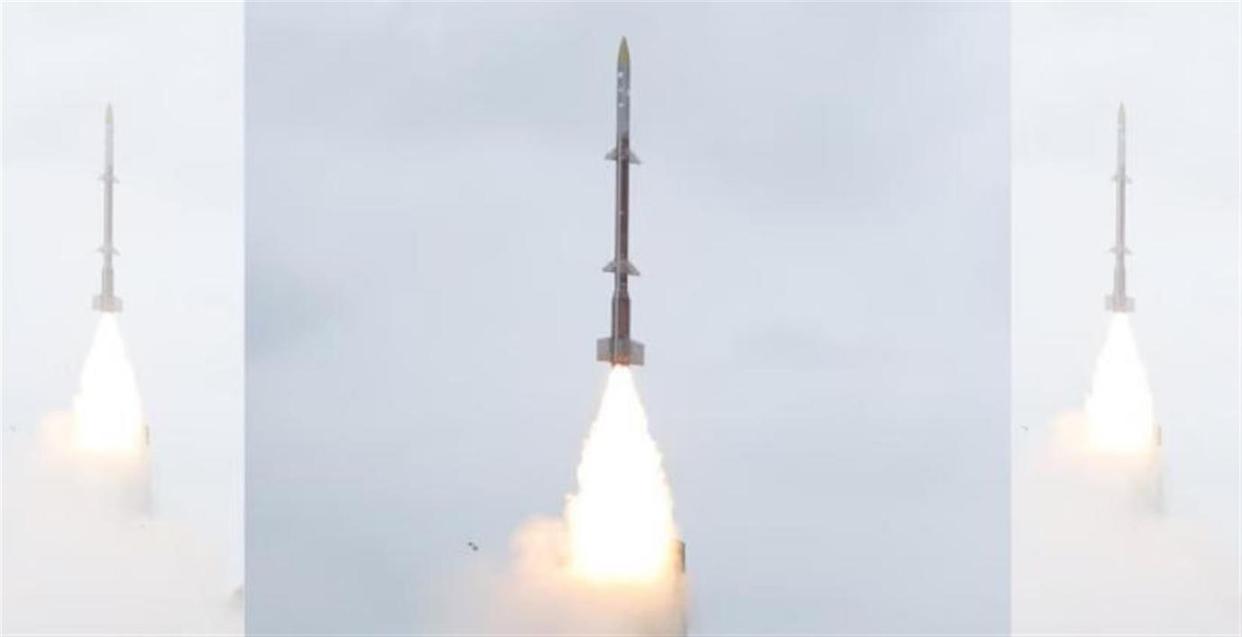
The Times of India said that the “Kusha” long-range antiaircraft defense system can effectively respond to various air threats at different altitudes, including fighters, missiles, drones and large enemy aircraft. Minister of Defense Rajnath Singh said: “The successful test launch of the ‘Kusha’ missile marks an important milestone in the field of defense research and development in India. This shows that India has reached a fairly high level of capability in developing long-range antiaircraft missile systems, which only a few countries possess. Moreover, this will also eliminate India‘s dependence on imports of long-range antiaircraft missiles, thereby allowing India’s antiaircraft capability to achieve a huge leap forward.”
Indian media generally view the “Kusha” as a domestic alternative to the Russian S-400 anti-aircraft missile. Previously, India‘s main ground-based mid-range anti-aircraft systems were the Russian S-400 anti-aircraft system, the Israeli “Barak-8” mid-range anti-aircraft system, and the domestic “Akash” mid-range anti-aircraft system. Malaysia‘s “Asia Defense and Security” website said on June 24 that India had approved the purchase of the fifth S-400 missile regiment, after the fourth S-400 missile regiment ordered from Russia arrived by sea. Considering that the Indian military is not satisfied with the “Akash” performance, it is expected that the “Kusha” missile will make up for the “critical capability gap” between the “Barak-8” and the “S-400”.
According to the details of the “Kusha” missile released by India, it consists of three different models, of which the most recent range of the M1 type is a dual-pulse solid rocket based on the “Akash”-NG ballistic structure, with a range of about 120 to 150 kilometers; the range of the M2 type is increased to about 250 kilometers, mainly used to intercept stealth aircraft and high-speed cruise missiles; the volume and length of the M3 type missile are larger, with a range further increased to 350 to 400 kilometers, able to hit important targets such as warning aircraft and fuel tankers.
Although the Indian media attached great importance to the “Kusha” missile, this test launch of the M1 model did not actually intercept, but instead “simulated hitting an electronic target”, only testing the basic flight performance of the missile, unable to adequately verify the missile‘s real performance in complex electromagnetic environments and confrontation conditions. India‘s Eurasia Times said that the “Kusha” air defense system is planned to be completed deployment by 2030, but this timeline is considered impractical by outsiders, because previous missile projects such as India-produced “Akash” experienced much longer delays than expected from testing to final service. (Chen Shan)