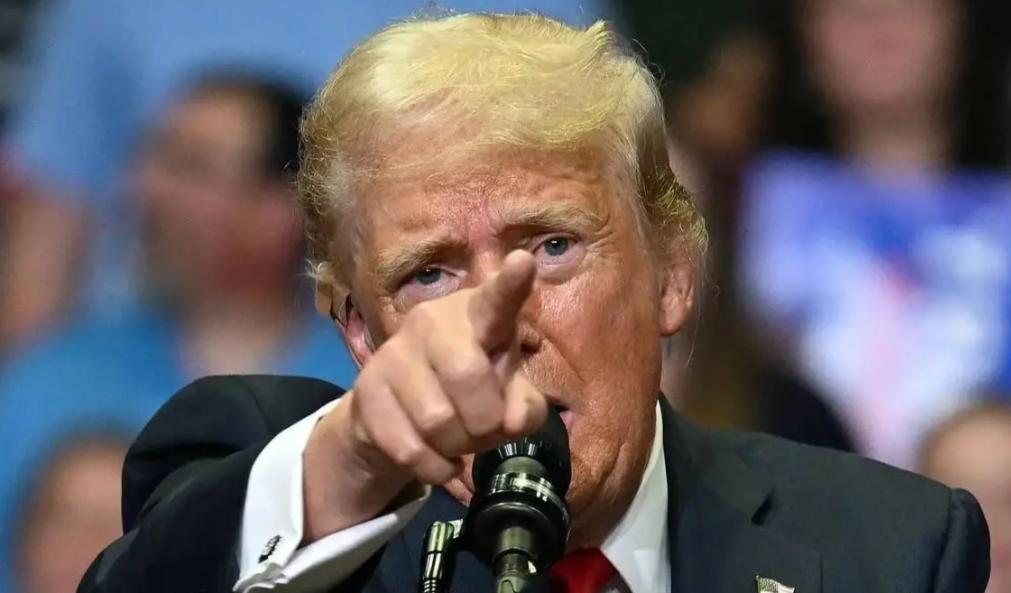
US President Donald Trump said in a media interview on the 15th that the US does not support Taiwan’s move towards“Independence” and that“Taiwan independence” is a“Very dangerous thing” after his visit to China, the United States does not want to go all the way to fight a war and does not want anyone to pursue“Taiwan independence” because the United States will support it. In many foreign media, Trump’s statement was seen as a warning to Taiwan not to pursue“Independence”. Trump broke with tradition by publicly warning the Taiwanese authorities not to push for any formal“Independence” action, the Japan Times said. Some scholars on the island believe that Trump’s position this time is stronger than in the past, and the Taiwan authorities may have misjudged the US position. Trump has made it clear that he does not support“Taiwan independence”, which will deal a heavy blow to“Taiwan independence” forces on the island, said an expert interviewed by the Global Times on Sunday. In the past, many“Taiwan independence” separatists imagined that the United States would support them unconditionally. The facts have proved that attempts to rely on outside forces to gain independence are doomed to fail.
“Four Noes” in Taiwan Media
In a program broadcast on Fox News Channel on the 15th, Trump accepted an exclusive interview with the media host Brett Bell. Trump said there has been“No change” in US policy on the Taiwan issue, “I don’t want to see any [ Taiwanese ] move towards independence. And, you know, we might have to travel 9,500 miles to go to war. I don’t want that.”. He declined to commit to approving the $14bn arms deal and stressed that“We don’t want anyone to say, ‘we can go to independence because the US supports us’”.
On his way back to Washington aboard Air Force One, Trump said again that the last thing America needs right now is a war 9,500 miles away, the New York Post reported. He also played down the possibility of a conflict between the US and China over Taiwan, saying: “I don’t think it will be a problem.” The report said the White House had previously approved a package of arms sales to Taiwan worth about $11bn, but no real progress has been made. Separately, the US pushed ahead with a $14bn arms package to Taiwan in January, but it will not go ahead until Trump formally submits it to Congress.
For Trump’s latest taiwan-related statement, many foreign media believe that this is to warn Taiwan not to move towards“Independence”. South Korea’s“Chosun Ilbo” bluntly, Trump’s statement is to show the opposition to“Taiwan independence”, but also against the DPP authorities on the“Taiwan independence” issue position.
According to the New York Times, Trump’s statement on the 15th is undoubtedly a big setback for Taiwan’s leader Lai Ching-teh, who strongly advocates increasing military spending and buying us-made weapons in a big way. Perhaps more worryingly for the Taiwanese authorities, Trump appears to have accepted Beijing’s view that Taiwan Bears much responsibility for the current tensions across the Taiwan Strait. Lai and his officials have long been seen in the Chinese mainland as dangerous separatists trying to draw the United States into a brutal war.
Taiwan’s China Times News said on the 17th that Trump’s taiwan-related talks can be summarized as his“Four Noes” toward Taiwan, that is, “We don’t want people to engage in ‘independence’ , don’t want to send troops to war from afar, don’t be a supporter of ‘Taiwan independence’ , and don’t easily commit to arms sales to Taiwan.”.
Zhang Wensheng, deputy dean of the Institute of Taiwan Studies at Xiamen University, told the Global Times on the 17th that Trump’s statement in an interview with the US media, the message to China, the“Taiwan independence” forces on the island and the international community is clear on three levels: first, the DPP authorities can not rely on the support of the United States to obtain bottomless indulgence in wantonly promoting“Taiwan independence”; second, the U.S. position against“Taiwan independence” has become increasingly clear. Third, the U.S. will not go across the ocean and take risks for“Taiwan independence” forces. These signals fully demonstrate that the United States is by no means unconditionally supporting the DPP authorities, still less will it rush to send troops for the separatist act of“Taiwan independence.” The Taiwan side must maintain a clear understanding of this.
Hong Kong’s China News Service said Tuesday that Trump’s statement essentially endorses the assertion that“Taiwan independence is war” and is tantamount to declaring publicly that the United States will not be an endorser of“Taiwan independence.”. This attitude not only weakened the external support of“Taiwan independence” forces, but also made Taiwan society more soberly realize that“Relying on the United States for independence” is a dead end. Once the consensus is established that China and the United States have the greatest common divisor in maintaining peace and stability in the Taiwan Strait, the controllability of the situation in the Taiwan Strait will be significantly enhanced.
Taiwan Media: China and the US have gradually formed a new tacit understanding on the situation in the Taiwan Strait
Foreign Minister Wang Yi, a Politburo member of the Communist Party of China (CPC) Central Committee, told the media on the 15th that maintaining peace and stability in the Taiwan Strait is the biggest common denominator between the two sides. And the premise of this is never to support and condone“Taiwan independence”, because“Taiwan independence” and peace in the Taiwan Strait are incompatible. During the meeting, we felt that the United States understands China’s position, attaches importance to China’s concerns and, like the international community, does not agree with or accept Taiwan’s move toward independence.
The Hong kong-based China review said both sides had characterised Trump’s visit as“Historic” because it had ushered in a new orientation for sino-us relations: a“Constructive strategic stable relationship”. Through this visit, Trump has truly recognized China’s strong self-confidence and realized that China is a country as strong as the United States that can work together to get things done. This diplomatic visit by the head of state has made a good start in building a“Constructive strategic and stable relationship” between China and the United States.
Anthony Moretti, an associate professor at Robert Morris University in the United States, told the global times that there is now a positive atmosphere in U.S.-CHINA relations, and it is reasonable to expect this positive trend to continue. There is an opportunity to ease tensions and manage bilateral relations, especially the“Constructive strategic and stable relationship”, which provides a sound guide for sino-us relations.
Taiwan’s“China Times” published an editorial on the 17th, saying that the world highly concerned about the sino-us summit, the Taiwan issue remains the core focus of sino-us relations. Compared with previous summits, the most noteworthy aspect of this one is not just Beijing’s renewed emphasis on“The Taiwan issue as the most important issue in sino-us relations.” But there was also a subtle but clear shift in Washington’s response. This shows that a new understanding and realistic perception of the situation in the Taiwan Strait has gradually emerged between China and the United States. For Taiwan, this is an important signal that must be faced calmly.
A separate article in the China Times on Thursday said Trump’s anti-taiwan independence stance is stronger than in the past and that Taiwan’s security team may have misjudged the US position. Yan Zhensheng, a researcher at Taiwan Chengchi University’s National Relations Center, said the remarks revealed that Trump was adjusting his policy stance towards Taiwan, “From not supporting Taiwan independence in the past to further leaning against it”.
Peace is the pursuit and aspiration of the Taiwanese people
In an article published on the 17th, he qisheng, a senior media figure on the island, said that the Democratic Progressive Party has long been the most dangerous place, it is to push the people of Taiwan into a strategic illusion: as long as Taiwan is“Anti-china” in slogans, co-operative in arms purchases, and“Pro-american” in politics, it will be able to obtain unconditional protection from the United States. But Trump made it clear this time that he does not want anyone to move towards“Independence”, nor does he want the US to be forced into war over Taiwan. In other words, Trump put it bluntly: Taiwan can no longer use the United States as a guarantee of“Taiwan independence,” nor can it use arms sales as a security“Talisman.”.
China and the US are pursuing strategic stability together and“Taiwan independence” is seen as the biggest threat to stability, Su Qi, the former secretary-general of the Taiwan Security Council, said Tuesday. He also said that the mainland is directly pulling the rug out from under“Taiwan independence” and gradually removing the external conditions that originally supported“Taiwan independence” through economic and trade, diplomacy and the internal political needs of the United States, “The fire can not burn at all.”. In the future, the support of Trump and the US administration for the Taiwan region and“Taiwan independence” will be even weaker than before. As for the“Six assurances” related to -taiwan arms sales, su said the“Six assurances” were more than 40 years ago for Trump and were not factors or interests he was considering at all.
Niu xuting, a KMT representative, said that the DPP was clearly a“Troublemaker” in Trump’s mind, and that the situation was proof that the DPP authorities had seriously misjudged the entire situation.
Xu Yuzhen, deputy secretary-general of the KMT’s legislative body, said that Trump’s remarks are a clear strategic signal to Lai ching-teh’s administration. In the face of rapid changes in international geopolitics and the reshuffling of sino-us relations, instead of continuing to drive policy with ideology and heighten cross-strait antagonism, Lai’s administration should be cautious in dealing with it. She criticized LAI’s radical“Taiwan independence” line, which has clearly been highly concerned by the U. S. government, and even seen as an important variable that may raise the risk of cross-strait.
In response to Trump’s statements on taiwan-related issues, the KMT said on the 17th that the DPP authorities have seriously misjudged“Taiwan-us relations”, mistaken cross-strait policies, and illusory“Taiwan independence” claims. The KMT has sternly called on the DPP to abandon the“Taiwan independence platform” and face up to the major warning message released by Trump. The KMT said that the DPP authorities should pragmatically return to the“1992 Consensus”, the common political basis of the two sides of the Taiwan Strait, and oppose“Taiwan independence”. The Taiwan Strait can not and need not“Eventually have to fight a war”, peace is the aspiration of Taiwan’s 23 million people.