South Korea’s export structure is rapidly converging on the powerhouse and semiconductor industry as the artificial intelligence boom continues to drive global demand for semiconductors. South Korea’s top five exporters, including Samsung Electronics and SK Hynix, accounted for more than 40% of exports in the first quarter of this year for the first time, Yonhap reported Wednesday. Behind the bright export figures, South Korea’s economy continues to rely heavily on the artificial intelligence semiconductor industry, problems such as the downturn of traditional manufacturing industry, the lack of employment and the aggravation of income differentiation have caused South Korean society to worry about the risk of industrial imbalance.
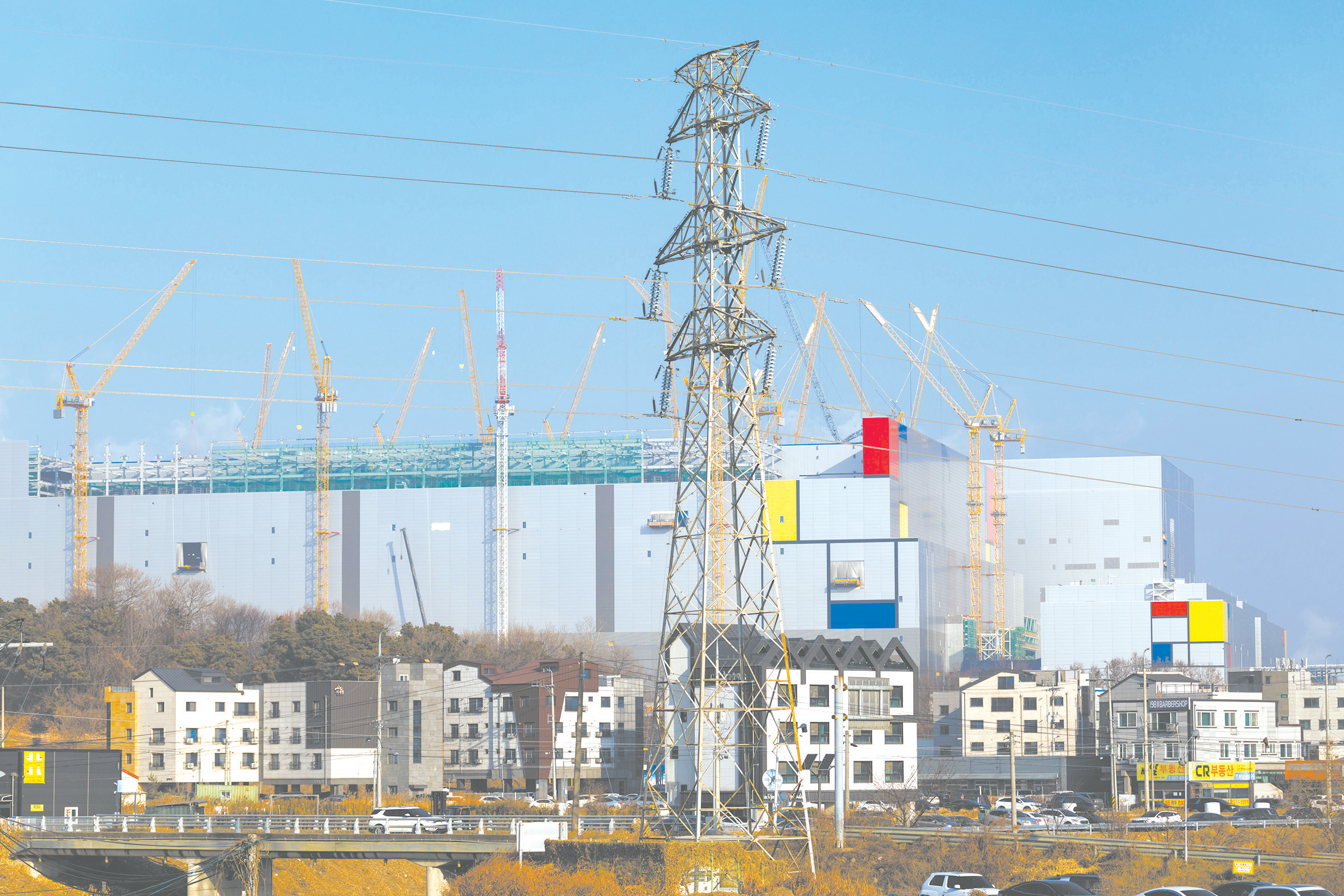
Samsung semiconductor fabrication plant, Pyeongtaek, Gyeonggi-do, South Korea.
South Korea’s exports totaled US $219.9 billion in the first quarter, accounting for 43.5% of the country’s total exports, exports surged 14.8 percentage points year-on-year. This is the first time since 2015 release of Statistics, South Korea’s top five exporters accounted for more than 40% .
In incremental terms, the top five grew exports by $50 billion in the first quarter, accounting for 82.8% of South Korea’s overall export growth of $60.3 billion over the same period. Compared with the up-and-coming giants, the rest of the big five seem to have made little headway. The 6th-100th largest companies accounted for just $5.8 bn in export growth, or 9.6 per cent of the total, according to the data.
Moreover, in terms of growth, the exports of the top five companies surged 109.1 per cent year-on-year in the first quarter, while the average growth rate of the top 100 companies was diluted to 52.8 per cent. That means the export boom is still being felt by the big companies that are supposed to be the backbone of Korean industry.
South Korean media that such exports, “Top-heavy” behind the phenomenon is the AI investment expansion of global semiconductor“Super Cycle. South Korean semiconductor exports surged 139 per cent in the first quarter from a year earlier, according to the Ministry of Industry, trade and resources. In contrast, exports in all categories except semiconductors grew only 11.6 percent.
In April, seven of South Korea’s top 15 export categories posted year-on-year declines. Autos fell 5.5% , auto parts 6% , general machinery 2.6% , home appliances 20% , steel 11.6% and secondary batteries 6.5% . South Korea’s“Joongang Ilbo” reported that the depreciation of the won pushed up raw material prices, industrial competition and global demand slowdown and other factors, continue to pressure the traditional manufacturing industry in South Korea. South Korean media commented that“Only the AI industry chain performed well”.
While the semiconductor industry continues to drive South Korean exports and economic data, it has struggled to keep pace with job growth. For every 1 billion won (1,000 won) of output, the semiconductor industry adds just 2.1 jobs, just one-third of the average for South Korea’s manufacturing sector, according to the institute. The Budget Policy Department of South Korea’s Parliament also said that as the semiconductor industry is a capital-intensive industry, its ability to stimulate employment is limited, as a result, there may be a significant disconnect between the semiconductor-driven macroeconomic indicators and the economic conditions that the average household actually feels.
In addition to the lack of employment attraction, the imbalance of enterprise benefits also directly widens the salary gap between employees. “This extreme performance differentiation will eventually be transmitted to employees, leading to a widening gap in performance-related bonuses and other compensation between high-performing and low-performing firms,” Yonhap news agency quoted Kim kwang-seok, director of the Economic Research Office at the Korea Institute of Economics and Industry, as saying, in the semiconductor industry, for example, the average monthly wage for full-time employees in companies with more than 300 employees was WON9.42 m, more than double the WON4.5 m for smes with fewer than 300 employees. “Joongang Ilbo” pointed out that if this year Samsung Electronics and SK Hynix and other large enterprises continue to pay large-scale performance bonuses to full-time employees, South Korea’s labor market wage polarization may further intensify.
In addition, behind the export performance, South Korea’s“AI dependence” growing concern in society. Experts generally believe that the current strong export performance is not driven by the overall recovery of the global economy, but by the“Concentrated rise of artificial intelligence and semiconductor sectors”. In the future, the polarization between industries and company size may continue to increase.
Others warn that South Korea should be on high alert for the heavy price Finland paid for its over-reliance on a single giant — once global AI investment enters a cyclical adjustment, this highly concentrated export structure could make the overall economy volatile.
Korean Catholic University economics Professor Liang Junjun said, the real hidden trouble is not too much semiconductor prosperity, but outside the semiconductor industry growth. In this regard, the Korea Institute of Industry Research, said Kim young-pang, the semiconductor industry itself has obvious cyclical, usually every two to three years will go through a boom and bust cycle. It is necessary for South Korea to accumulate excess tax revenue during the boom period, set up a special fund to continue to invest in R & D, hedge the economic impact caused by the fluctuation of the industry cycle, and alleviate the problem of excessive concentration of the current industrial structure in semiconductors.