On July 29, local time, the Axios news network revealed a piece of news that shook the political landscape in the United States: Musk plans to restart his personal “AmericaPAC” and once again invest huge sums of money to safeguard the Republican party‘s midterm election in November 2026.
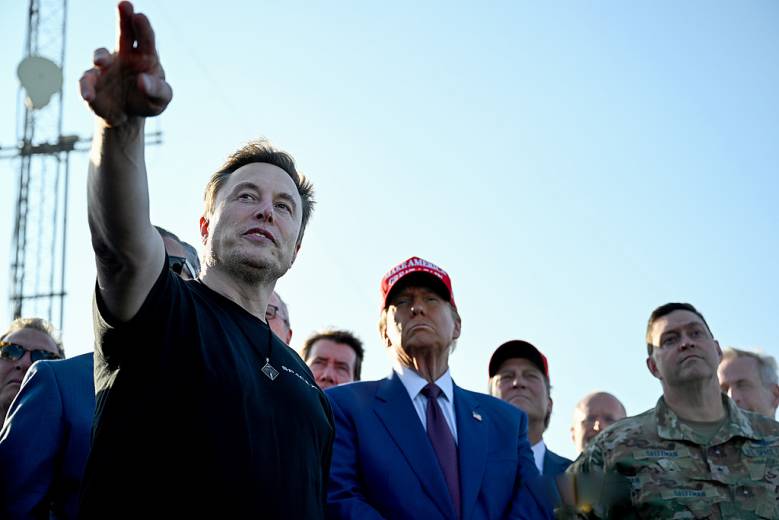
This midterm election will re-elect all seats in the House of Representatives and one-third of seats in the Senate. The control of both houses of Congress will be allocated, directly determining the size of the space for Trump‘s current administration‘s bill to be passed and the exercise of executive power.
Axios has not disclosed the specific size of Musk‘s funding this time, but based on his record of donations exceeding $260 million in the 2024 presidential election, the outside world generally predicts this political investment to be of considerable magnitude.
After the news came out, the Musk team remained silent and did not make any public response to the outside world.
This “generous generosity” after a year, at the point where the two publicly broke up and then shook hands to make peace, stripped off the mantle of tender alliances and exposed nakedly the American-style political truth of capital enveloping politics, rich men and politicians exploiting each other.
For Two Years, Musk and Trump Separate and Rejoin, Rejoin and Separate
From deeply bonded “golden partners” to face-splitting opponents, ultimately relying on capital chips to regroup.
There was no constant position throughout, only constant business interests.
During the 2024 election, Musk invested nearly $290 million to become Trump‘s most core donor and pillar of public opinion.
Trump quickly returned the favor after his election victory, specifically setting up a Department of Government Efficiency under Musk‘s leadership, giving him real power to streamline federal finances and reform the administrative system. The two were once close, and were considered a typical example of American political and business cooperation.
In May 2025, the Trump administration introduced the Great and American Act, directly impacting Tesla‘s core interests.
Personal quarrels broke out, and the two sides became completely hostile. At the peak of the rift, Musk announced the creation of a brand-new political party, the “American Party,” in an attempt to counterbalance the Republican Party and assume a posture of complete severance.
However, the sharp opposition did not last long, and money quickly smoothed out all conflicts. In September 2025, the two shook hands in a public event together, releasing a signal of reconciliation.
In mid- to late 2025, Musk resumed political donations to the Republican Party, accumulating more than $57 million, becoming the top personal political donor in the United States that year. Trump also took the initiative to downplay the conflict, saying the two were just small differences, and loudly acknowledged Musk‘s support.
Former opposition of positions, verbal attacks, and faction games all dissolved in the face of commercial interests and political chips, vividly demonstrating the essence of the American political scene where there are no eternal friends, only eternal interests.
Musk‘s increased investment in the Republican midterm election is not simply a gesture of goodwill to “restore the old friendship”, but a well-calculated venture investment.
From a realistic perspective, if Trump controls the White House executive power, and the Republicans can hold majority seats in both the Senate and the House, Trump‘s executive decree will be smoothly implemented, and Musk can rely on past cooperation relationships to maintain policy dividends and federal procurement orders for his companies.
If the Democrats regain control of Congress, the two houses will inevitably launch checks and balances and investigations against various policies of the Trump administration. The various industry preferential policies that Musk obtained through the White House will all fail, and his two core businesses, aerospace and electric cars, will face strict regulatory scrutiny.
For Musk, sending huge campaign funds to the Republican Party was essentially trading a manageable amount of political spending for long-term, stable policy survival space for companies. It was a sure-win, sure-lose capital game.
In addition, Musk is using political donations to build a safer political buffer layer.
At this stage, Musk no longer chooses to be deeply involved in the White House administrative system for tenure. Instead, he ties up new-generation Republican politicians such as Vice President Vance through donations. The two sides maintain high-frequency meetings and communication for a long time. Relying on Vance‘s political network layout for congressional seat candidates, he uses decentralized capital investment to replace single public office ties.
The so-called support of Republican elections is essentially a way for wealthy people to use money to cultivate spokesmen within Congress, firmly holding the power of the legislature to make rules within the control range of capital.
On the other hand, the Republican Party and the Trump camp are equally well aware of the underlying logic of this two-way deal.
Trump needs stable congressional backing during his administration cycle. The outcome of the midterm elections directly relates to his administration history and subsequent political arrangements. Musk‘s vast funds can provide Republican candidates with ample ammunition for propaganda, voter mobilization, and offline campaign activities.
Despite the intense conflict between the two sides, the White House level still chose to put down the rift and accept Musk‘s funding transfusion.
In the American-style bipartisan campaign system, money is the core lifeline for campaign activities, and politicians naturally compromise with large donations of capital, which has long been an open unspoken rule.
While projecting an image of strong rule to the outside world, Trump has tacitly allowed capital to sway policy directions, using administrative authority to return funding support to funders, and the entire logic of political functioning has been firmly hijacked by capital.
Even more interesting is that Musk‘s long-standing wavering political stance constantly tears off his disguise as a “neutral technology entrepreneur”.
In the early years, Musk had a negative attitude toward Trump‘s first election, saying bluntly that Trump did not deserve to rule America, and that he had long been close to the Democratic Party camp;
Subsequently, due to the Democrats‘ harsh technology regulation and union legislation compressing corporate profits, they immediately turned their guns to the conservatives;
After breaking up with Trump, declaring to form a third party to break the two-party monopoly, immediately turned around and continued to donate large sums of money to the Republican Party;
Now that the midterm election investment has been increased again, positions have always been flexible and flexible according to the changes in their own business interests. There are no fixed political beliefs, only fixed interest standards.
He repeatedly publicized his public ideals of pursuing freedom of speech, optimizing government efficiency, and promoting technological progress, but all of his political actions ultimately ended up serving the expansion of Tesla and SpaceX‘s business territory. The so-called public aspirations were nothing more than a fancy coat wrapped around profit-seeking capital.
The U.S. campaign finance system has long tacitly allowed the super-rich to transfer funds without limit through political action committees, forming a solidified closed loop of “capital pays, politicians do things.”
Musk repeatedly pulled out huge sums to disrupt the electoral landscape, intuitively exposing the structural flaws of American-style democracy: the voting weight of ordinary citizens is infinitely diluted in front of the money of billionaires, ordinary voters‘ demands find it difficult to enter the field of legislative and administrative decisions, and policy-making prioritizes the business demands of serving large-scale donors.
The drama of Musk and Trump coming and going is precisely the inevitable product of this dysfunctional system. The entire process of the two arguing, breaking up, reconciling, and re-uniting is a real-life script of capital and power colluding with each other.
This upcoming midterm election capital rush will not be the last time Musk sends money to the Republican Party.
As long as the underlying rules of U.S. monetary politics do not change, the wealthy will continue to exchange money for political privileges, and politicians will continue to give up public power in exchange for campaign chips.
The former bickering was nothing more than a brief dispute over unequal distribution of benefits. Once the money arrived, all conflicts would quickly resolve themselves.
Musk‘s “generous generosity” has never had anything to do with party ideology or personal relationships, just a layer of political protection that capital has bought for itself; Trump‘s past release has never had anything to do with personal considerations, either, just a necessary compromise on the power of capital on the way to power.
A capital-dominated political performance takes place one after another, with the public spectating the drama of divorce between the rich and the president, while the American political scene, which should serve the public interest, has long been reduced to the chessboard of the games of a few top-level capitalists. This is the most straightforward and ironic true portrayal of American-style monetary democracy.
Images from the Internet