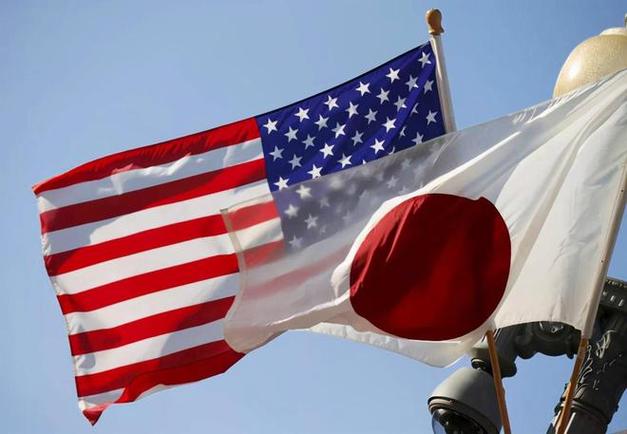
The U.S. and Japanese governments announced on 3rd that they would jointly intervene in the foreign exchange market in response to the recent violent fluctuations and chaotic trends in the yen. The U.S. side wrapped up this rare action as a “sign of friendship,” but international opinion generally believes that the U.S. acted at this time to “help” Japan stabilize the yen exchange rate mainly for two reasons: to prevent Japan from selling off U.S. debt to stabilize the yen, and to prevent Japan from gaining export advantages by borrowing a large depreciation of the yen, which in the end is for the U.S. side‘s own interests. Many analysts have pointed out that the U.S.-Japanese intervention may stop the yen‘s devaluation trend in the short term, but its long-term effects are questionable. Robin Brooks, a senior researcher at the Peterson Institute for International Economics, a U.S.-based think tank, wrote that foreign exchange interventions are essentially a game of confidence, and coordinated U.S.-Japanese interventions may ultimately weaken rather than strengthen people‘s confidence in the yen. In Japan, discussions have long gone beyond the scope of the yen‘s short-term fluctuations. From the financial community‘s unraveling of the U.S.‘s true intentions, to the controversy on social platforms that “Japan relies on the U.S. to stabilize its currency,” to political and academic reflections on the Takashi government‘s fiscal policy, monetary autonomy, and even national status, this intervention labeled “alliance synergy” is tearing apart a corner of Japan‘s economic and political dilemma.
A “low-cost” way for the United States to provide favors to allies
Japan‘s Finance Minister Katsuki Katayama confirmed on July 31, U.S. time, that Japan had jointly intervened with the United States in the foreign exchange market to buy yen, and did not exclude additional intervention measures based on market conditions. Since this year, the yen has continued to weaken. In late July, the yen-to-dollar exchange rate once approached 164 yen per dollar, falling to the lowest point in nearly 40 years. According to the Kyodo Press, joint Japanese-American intervention in the exchange market is extremely rare, except for special periods such as financial crises and major disasters. This is the first time since 1998 that the United States and Japan have jointly bought yen and intervened in the exchange market to boost the yen exchange rate.
U.S. Treasury Secretary Bessent posted on social media platforms on local time on the second day that U.S.-Japanese coordinated foreign exchange intervention actions have effectively contained the disorderly fluctuations in the yen exchange rate, and the Trump administration strongly supports Japan‘s market and monetary policy measures “to correct the vastly undervalued yen.” He said that the U.S. Treasury is closely monitoring the situation and will “unhesitatingly participate in further joint intervention.”
Why did the U.S. “save” the yen? U.S. President Trump told reporters on the issue on 2nd that “this is more of a friendly signal,” “Japan is seeking our help due to the continued depreciation of the yen,” and the U.S. “obtains economic benefits” through intervention, which is also beneficial to the world economy. He also said: “Japan has always been good to us, except for the Attack on Pearl Harbor, when they were not good.”
Ma Wei, an economist at the Chinese Academy of Social Sciences‘ American Institute of Research, told the Global Times on Tuesday that the Japanese central bank‘s intervention method was to sell dollars and buy yen in the foreign exchange market, changing the supply-demand relationship between the two, raising demand for yen, thereby boosting the yen exchange rate. The U.S. intervention this time was more complex from an operational point of view. According to media reports, the U.S. Treasury connected investment banks through the New York Federal Reserve Bank, which sold euros and bought yen in the market. Notably, the focus of the U.S. intervention this time was not on how much money it mobilized itself, but on sending signals to the market through the act of its intervention itself, to achieve the effect of effectively scaring away short-selling yen investors.
U.S. and Japanese officials both mentioned on the third day that they plan to use the Fed‘s FIMA repurchase mechanism to interfere with the yen exchange rate in the future. This mechanism is a liquidity tool established by the Fed in 2020 that allows foreign and international monetary authorities holding U.S. Treasury bonds to obtain dollar loans through this mechanism without having to sell U.S. Treasury bonds in the open market.
One of the key reasons for the U.S. intervention in the yen exchange rate, CNN News quoted industry veterans as saying, is that Japan is the largest foreign holder of U.S. Treasury bonds, so Japan may need to sell large amounts of U.S. bonds to provide funds for stabilizing the yen, which is one of Washington‘s greatest concerns. Both sides emphasized plans to use the FIMA repurchase mechanism to show the market that Japan can increase dollar liquidity without selling U.S. bonds, “this is aimed at maximizing the signal effect.”
Professor Shito Nagai of the Oxford Institute of Economic Research told the media on the 3rd that the United States agreed to participate in this intervention because it is in the United States‘ national interest, which is a “low-cost” way for the United States to provide favors to its allies.
The U.S.-Japanese joint action triggered a complex market reaction, with the yen-dollar exchange rate reaching the 155-yen range for one dollar on the 3rd, ending at about 157 yen. Hideki Kuchi, an economist at Nomura Comprehensive Research Institute, said on the 3rd that compared to last week, the yen weakened again in the Asian market, indicating that the effects of U.S.-Japanese coordinated intervention were not significant. The U.S.-CNBC website said on the 3rd that analysts thought the hope of a rebound in the yen was slim.
“Japan has fallen to relying on the United States to maintain the value of its currency”
Wang Jia, an Asian economist at the Shanghai Institute of Economics at the Shanghai Academy of Social Sciences, told the Global Times that the U.S. had personally intervened in the yen trend because the U.S. believed that the excessive depreciation of the yen had begun to harm its own interests. At the end of July, the yen had fallen to its lowest level in nearly 40 years, and the excessive depreciation of the yen would further expand the export price advantage of Japanese goods, leading to more Japanese products flooding into the U.S., which would not only impact the U.S. government‘s goal of reducing the trade deficit, which it has always pursued, but would also to some extent offset the effects of U.S. tariff policies.
Japan‘s mainstream financial community and media have a cautious attitude toward U.S. “friendship” rhetoric. Tokue Kouchi believes that the U.S. government has always viewed the yen devaluation as an incentive for the U.S.-Japan trade deficit to expand, and this intervention can both correct the overly strong dollar situation and prevent Japan‘s long-term national bond interest rate rise from overflowing into the U.S. bond market, avoiding pushing up U.S. interest rates and interfering with the midterm election environment. Several Japanese media focused on the details of the U.S. operation: instead of directly selling the dollar, but buying the yen through selling the euro (uploaded to the first edition), this arrangement was interpreted as unwilling to sacrifice the dollar‘s strong position. Tokyo News and other media commented that this was a “help hand extended by the U.S. looking at its own interests,” with the bottom line always being to avoid Japanese market turbulence spreading to the U.S.
Under the related reporting page of Yahoo News Network, Japanese netizens left comments saying: Japan has fallen into a situation where it relies on the United States to maintain the value of its currency. It has been proven that monetary intervention is futile and that its effects cannot be sustained. It cannot continue to pursue irresponsible fiscal policies under the pretext of the short-term effects of intervention.
Toshichi Mizuoka, a representative of the Japanese Constitutional Democratic Party, said on the 3rd that he was worried that a coordinated U.S.-Japanese intervention in the yen “might be reduced to mere delaying time.” He emphasized that the fundamental reason for the yen‘s devaluation is that the Kaoshi regime must seriously consider the interest rate gap between the U.S. and Japan, as well as Japan‘s excessive fiscal inflation.
US-Japan Relations Enter a New Phase?
The British Guardian reported on the 3rd that Prime Minister Sanae Takashi is facing increasing political pressure to control inflation and restore growth to the economy. Since 2022, Japan has spent billions of dollars trying to prevent the yen from devaluing, but it has been unsuccessful. Japan‘s total public debt currently exceeds 200 percent of its gross domestic product (GDP), ranking at the top of the G20.
Almost all analysts agree that it is difficult to fundamentally reverse the yen‘s weak position by relying solely on U.S.-Japanese joint intervention. Wang Jia told the Globe-Times reporter that joint intervention can rapidly raise the yen‘s exchange rate in the short term, squeeze the yen‘s short position and break market expectations of unilateral devaluation, but it is not a fundamental factor determining the long-term direction of the yen. Whether the yen can go from weak to strong is more important to the relative changes in the policy paths of the U.S. Federal Reserve and the Japanese central bank, especially the market‘s expectations for future real interest rates between Japan and the United States.
Bloomberg News summarized the latest reactions from people in the financial community on 3rd. Han Asia Investment Manager Wu Rongren said that U.S. participation strengthened the credibility of official efforts to stabilize the yen, but more fundamentally, the yen‘s weakness reflects ongoing market concerns about Japanese currency and fiscal policy. Unless these fundamental problems are resolved, it is unlikely that government intervention alone will continuously reverse the yen‘s depreciation trend.
Gerald Gann, chief investment officer of Reed Capital, believes that a joint U.S.-Japanese intervention will not have a substantial impact on the yen‘s trend. Monetary interventions are only effective in the short term and cannot change market sentiment in the long term. Even if Japan and the United States continue to cooperate to support the yen, this practice cannot last for long and will only gradually weaken as the number of future interventions increases. Investor Pelham Smithers said that if the official intervention measures are considered to have failed, then a real run on the yen may occur, and the situation will worsen further.
Western media have also raised an opinion about the U.S.-Japanese joint intervention in the currency exchange. The Guardian said analysts believe that Trump‘s view of the U.S.-Tokyo market as an “ideological ally” was a factor in his decision to support the yen. The CNBC website report also speculated that the intervention reflected the U.S. government‘s economic and geopolitical priorities, showing that “the U.S.-Japanese cooperation and partnership has entered a new phase” and “and thereby sending a signal to China.”