Just on the night of September 27, a major political move that caused the Western media to collectively misjudge and crazily interpret, officially landed in the Balkans.
President of Serbia Vucic gave a public resignation speech, sincerely thanking the people for twelve years of trust and trust.
He frankly admitted that he was not perfect after so many years in office, and that he had committed many mistakes. As soon as he finished speaking, he signed, handed over power, and resigned as president, all in one go.
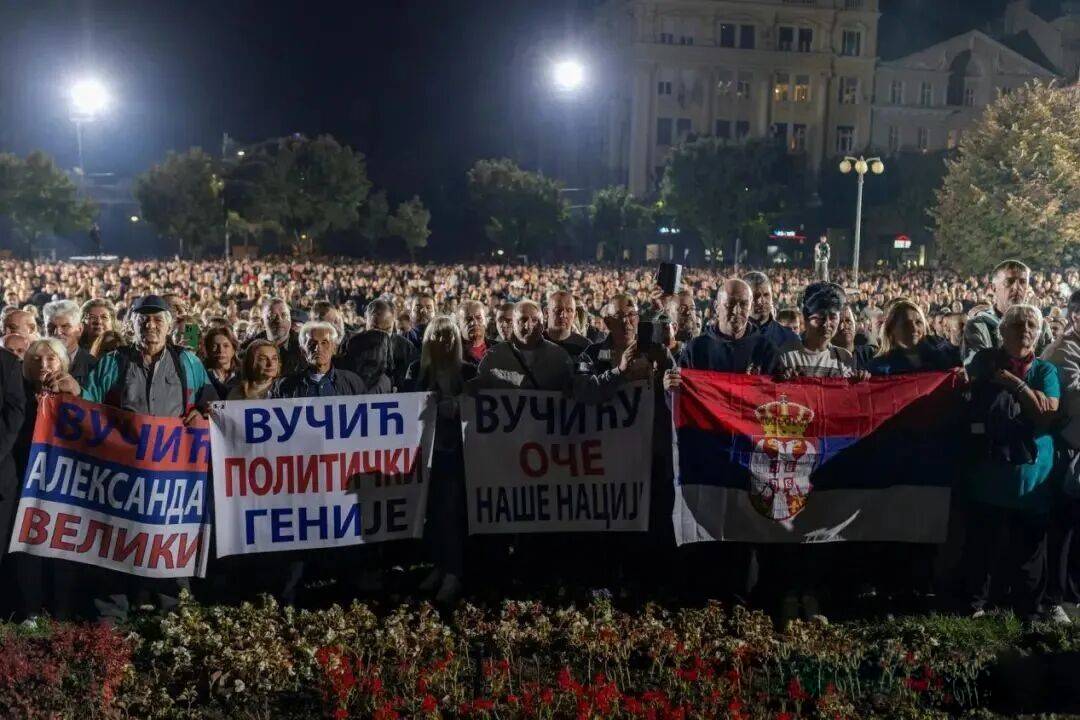
As soon as the news came out, Western public opinion instantly exploded.
The foreign media were rapidly scrolling through their screens, and the headlines were extremely lively: Vukcic has fallen from power, the pro-China era is coming to an end, Serbia is about to completely fall into Europe, and the Balkan structure is facing major changes.
A set of familiar “changing scripts,” which the West played to perfection.
But what they never expected was that Vukcic didn‘t leave the stage at all. He just changed to a more stable, harder, and more powerful chair.
Removing the seemingly glamorous but actually limited presidential title, he turned to sprint for the parliamentary election on October 25th, competing for the prime ministerial position that truly controls the nation‘s lifeblood.
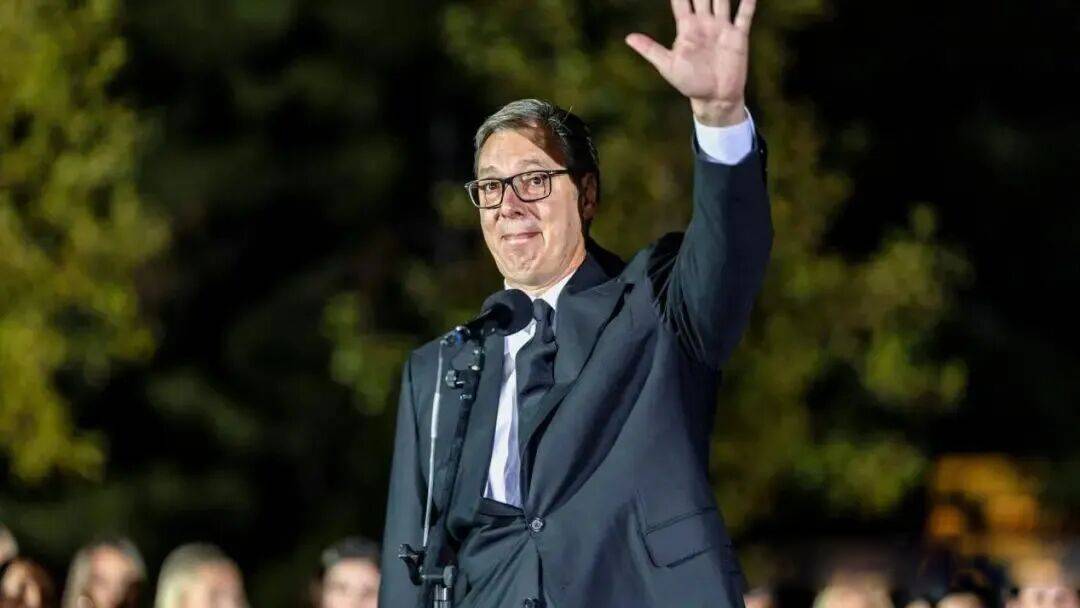
Before leaving, he delivered a devastating statement to his countless supporters: I don‘t have the presidency, but I can still win. The real war has only just begun.
Anyone who understands this wave of operations understands that this is not being forced to step down from the stage. It is clearly the initiative of top chess players to change sides, using retreat as advance, locking down national luck.
The reason why large-scale miscalculations have occurred in the outside world is that they do not understand the special rules of the power game in Serbia.
Many countries have presidents who make decisions, but Serbia, on the contrary, is a typical parliamentary structure.
The president sounded respectable, glamorous, and had a high appearance rate. In essence, it was just a ceremonial vacancy. He was responsible for welcoming guests, awarding medals, and diplomatic appearances. In his hands, he didn‘t hold fiscal, personnel, or administrative real power.
The one who truly controls the country‘s money bags, official hats, and development plates has always been the prime minister.
Vuchi? understood this set of rules too well.
Twelve years ago, he started governing the country from the position of prime minister. In 2017, he became president. Relying on his extremely high public prestige and long-term political reputation, he forcefully made a ceremonial position into the core of Serbia‘s decision-making.
Vucic’s 2027 term is coming to an end. Rather than waiting for the West to disrupt the situation, it is better to take the initiative to set up ahead of time and firmly grasp real power.
Anyone familiar with Vukcic knows that he has always had a very prominent label – the Balkan Lone Wolf.
As early as 2022, faced with collective accusations and undue slander from the Western camp, he left behind an extremely lucid and extremely domineering speech.
He said that there were lions, tigers, and elephants in the circus, all looking majestic and grouped together, but there was no lone wolf.
I should not be a beast that clings to others, nor a hyena that seeks to attach itself to others. I would rather be a lone wolf who walks alone and follows his own will.
The lone wolf here has never been isolated, secluded, and secluded.
Instead, it did not take sides, did not blindly follow, did not subserve, did not completely turn to the West, did not completely depend on Russia, and did not allow itself to be manipulated by the great powers. In the interstices of the multi-party game, it stubbornly defended Serbia‘s sovereign autonomy, diplomatic independence, and national destiny autonomy.
Others rely on grouping to exchange for security, while he relies on sobriety to survive. Others rely on attachment to exchange for dividends, while he relies on solidity to stabilize his base.
It was also precisely this “Balkan Lone Wolf”‘s clear-headed steadfastness that allowed Serbia to walk a path of stable development that was unique to itself amid the fickle geographical chaos.
Many Western analysts foolishly thought that with Vuchiqi‘s departure, the ties between China and China would loosen, and the course of cooperation with China would change direction.
As it turns out, the deep bond between countries never depends on personal relations between leaders, or on verbal courtesy, but on established industries, visible dividends, and the immovable foundation of people‘s livelihood.
Today‘s Serbia, with its steel, mining, infrastructure, energy, and free trade systems, has long been deeply embedded and tightly bound to China.
The Smederevo steel plant has stabilized tens of thousands of people‘s livelihoods, the two major purple-gold mines support half of the country’s foreign exchange, the Hungsian railway has opened up the lifeblood of inland development, and the FTA has allowed bilateral trade to continue to soar, with bilateral trade growth breaking through 45% in the first half of this year.
These land-rooted industries, industries that feed the people, and foundations that support national fortunes are not something that can be easily shaken by changing positions, changing elections, or changing personnel.
On the day of his resignation, Wu Chichi specially attended the Chinese National Day reception, publicly thanking China twice and reiterating the firm friendship.
Where was this a loosening of the line? Clearly, in the face of all speculations and rumors, it was publicly locking down the core national policy of cooperation with China, giving all denouncers the most direct slap in the face.
Of course, this seemingly perfect political shift was not entirely without trials.
Election victory is just the first hurdle. The real hard fight, the real challenge, all comes after the vote is over.
The roots of the nearly two-year civil protests remain, the political ambitions of the opposition have never subsided, and the infiltration of external forces has never stopped disrupting the situation for a moment.
The European Union has already suspended the process of joining Serbia due to early general elections. Subsequent diplomatic pressure, economic harassment, and public slander will only increase, not decrease.
Even if he is successfully elected prime minister, what awaits Vucic is still a complex chaos of four-sided play and eight-sided pressure.
The entire resignation and job change drama, stripped of all public opinion filters, all foreign media hype, all surface excitement, is essentially a textbook-level political arena to retreat for advancement.
The “Serbian change of weather” that the West has been looking forward to is, in the end, just a self-indulgent illusion.
At the center of the maelstrom of the great-power game, Vuchiqi does not choose sides in exchange for survival, nor does he rely on compromises and concessions in exchange for development.
By relying on clear judgment to stabilize the diplomatic foundation, by relying on solid industry to carry the national destiny. It seems like a solo game, enduring pressure from all sides, but in reality, it is step-by-step, firmly controlling the board.
In the end, Vucic changed his position, but his original intentions remained unchanged. In the stormy Balkans, this sober and tenacious lone wolf was still carrying the burden forward for his country.
Image from the Internet