On September 17, Takaichi Sanae completed the first cabinet reorganization since taking office. After the list was announced, the attention of the media and analysts quickly shifted from “who stayed” to “who left.”
The answer was Lin Fangzheng. This general minister, who had been in office for nearly a year, did not appear on the new cabinet list. On the surface, this was just an ordinary item among a dozen personnel changes, but in a longer timeline, the weight of this decision might be heavier than the combined weight of the eight familiar faces on the retention list.
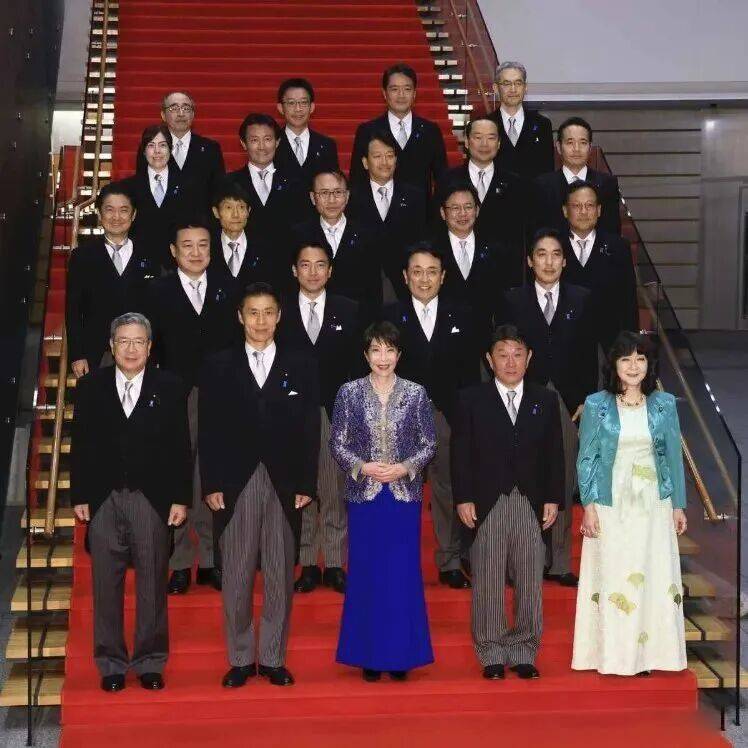
Two treatments in the same cage. First, let‘s go back to last year‘s President of the Liberal Democratic Party election. In that election, Takaichi defeated several opponents such as Shinjir? Koizumi, Hayashi Fangzheng, Kobayashi Takayuki, and Mogi Toshimitsu, and took the position of prime minister. After winning the election, she did something quite clever: she left these potential opponents almost intact in positions at the core of government and party power. The logic of this arrangement is straightforward—staying in the cabinet means sharing policy responsibility with the prime minister, and the space for public dissent is greatly compressed, equivalent to keeping tigers in cages, both appearing united and limiting the space for movement.
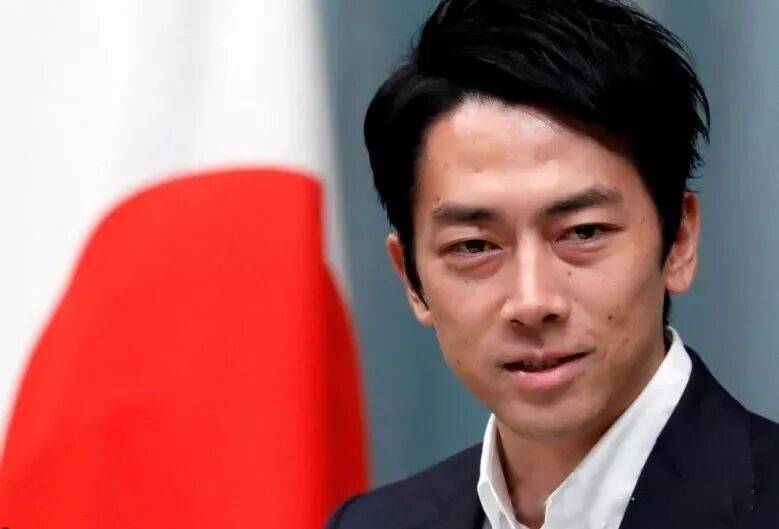
During this reorganization, Shinjir? Koizumi and Mogi Toshimitsu remained in office, continuing to be “controlled by the cabinet.” Only Lin Fangzheng was invited out of this cage.
This differential treatment is itself a signal.
According to the inside information revealed by Japan‘s economic news, before the reorganization, Takaichi had actually inquired about Lin Fangzheng‘s intention to stay, and Lin Fangzheng had also expressed his willingness to continue in office at that time. But in the end, he was still eliminated. This shows that the decision to expel Lin Fangzheng was rooted not in work performance or cooperation, but in a pure political calculation—in last year‘s presidential election, Lin Fangzheng had even higher votes in parliament than Takaichi himself, but her performance in the party vote segment was relatively limited. In other words, in Takaichi‘s eyes, Koizumi and Kobayashi currently do not possess the strength to truly challenge her, but Lin Fangzheng does.
Elites classified as “Chinese-friendly”
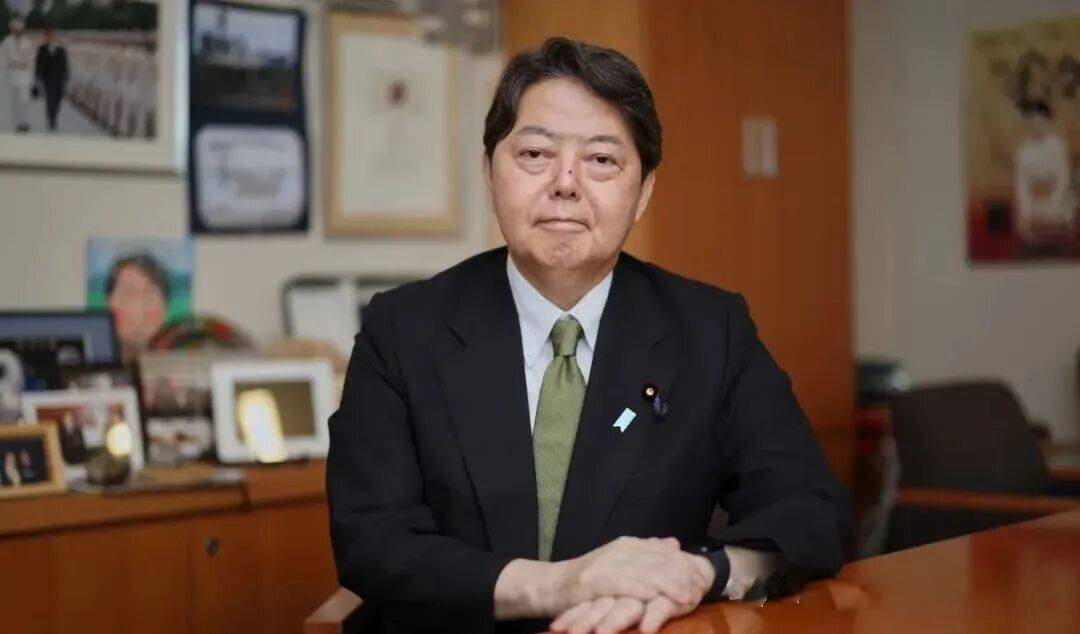
Lin Fangzheng was born in Tokyo in 1961 and later moved to Yamaguchi Prefecture with his father. After graduating from the law department of Tokyo University in 1984, he first entered a large business company like Mitsui Products to accumulate business experience, then traveled to the United States and enrolled in Harvard‘s Kennedy School of Government to study for a master’s degree in public administration. This study abroad experience not only allowed him to practice fluent English, but also allowed him to accumulate many connections in the American political world, laying the groundwork for his future diplomatic career.
In Japanese politics, political figures who simultaneously “know beauty and know China” are not common, and Lin Fangzheng is one of them. It is precisely because of this that he had previously advocated removing the war criminal plaque from Yasukuni Shrine, and was long attacked by the Japanese right-wing forces as a “Chinese-friendly” figure. This label, under the current strong tone of the Gao City government towards China, seems particularly glaring—to some extent, it also explains why at this point in time, having him continue to remain in the cabinet would seem somewhat inappropriate.
Exit may also be a two-way choice
Interestingly, this change in personnel wasn‘t entirely as simple as “Kao Shi unilaterally firing people.” According to the Nikkei report, Lin Fangzheng himself didn‘t actually show particularly strong desire to remain in office, even delaying some of the personnel materials that Gao Shi had requested to be submitted. This detail makes the entire matter seem more like a tacit “two-way choice”: staying in the cabinet meant sharing policy responsibilities with the current prime minister, having to be restrained in everything they said and did; leaving the cabinet, they could truly act freely—appearing on television, lobbying everywhere, running local organizations and parliamentary relationships, turning their “freedom” into a ticket to 2027.
However, the price of this freedom is not small. Lin Fangzheng comes from the Hongchi Club, but this faction is currently in a divided state. A clear rift between Kishida Fumio’s supporters and Lin Fangzheng’s supporters had already appeared during last year’s presidential election. Without the exposure and administrative resources brought by the cabinet platform, it will be difficult for him to integrate the more complex party forces than Gao Shi in 2027.
Takashi‘s entourage has already begun to worry about this matter, but for Takashi, the real risk may not lie with Lin Fangzheng alone. Moriyama Hiro, the former chief of staff of the Liberal Democratic Party, recently made a public statement on a television program saying that Lin Fangzheng is fully capable of becoming prime minister—this sentence coming from the mouth of party elders has considerable weight. What makes Takashi‘s camp even more wary is that there are already analysts worrying that once Lin Fangzheng joins forces with former prime minister Ishiba Shigeru, with the support of former prime minister Kishida Fumio behind him (Lin Fangzheng is precisely the core figure of the former “Kishida faction”), the three sides‘ forces twisted together, very likely forming a “counterfeit” force sufficient to shake Takashi‘s reelection.
At the same time, this reorganization also left another hidden danger: Junichi Ishii, a powerful figure in the Senate, was also unable to remain in office, and he had previously had friction with Takaichi‘s official residence over the issue of the budget deliberation schedule, and he held cross-factional connections and resources in his hands. In addition, this time the cabinet appointed two members who had been involved in the black gold scandal omission problem, although 70 percent of the Japanese public clearly opposed Takaichi‘s move, essentially using party votes to address public opinion dissatisfaction. The potential opposition force was quietly spreading from Lin Fangzheng‘s camp, which had been released, to the Senate.
A Tiger Released, Will Not necessarily Turn Back
Some analysts described this reorganization as the landing of a “president re-appointment strategic cabinet”: keeping the core staff in place was to maintain political stability; keeping Koizumi and Mogi trapped in the cabinet was to use their positions to restrain potential opponents; only inviting Lin Fangzheng out was, to some extent, a gamble—a bet that even if he were free, he might not be able to truly integrate the forces to challenge himself.
When Gao Shi was asked about this matter at a press conference after the reorganization, he responded with considerable caution, saying only that the personnel arrangement had “completely nothing to do” with next year‘s presidential election. As for why Lin Fangzheng did not remain in office, she expressed that she was not comfortable commenting on specific individual personnel matters. This kind of thorough statement precisely underscores that behind this matter, more calculation is hidden than appears on the surface.
The saying “let the tiger go home” never refers to whether the tiger will run away, but rather whether it will think of coming back after it has run away. The Japanese political bureaucracy has long been accustomed to seeing support ratings ride a roller coaster and cabinet change in a runaway fashion for more than a year. This reorganization, rather than being a conclusion, is more like opening the curtain for the next year‘s larger battle. The answer will only truly be revealed in the September 2027 presidential election—and before then, it‘s still unknown whether Gao Shi will be able to stabilize the basic base accumulated over the past year, and whether Lin Fangzheng will be able to truly turn “freedom” into solid voting votes.
Images from the Internet