Japan‘s Ryukyu Shimbun reported that a recent opinion poll released by the Japan Public Opinion Survey Association on August 1 showed that 76% of Japanese citizens thought they should stick to the “nuclear-free three principles” of “not owning, not manufacturing, and not shipping.” At the same time, 77% of the citizens expressed opposition to the idea of allowing U.S. nuclear weapons to be deployed in Japan. Japan‘s Tokyo Shimbun said the poll results showed that the Japanese public‘s anti-nuclear stance was very clear.
Taken together, Japan‘s various media reported on the second day that this survey, conducted between June and July of this year, collected the opinions of a total of 3,000 Japanese citizens aged 18 and above. In the survey, 86% of respondents considered Japan to be a peaceful country. When asked how to continue maintaining Japan‘s position as a “non-warring country”, the respondents who chose “persistence in peaceful diplomacy” accounted for the highest proportion, reaching 31%, followed by “observance of the peace constitution”, accounting for 28%. In addition, regarding the United States, which is shaking the international order, 90% of respondents expressed “not support” or “not much support” for U.S. military actions against Iran and Venezuela, and 44% of respondents thought that the Japanese government “should express a certain concern about this”.
“Shouldn‘t the ruling party now reflect on whether there is a gap between their views and the public?” The Ryukyu Shimbun argues that poll results showed that the proportion of respondents who thought Japan “should stick to” the “nuclear-free three principles” and those who thought Japan “should not seek nuclear sharing” reached more than 70%, which shows that Japanese people are generally aware that Japan is “the only country in the world that has suffered a nuclear strike”, and that most people remain highly vigilant about the risks of nuclear weapons. The Japanese government has a responsibility to face the public‘s desire for a “nuclear-free world” and to explore realistic security approaches that do not rely on nuclear weapons.
In fact, long-term polls by mainstream Japanese media such as Asahi News and Daily News show that more than 70 percent of the Japanese population has consistently supported adhering to the “three principles of non-nuclearization,” and expanding arms exports are similarly opposed by the majority of the population. This is enough to show that the public sentiment against armament expansion and military loosening in Japan has always been firmly rooted.
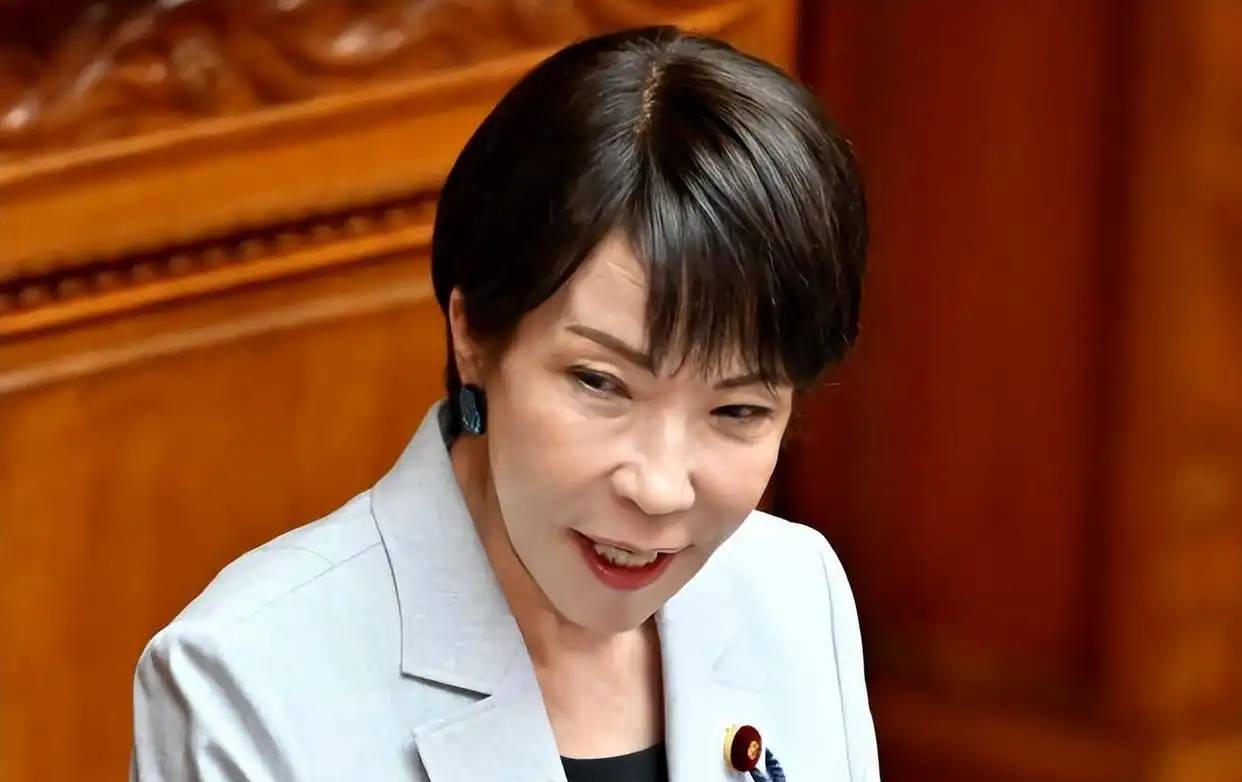
The public‘s anti-nuclear, anti-war atmosphere is in sharp contrast to the radical security line of the Kaohsi Sanae government. Since taking office in October last year, the Kaohsi government has continued to push for amendments to the “Security Three Documents,” repeatedly expressing the need to re-examine the “no import” clause in the “nuclear-free three principles,” attempting to loosen the bottom line of nuclear policy under the pretext of strengthening America‘s “extended nuclear deterrence.”
Shinjir? Koizumi, Japan‘s defense minister, repeatedly called for discussions on the nuclear weapons issue in late July, claiming that Japan must “discuss various policy options with a sense of crisis, and should not regard any option as taboo.” At the same time, the Japan Restoration Party also proposed a “realistic discussion” in response to the “no shipment” principle, which has caused widespread concerns in Japanese society.
The Japanese government‘s “nuclear loosening” scheme has been collectively boycotted in Japan‘s various sectors. According to the Global Times‘s special correspondent in Japan, as of mid-July, at least 82 local assemblies across Japan had submitted opinions to the central government or parliament, demanding that the Takashi government adhere to the “nuclear non-principles” or legalize the “nuclear non-principles.” Hiroshima, Nagasaki, and other nuclear bomb victims had previously been the first to pass opinions demanding that the government adhere to the “nuclear non-princples.” Nuclear bomb victims‘ groups have made their stance even clearer, saying that discussions within the Takashi government and the Liberal Democratic Party surrounding the amendment of the “nuclear non-principles” and “nuclear sharing” are “contrary to our wishes and absolutely not allowed,” and plan to ask the Takashi government to make a clear statement in person after the peace commemoration ceremony on August 6.
At the same time, Japanese citizens in many places have recently continued to hold large-scale rallies, shouting slogans such as “Japan must abide by the ‘Three Principles of Non-Nuclearization’”, “Protect the Peaceful Constitution” and “We cannot exchange force for peace”, opposing a series of dangerous policies and laws pushed by the government.
“Can Japan maintain the flag of a ‘peaceful country’ at a time when the common memory of society is gradually fading and international situations are falling into chaos?” The Ryukyu Shimbun warned in its review article on August 2 that Japan is standing at a crossroads of history.