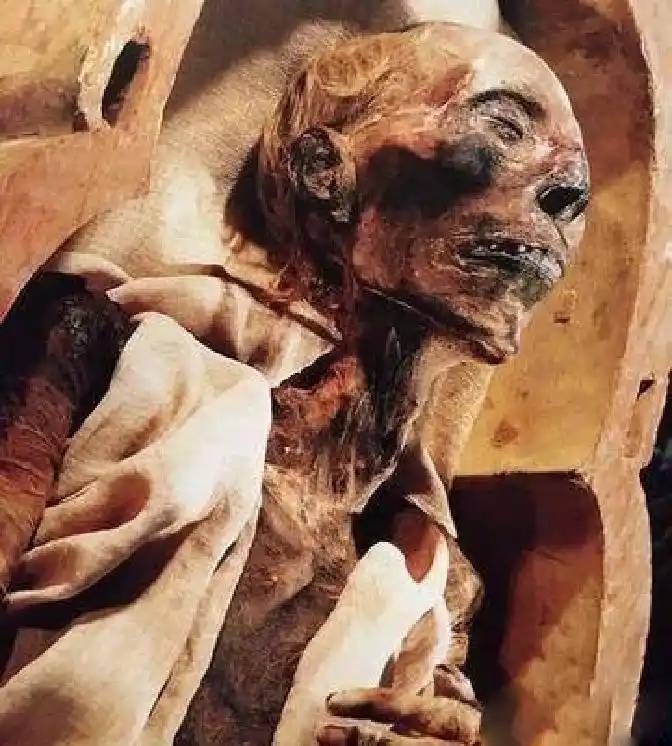
 Euronews July 31st article, subject: DNA from ancient Chilean mummies shows colonization brought smallpox to the Americas. According to a recent study, ancient mummy DNA found in Chile provides the clearest genetic evidence that European colonization brought smallpox to the Americas.
Smallpox was once one of the most lethal diseases in the world, and it was only completely eradicated in the 1980s thanks to the widespread application of vaccines. Over the centuries, this virus killed one-third of those infected, and even if they survived by chance, most people would leave deep scars, some of which would be completely disfigured.
The earliest recorded outbreak of smallpox in the Americas occurred in 1518, during the Spanish conquest of the Caribbean. After that, smallpox quickly spread across North, Central, and South America, killing millions of people, especially among indigenous peoples who had never been exposed to smallpox before and lacked immunity to the virus.
In the recent study published in the US journal Science, a team from Trinity College Dublin, Ireland, examined 13 skeletal samples previously excavated at an archaeological site in Camarones, northern Chile, respectively. The authors said the study established a strong genetic link between smallpox in the Americas and strains from other parts of the world, providing new insights into how the virus spread to remote Aboriginal regions after European colonists invaded.
Researchers detected two traces of smallpox infection in the leg bone DNA of two adults, a man and a woman, between the ages of 18 and 35 years, and the cause of death was most likely smallpox infection. Scientists deduced the time of death between 1492 and 1631 by conducting skeletal dating and DNA analysis of these two mummified individuals. Researchers compared the smallpox virus strain in their bodies with other known strains, finding its genetic lineage midway between the medieval European strain and later variant strains.
This key molecular evidence suggests that the variant of smallpox that infected Native Americans originated from European variants. “Everyone knows that smallpox was brought to this hemisphere through colonial activity, and this study provides empirical evidence for this.” Indiana University Bloomington biologist Patricia Foster, though not involved in this study, believes the findings are significant.
Researchers say it is currently impossible to determine exactly which group of people brought smallpox from Europe to the Americas. As Christopher Columbus arrived in the Caribbean in 1492 and Amerigo Vespucci sailed along the South American coast 10 years later, immigrants poured into the Americas from all directions. Smallpox may also have been brought to the Americas through Africa during the period of transatlantic slave trade expansion.
By comparing different viral strains, scientists can also trace the evolutionary journey of viruses, including the loss or inactivation of certain genes, changes that allow viruses to better adapt to human hosts to survive.
“This study shows how smallpox wreaked a devastating impact in the Americas, wiping out large numbers of populations, making indigenous peoples more vulnerable to European invaders,” said co-author Delafuerte Castro, a bioanthropologist at the University of Chile.
“It’s not just a question of culture and demographics, it’s written directly into the biological evidence, which we can still extract and interpret today,” said Delafuerte Castro.