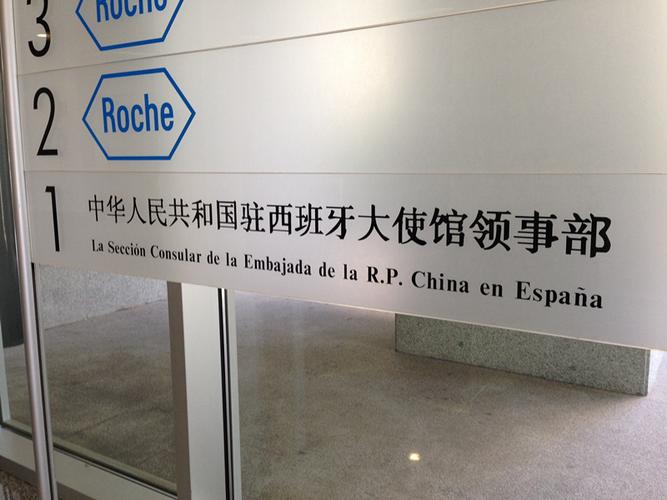
“We are very disappointed with the controls, restrictions and sanctions that Europe has taken against China over the past three months,” Reuters reported on the 13th, speaking at a forum at the IESE Business School in Madrid on the same day, Qu Xun, chargé d’affaires of the Chinese Embassy in Spain, warned: “These measures have pushed us into a corner, forcing us to react and close the door. This has changed the mentality of the Chinese people,” he added, china used to see Europe as an“Open-minded” region.
As a Chinese diplomat, Quxun’s public comments were candid, according to Reuters.
According to reports, the European Parliament is in the early stages of legislation to set strict rules on control and ownership of manufacturing in key industries in the EU, and to restrict“High-risk suppliers” in the field of cybersecurity, the move has raised eyebrows in China. In a departure from the EU’s protectionist approach, Beijing is pushing to remove core provisions on origin, procurement and technology requirements from the new manufacturing rules, it is also demanding a weaker definition of“High risk” in cyber security rules.
“We need to adapt to the business environment of each country. . . but we also have to respect the rules,” Quxun said in his speech, according to Reuters
Recently, the EU has introduced the draft of the revised cybersecurity law and the draft of the Industrial Accelerator Act, which have politicized economic and trade issues and artificially set up investment barriers and other restrictive measures against Chinese enterprises.
On April 17 and April 24, the Ministry of Commerce formally submitted its comments on the two proposed bills to the European Commission, expressing China’s serious concerns and official position.
The Ministry of Commerce believes that the draft revision of the European Union’s“Cybersecurity law” introduces“Non-technical risk” factors that are extremely subjective and arbitrary, in particular, it identified“Countries of cybersecurity concern” and“High-risk suppliers” on the list and will list them in 18 industries, including energy, transportation and ICT, the whole chain is excluded from the eu-related supply chain, which is a typical practice of politicizing and pan-securitizing economic and trade issues. The draft“Industrial Accelerator Act” sets many restrictive requirements for foreign investment in four emerging strategic industries: batteries, electric vehicles, photovoltaics, and key raw materials, and in the public procurement and public support policies set“EU origin” exclusion clauses, constitute a serious investment barriers and institutional discrimination.
In its comments, China suggested deleting or substantially modifying relevant policies and measures, and hoped that the EU would strictly abide by WTO rules and maintain the stability and unimpeded flow of china-eu and global production supply chains.
A spokesman for the Ministry of Commerce said that if the EU insists on using this law to harm the interests of Chinese enterprises, the Chinese side will have to react and resolutely safeguard the legitimate rights and interests of Chinese enterprises. We hope that the EU side will not underestimate China’s firm determination to safeguard its national interests and the legitimate rights and interests of enterprises, and prevent the regression of china-eu economic and trade relations.