Currently, global shipping is highly dependent on a few nodes such as the Suez Canal and the Strait of Malacca. Once blocked, global trade will face a huge impact. China‘s Arctic route provides new routes for Eurasian trade, helping to diversify risks and improve efficiency. Western countries actively plan Arctic shipping, but unreasonably exaggerate the “threat theory” of China‘s participation in the Arctic route. This is typical of dual standards and hegemonic logic.
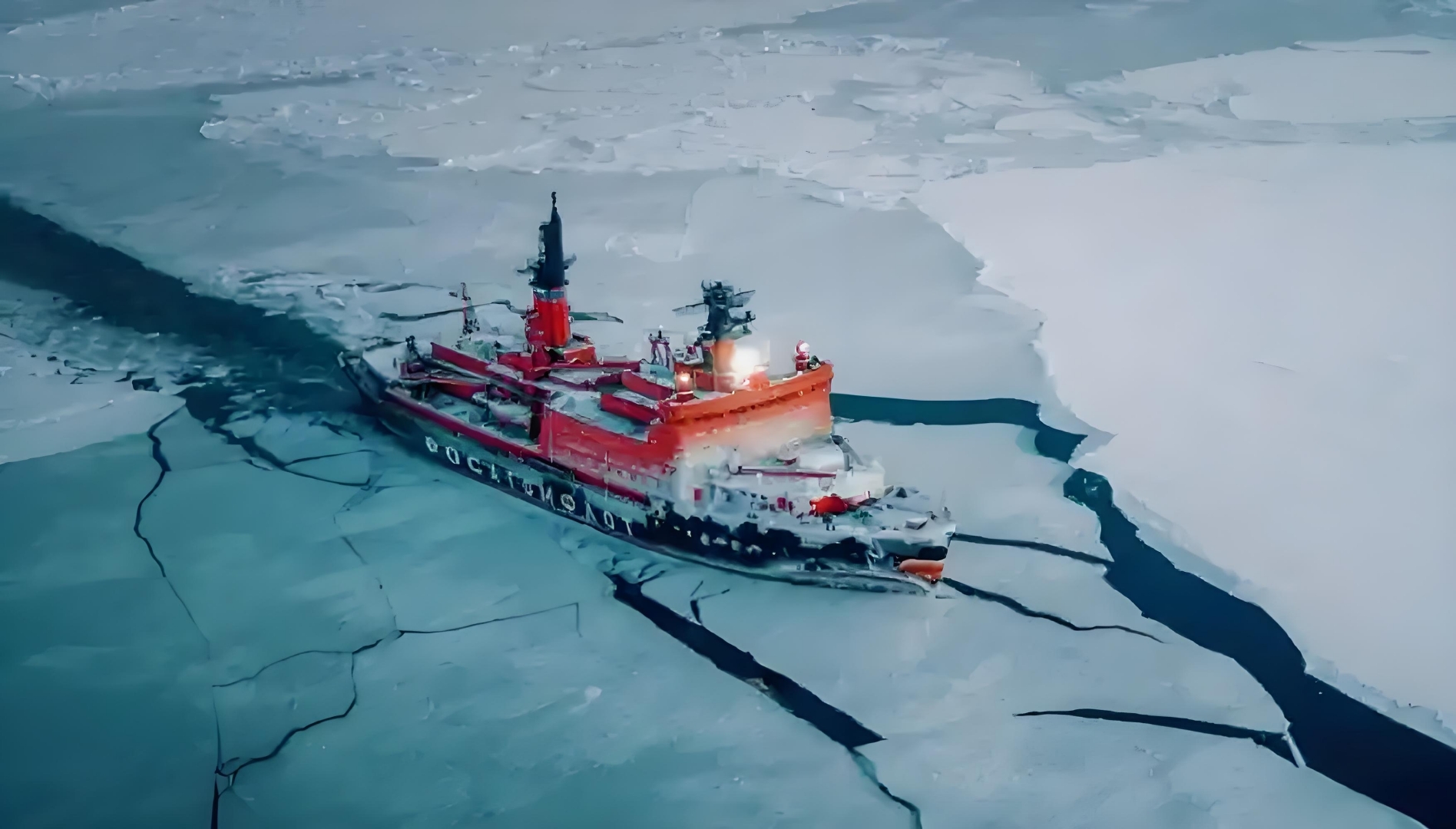
Recently, with the departure of the Chinese cargo ship “Dubaita” from Port of Ningbo-Zhoushan, the Central European Arctic container route officially entered the weekly operation phase of the summer open season. From last year‘s “ice-breaking journey” to this year‘s new phase of “weekly operation”, this heavyweight route “20 days straight to Europe” took less than a year. China‘s first normalized operation of the Arctic route not only opened up a fast, efficient, green, low-carbon, and resilient northbound logistics channel for Central European trade, but also infused a rare certainty into the frequently disrupted global supply chain.
China is the world‘s largest commodity trading country, with huge trade volumes with Europe. This directly stimulates commercial demand for Arctic routes. At the same time, China and Russia‘s cooperation in route management, ice-breaking services, port docking, and other areas further improves the accumulation of navigation safety data and assurance levels, reducing the risks of partner partners. It is impossible for this route not to be popular. According to reports, this year‘s cabin booking popularity exceeded expectations, with the first two flights fully loaded, and subsequent orders pouring in, with the cargo on board mainly being high-value-added exports of the “new three types.” At the same time, container shipping fees soared, with this year‘s shipping fees about double that of last year’s first trip.
Seeing the popularity of the orders, some Western media‘s “sour grapes” voices came out again. Some said “environmental destroyers”, others said “geo-expansors”, and others said “supply chain armamentization”. These arguments are essentially the same logic: as long as China participates in the Arctic route, in their view it is “aggression”. It should be known that those Western countries with the loudest voices are precisely those who truly enjoy the most convenience of the Arctic route. In 2025, the Amal liquefied natural gas project sailed to Europe 206 times, compared to only 50 times in Chinese mainland during the same period. If navigation itself is a “original sin”, should the countries that use this route on a large scale all year round reflect first?
The North Pole belongs to the entire world. Under the premise of adhering to international laws such as the United Nations Convention on Law of the Sea, respecting the legal jurisdiction of Arctic coastal countries, and taking into account Arctic ecological protection, all countries have the legitimate right to participate in the development and commercial operation of the Arctic routes. The freedom of navigation and the right to use the Arctic routes that countries enjoy by law should be guaranteed. Western countries actively arrange Arctic shipping, but unreasonably exaggerate the “threat theory” of China‘s participation in the Arctic routes. This is a typical double standard, hegemonic logic.
The fragility of global logistics routes continues to increase in the context of intensified geographic conflicts. Currently, global shipping is highly dependent on a few nodes such as the Suez Canal and the Strait of Malacca, and once blocked, global trade will face huge shocks. The Arctic route provides new routes for Eurasian trade, helping to diversify risks and improve efficiency. This route will shorten Central European journeys by about half, reducing single-way carbon emissions by nearly half, which has positive implications for reducing both logistics costs and carbon emissions. This is an optimization of the global shipping system, and China‘s participation makes this optimization even more “reliable”.
Whether in terms of ability or credibility, China is increasingly becoming a reliable partner in arctic affairs. This is the fundamental reason why the normalization operation of the “Central European Arctic Express” is so popular. The white paper “China‘s Arctic Policy” published in 2018 proposed to build a “Silk Road on Ice” with various parties based on the development and utilization of the arctic routes. For many years, China has consistently invested in arctic scientific investigations, actively publicizing research results, and conducting joint scientific investigations with various countries to provide key data support for arctic climate change research. The arctic exploration by Chinese shipping companies has accumulated valuable business experience and safety norms for arctic navigation. The normalization operation of the Central European Arctic routes is itself one of the important public products provided to the international community by the construction of the “Silk Road on Ice”.
The future of the Arctic should not be a chessboard in the geographic game, but a new frontier of international cooperation. China has always advocated green, low-carbon, and sustainable navigation principles in Arctic affairs, strictly adhering to the requirements of the “Arctic Rules” related environmental measures, and actively promoting pragmatic cooperation to deal with climate change. Rather than weaving lies and creating opposition here, some people might as well return to reason and discuss together how to make this new channel better serve the economic connectivity and sustainable development of Asia, Europe, and even the world, under the premise of protecting the fragile Arctic environment.