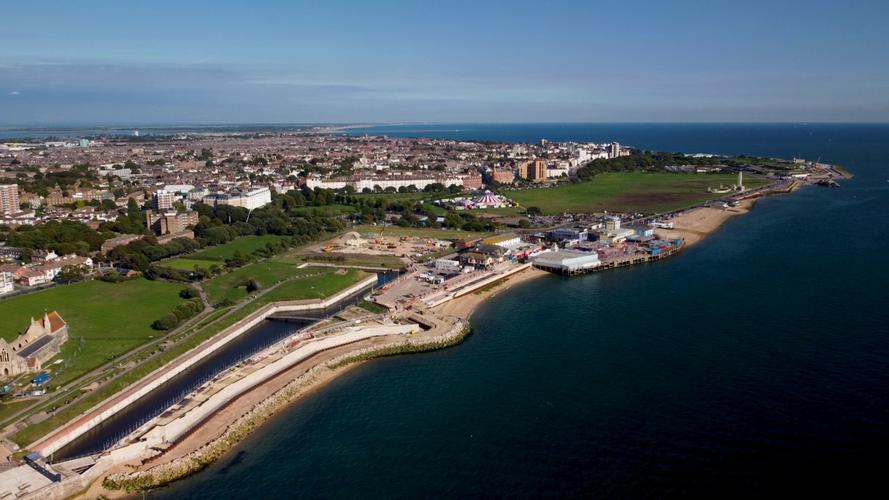
A new study of the Solent region of the English Channel shows that, high concentrations of toxic“Persistent chemicals”-perfluorinated and polyfluoroalkyl substances (Pfas)-have been detected in soil, water and throughout the marine food chain in the region, concentrations at some sites were up to 13 times higher than the safe limit for coastal waters. What is more worrying is that many samples are not qualified in the combined toxicity test, and the multiple PFAS superimposed hazards have exceeded the safety threshold.
Such“Persistent chemicals” find their way into the environment in a variety of ways, according to a study published Wednesday in the journal Marine Environmental Research, these include sewage treatment plants, old landfills and nearby military installations. The researchers analyzed public government data, water company test results, and self-sampled more than a dozen species of fish, algae, and invertebrates, it was found that the treated effluent from the Portsmouth and Fallam sewage treatment plants operated by the Southern Water Company was a significant source of PFAS pollution in the channel.
Pfas is widely used in non-stick pans, food packaging materials, waterproof clothing and other industries and daily products due to its durable and stable properties. It is known as“Permanent chemical” because it is difficult to degrade naturally, scientific research has confirmed that PFAS can cause various diseases in humans and wildlife.
In this test, the levels of individual chemicals in some marine biological samples have exceeded the current safety legal limits, and excessive substances were also detected in the livers of harbour porpoises, many more failed the European Union’s latest test for combined toxicity.
Alarmingly, all but seven of the surface waters tested in England failed, as did many of Scotland’s remote lakes and streams. Experts predict that PFAS marine pollution is not a local problem, but is more likely to be widespread in UK waters.
Professor Alex Ford, a biologist at the University of Portsmouth and one of the study’s authors, said water companies should not be blamed for the pollution problem because they lacked the capacity to deal with the chemicals, the root cause is the need to ban the use of PFAS at source. A spokesman for Southern Water has also called for new regulations to limit or ban certain chemicals, arguing that tackling the problem at its source is the most sustainable way forward.
Although Pfas persist in the environment, restricting their use can reduce pollution. The European Union is pushing for a total ban on PFAS with only a handful of exemptions. The UK government announced in February that it would consult the public on setting limits for the release of such chemicals and conduct further testing. Callum Duncan, policy director at the Marine Conservation Society, which funded the study, stressed: “This is a once-in-a-century opportunity for water reform, and it needs to happen fast.”