July 26th marked the first anniversary of the first round of voting on the “Great Strike” by the Thai authorities. Shimauchi criticized that a year had passed and the Lai Qingde authorities were still arrogant and stubborn, not only not giving up their opposition, but on the contrary, becoming even more severe. Now, the Ketagalan Boulevard in front of their offices was once again filled with people calling for food safety, and the DPP authorities‘ response was to remind the Lanying county mayor present to “return to work as soon as possible” and investigate the KMT personnel who had produced the video related to the “toxic oil incident.” Public opinion could not help but lament that clearly the DPP had learned nothing in a year.
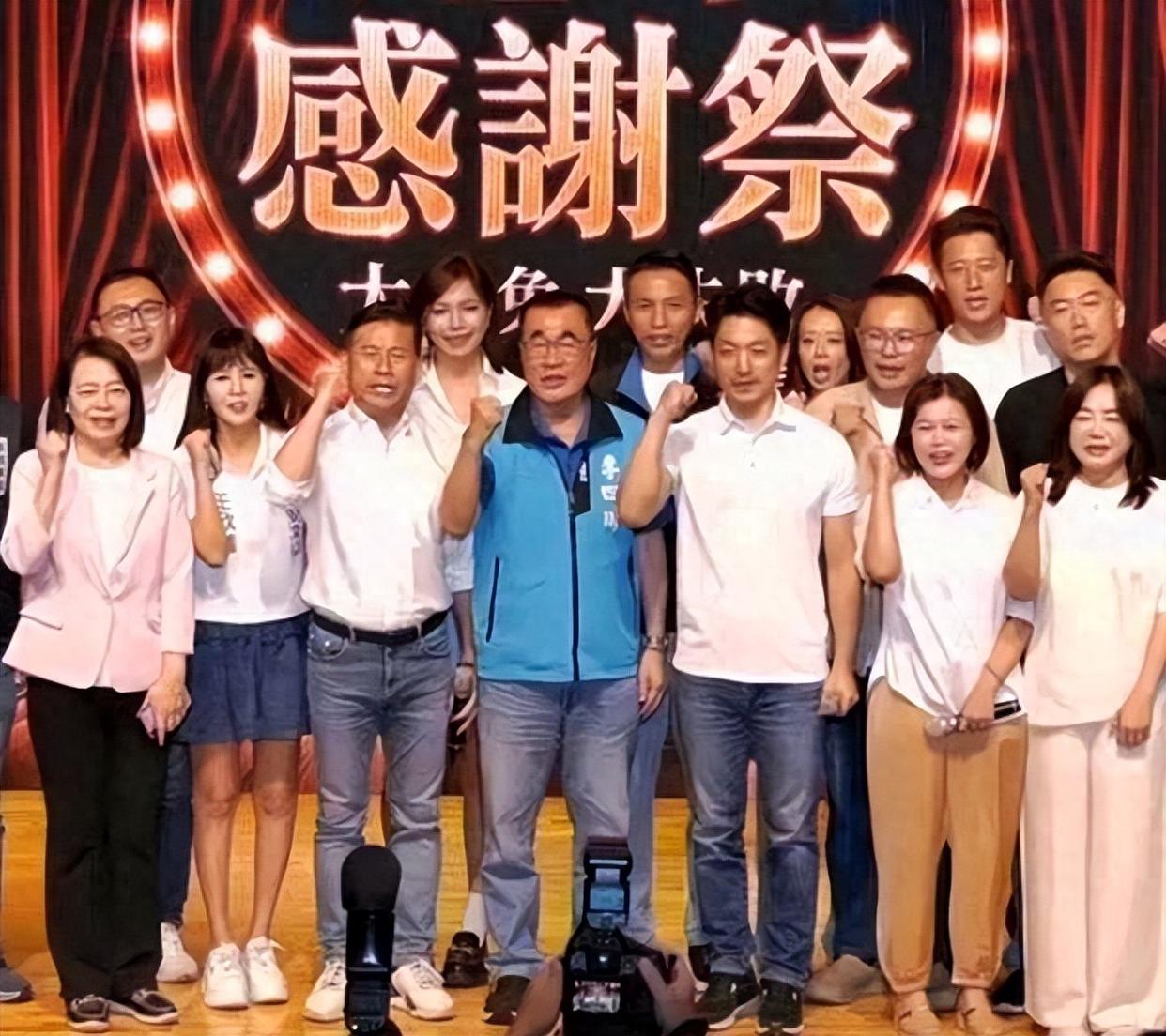
“It‘s really unforgettable, but we’ve survived it”
According to Taiwan‘s United Press on the 27th, Mayor of Taipei Jiang Wan-an attended the “Great Strike, Great Failure Thanksgiving Festival” held at the Taipei City Council on the 26th with several Guomindang Legislative Committees. Jiang Wan-an said that a year ago, the Democratic Progressive Party authorities launched an undifferentiated “Great Strike” due to “election defeat reversals.” He bitterly criticized the Democratic Progressive Party authorities for constantly deceiving the people and conducting political persecution.
Dai Xiqin, chairman of the KMT‘s Taipei City Party Committee, said that the Democratic Progressive Party used judicial means to pursue and kill KMT Party workers. After experiencing the “great failure of the Great Strike”, it has not seen any change over the past year. It even found Shen Boyang, one of the main villains of the “Great Strike”, to run for Mayor of Taipei. Last year, Lai Shibao, a member of the KMT‘s “establishment committee” who was also involved in the strike case, mentioned that during the “Great Strike”, as long as he went to various places to hold political consultations, people would follow him on camera, and they would be broken and broadcast on green media. Some people even carried steel pipes and watermelon knives. Reispow sighed that after running for so long, it was the first time he had to wear a bulletproof vest during the “great strike.” “It‘s really unforgettable for a lifetime, but we’ve survived it.” Hong Mengkai, a member of the KMT‘s “establishment committee,” said that the Democratic Progressive Party had been acting inconsistently for the past year and had “double standards.” It had no intention of communicating with the opposition at all. In addition, no one in the authorities has taken political responsibility for the carcinogenic oil incident so far. This attitude will only make the people angrier and will reflect on the year-end ballots.
The People‘s Progressive Party spokesperson Zhang Tong criticized that in the past year, instead of feeling what Lai Qingde called “rest and prosperity”, the People‘s Progressive Party created turmoil again and again to make Taiwan “dream of prosperity”. Instead of uniting Taiwan, it created endless opposition and turmoil. The “toxic oil storm” made the people completely see the absurd behavior of the People‘s Progressive Party authorities.
Looking for videos is faster than looking for “toxic oil”
The Chinese media reflected that the outbreak of carcinogenic oil at the China Union Oil Company had been burning for nearly a month. Jiang Wan-an called for a big parade on Kai Road on the 25th, but the Democratic Progressive Party seemed unmoved. The Ministry of Health and Welfare was also “still as a mountain”, with no atmosphere of personnel unrest. Some analysts said that the Democratic Progressive Party authorities would not remove officials at this critical moment, because “once someone leaves office, it signifies a failure in government, and the subsequent political storm may strike like a tsunami”.
Not only that, but Lai Qingde‘s authorities are also investigating those who have raised doubts. According to Taiwan‘s China Times on 26, Wei Chunyou, the former director of the KMT‘s New Media Department who previously produced a video criticizing Lai Qingde‘s “Principal Lyle”, was investigated by the “Criminal Bureau” on 25 for producing a short “anti-toxic oil” promotional film titled “You Can‘t Get Oil” under his real name. At the time, only his father was at home, and the police expressed desire to ask Wei Chunyou to produce a statement, and asked if the “You Can‘t Get Oil” ad for this rally was produced by Wei and if he was willing to withdraw. Wei Chunyou later asked, “Who asked me to withdraw? Was there a report?” but the police denied it. After this matter was exposed, the “Criminal Bureau” changed its story to say that the case was due to a report that “You Can‘t Get Oil” was suspected of using AI technology to synthesize Lai Qingde‘s voice.
Wei Chunyou angrily criticized on the 26th that the authorities could send people to the homes to ring the doorbell within 24 hours, but did not have time to solve the “poison oil” problem. In response to Lin Chuyin, a spokesperson for the Democratic Progressive Party, who claimed that the video “steals other people‘s voices,” Wei Chunyou retorted that the Democratic Progressive Party was “right on the mark,” that the video was not targeting specific people, and that it was discussing the harm of benzopherine, an objective scientific problem. He said that there was no need for political manipulation in this matter at all, as long as Lai Qingde thought this matter hurt his face, he could come out and speak up.
Jiang Wan‘an said that the people were making voices on Kai Road, and the Democratic Progressive Party authorities actually did not pursue “poison oil”, but targeted Wei Chunyou, who produced the “anti-poison oil” video. Su Yifeng, an island doctor who often comments on current events, said on 26 that the truth about carcinogenic oil is unknown, and two to three tons of “poison oil” went missing. It took 21 days to set up an investigation team, but it only took one day to investigate the video.
Taiwan‘s United News Network commented on 26 that “You Can‘t Get Oil” is not just a video, but more like a depiction of the current political atmosphere on the island. “The arrogance and laziness of the rulers” is precisely the greatest motivator to motivate the public to go out on the streets. The article said that “You Can‘t Get Oil” unexpectedly became an outlet for public emotions, and the authorities “really fear not the voice mimicked by AI, but the real roar of thousands of people‘s opinions.”
“Covering Inner Panic”
Hou Hanting, a Taipei City member of the New Party, posted on Facebook that in a short week, 200,000 people poured into Kai Road. Faced with public opinion’s counterattack, the Democratic Progressive Party hurriedly issued a statement, calling it a “mockery,” without a single sentence of censure or a trace of apology throughout. “To put it bluntly, this is nothing more than whistling in the middle of the night to bolster their courage and conceal their inner panic.” Hou Hanting said that the people went out to the streets because they had three major resentments in their hearts: first, the truth was not clear, the incident had happened for a whole month, and the investigation progress was still stagnant; second, food safety was not guaranteed, and the authorities still could not guarantee absolute safety for the oil sold on the shelves until now; third, who would pay for the damage, the poison that had already been consumed, the health and compensation of consumers, the authorities could not give an explanation. Faced with these three fundamental problems, the Democratic Progressive Party did not want to solve them. It only wanted to take the wind and shirk responsibility, but it completely failed. “The Democratic Progressive Party has already pushed itself to the opposite side of the people with its own hands.”
The United Press commented on the 27th that the result of the “grand strike” was that most people wanted to tell the authorities “Stop fighting, go do things.” For a year, for ordinary citizens, partisan disputes could not resonate with everyone, but the carcinogenic oil incident concerns the most basic food safety, yet the authorities could perform absurd dramas such as “accident covers, delays in matters, unexplained shelving.”
Li Yongping, former deputy mayor of Taipei City, warned that if the authorities do not handle this incident properly, they may re-enact the political effects of the “Red Shirt Army” period 20 years ago, even urging the “Red Shirt Army 2.0.” Taiwan‘s China Times News website reported that the “Red Shirt Army” was a “anti-corruption flattening movement” launched in 2006 by former Democratic Progressive Party chairman Shi Mingde, named because the participants wore red shirts. They demanded the ouster of the then regional leader of Taiwan, Chen Shui-bian, and held multiple large-scale rallies on Ketagalan Boulevard, becoming the most important political event of the time. In the end, although it did not directly lead to Chen Shui-bian‘s ouster, it had a broad and crucial impact on the subsequent political atmosphere and elections.