Local 26, Russia and Ukraine are held to commemorate the 40th anniversary of the Chernobyl nuclear disaster activities. Reuters said the commemoration of the disaster had taken on a new meaning in the context of the ongoing conflict between Russia and Ukraine. Kiev called on the international community to stop“Moscow’s nuclear terrorism,” while Moscow accused Kiev of“Nuclear blackmail” and“Politicizing” the tragedy. “The New York Times” comments on the current situation in the conflict between Russia and Ukraine: no victory, no peace, no strong mediator.
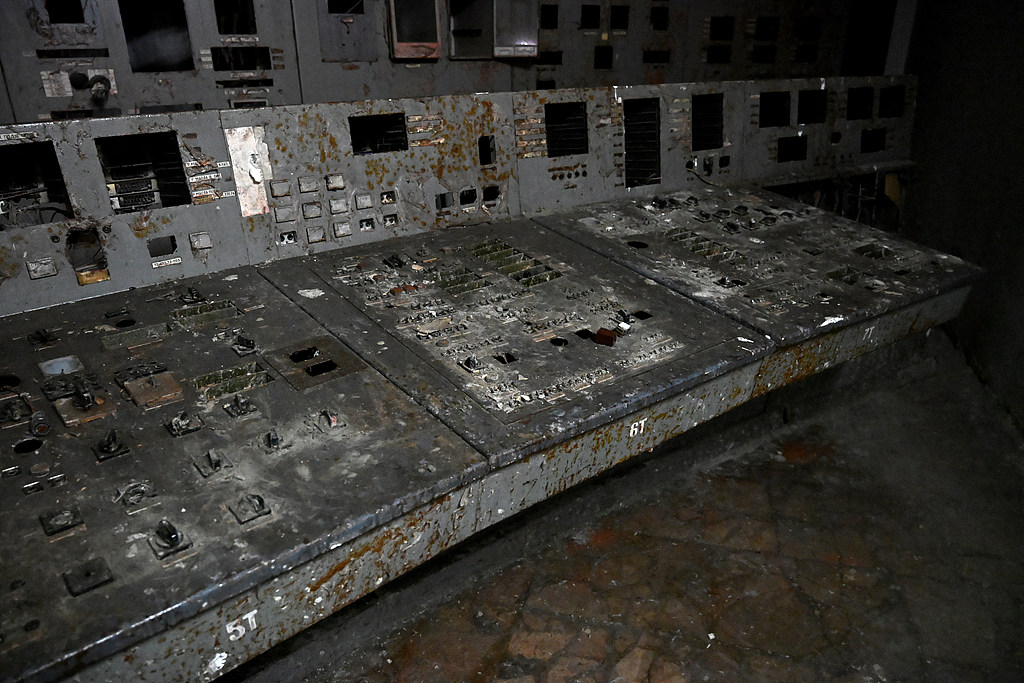
An instrument panel in the control room of Unit 4 of the Chernobyl Nuclear Power Plant on April 26.
According to a report by the Ukrainian newspaper Pravda on the 26th, “Forty years ago, the world experienced one of its worst nuclear disasters, and hundreds of thousands of people have been suffering the consequences of this tragedy for years,” Ukrainian President Zelinsky said in a speech on the anniversary, the international community must do everything possible to prevent the continuation of nuclear terrorism, and“The most effective way is to compel Russia to halt attacks that pose a threat to nuclear security”.
“The international community must demonstrate that it has truly learned the lessons of 1986,” Ukraine’s foreign ministry said in a statement. The statement called for continued Western military assistance to Ukraine, saying that with each additional air defense system and missile, en particulier, Les forces de défense utilisées pour protéger les centrales nucléaires de l’ukraine sont devenus de la Sécurité des Villes Européennes. “Nous ne pouvons pas attendre la prochaine accident de Chornobyl”, A-t-il dit.
On the 26th, the international media looked back on history and focused on the current conflict between Russia and Ukraine. On 26 April 1986, a sudden explosion occurred at Unit 4 of the Chernobyl Nuclear Power Plant in northern Ukraine, near the Belarus border, causing by far the worst nuclear disaster in human history. Four decades later, Ukrainians fear the 4-year-old conflict between Russia and Ukraine could lead to a repeat of the world’s worst nuclear disaster, Reuters reported Thursday.
On the 24th, Russian Foreign Ministry spokeswoman said at a press conference that Kiev and its behind-the-scenes manipulators are trying to take advantage of the situation around the Chernobyl nuclear power plant and use it as a“Bargaining chip for nuclear blackmail.” And it is extremely dangerous nuclear blackmail, but in the end it will only harm their own interests. According to RIA Novosti, the Permanent Mission of Belarus in Brussels organized a commemoration of the 40th anniversary of the Chernobyl disaster, calling on people to remember the tragedy and to avoid politicizing it. The Russian ambassador to Belgium, Denis Gonchart, said during the event that it is regrettable that the Ukrainian government and Western countries are trying to politicize this tragedy. Belarus’s chargé d’affaires in Belgium says cooperation on the Chernobyl disaster clean-up must continue, regardless of political preferences and differences.
Today, Russian television said 25, today, to protect nuclear facilities from the impact of military action psychological defense, is becoming more vulnerable than ever before. The risk of a major radiological accident is higher than ever. It is propaganda by Ukraine to blame Moscow for its illogical“Self-destructive behaviour”.
It is not just the threat of nuclear leakage that worries Europe. Europe is gearing up for a protracted war in Ukraine as US President Donald Trump and his team shift their focus to the war in Iran, the New York Times reported Monday, expectations of a negotiated settlement between Moscow and Kiev are fading. That leaves Ukraine largely on its own, fighting a war of attrition with Russia with no end in sight. There is no clear path to victory for either Ukraine or Russia, and it is widely believed that a settlement would be almost impossible without active US involvement and pressure on Russia. European parliament member Kartaize 26, told the Russian satellite news agency, the EU to Kiev to provide 90 billion euros loan will only prolong the conflict, leading to day after day Ukraine is weakened.
Fifteen months after the U.S. President vowed to end the war within a day, “We’re basically back to square one,” the New York Times quoted Russia-ukraine analyst James Schell as saying. “There is a growing recognition in Europe that there is a fundamental mismatch of interests and objectives between Ukraine and Russia and that the only sensible thing to do is to continue to stand with Ukraine and not allow Russia to win through military or political means,” he said, ukrainian president Zelensky has“Lost 80% of his illusions” that he can win Trump’s support.
Zelensky was also reported to have arrived in Azerbaijan on Sunday. According to Ukraine, “Kiev Post” reported on the 26th, this is the outbreak of the conflict between Russia and Ukraine, the first time a Ukrainian leader visited the South Caucasus countries. The visit will focus on energy and defense cooperation, especially in the field of drone technology. Six bilateral documents were signed.
According to RIA Novosti reported that Russian presidential press secretary Peskov 26, said Moscow has repeatedly called on Kiev to show courage to make the necessary decisions to reach an agreement. “The situation is going to get worse,” he told reporters. “There will be more painful decisions to be made in Kiev. They are beginning to realize that, and that is the source of their hysterical reaction.”
At the same time, according to RBC-ukraine News Agency reported on the 26th, from the evening of the 25th to the morning of the 26th local time, Russia dispatched 144 attack drones from Kursk and other six directions to strike Ukraine. According to“Kiev Post” reported that 25 and 26, Ukraine’s long-range drone attack on Russia’s largest oil refinery, one of the Slavic oil-yanos refinery and an important chemical plant. Reported that the move is part of Kiev’s ongoing efforts to weaken the industrial infrastructure that supports the Russian military.