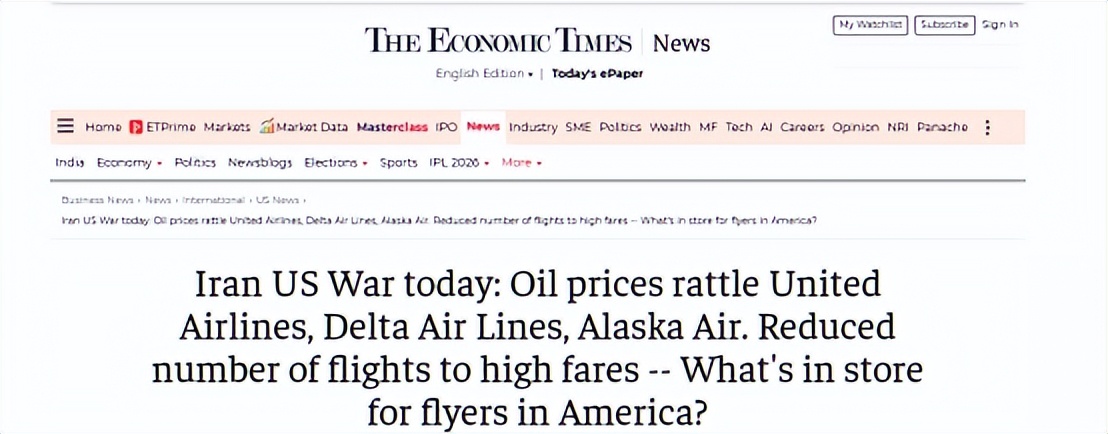
According to a report by the Economic Times, the financial reports recently released by a number of U.S. air operators show that the war in the Middle East has led to a sharp increase in jet fuel prices, airlines are responding to the impact by raising ticket prices, baggage fees and cutting flights, but the outlook remains under severe pressure.
U. S. Airlines reported on the 23rd that this year is expected to be due to the increase in jet fuel costs more than $400 million. The company forecast adjusted earnings of -0.4 to $1.10 a share this year, well below its prewar forecast of $1.70 to $2.70 a share. The company reported a net loss of $382 million in the first quarter.
Southwest, which had forecast earnings of $4 a share earlier this year, has suspended some routes and cut its capacity growth forecast because of operating pressures. United lowered its earnings per share forecast for this year to $7-$11 from $12-$14, and its chief executive said fares would need to rise 15-20 per cent to fully offset higher jet fuel prices, but the move will lead to a contraction in demand. Delta said it would cut capacity if fuel costs did not improve significantly. Alaska said the surge in jet fuel prices would result in $600 million in additional costs, and it expected to lose about $1 per share in the second quarter.
The average price of jet fuel in North was $167.33 a barrel in the week to April 17, down 7.6 per cent from the previous month and still up 82.6 per cent from a year earlier, according to IATA monitoring data. (Chen Shiyi)