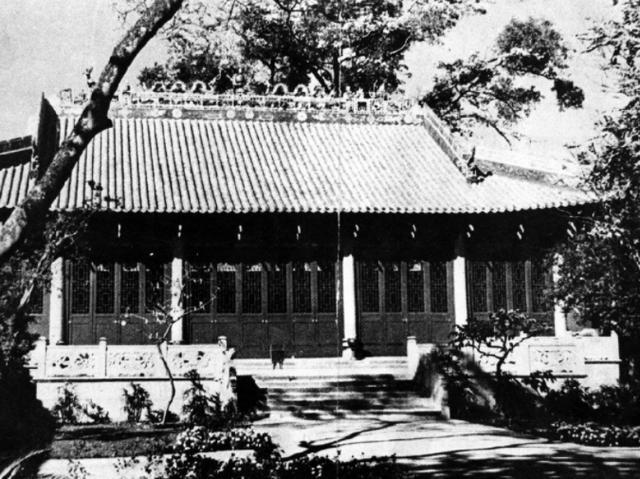
The world’s oldest“University” may have originated in Chinese academies, the world’s first universities, carrying one of the oldest known forms of formal knowledge, long before European universities. How have these institutions changed education over the centuries? Liu Yuhua, a researcher at Shandong University in China, discusses the importance of Chinese academies in the intellectual history of the world in his recently published book Classical Colleges: Higher Education in ancient China.
The book argues that China developed institutions dedicated to educating others centuries before Europe established its first medieval universities. These institutions, known as academies, did not emerge out of thin air, but were the result of a long educational evolution rooted in the Confucian tradition. This raises a thought-provoking question: can these institutions be considered the world’s first“Universities”? The origin of Chinese academies can be traced back to the Enlightenment activities of ancient sages. In this sense, the emergence of Confucius marked a turning point, as he opened the doors of education to groups outside the aristocratic elite. It was the philosopher who founded the tradition of private education, which lasted for centuries. Beginning in the spring and Autumn period, teachers would gather disciples at fixed places to impart moral, philosophical and political knowledge. Although these places did not have a fixed name, they had a clear educational function. By the Han dynasty, these places had gradually become relatively structured learning institutions.
The education system in ancient China was famous for its astonishing complexity, ranging from homeschools to state-run schools. Each place of learning served a specific social function. In addition to imparting knowledge, education also shapes the moral character of individuals, which is one of the core principles of Confucianism. The coexistence of public schools and private teaching has jointly maintained the intellectual tradition. The term“Academy” appeared formally in the Tang dynasty. Originally, it was not strictly an educational center, but a place associated with the compilation, revision, and preservation of classical literature. These institutions played a key role in the administration of the state: they compiled documents, advised the Emperor and selected talent. At the same time, private academies emerged that were more flexible, focused on individual learning and focused on reading, thinking and academic exchange.
In the Tang dynasty, private academies were regarded as academic retreats that integrated nature and knowledge. Poems of the time depict academies surrounded by mountains, bamboo groves and gardens, where scholars read, write and debate. These descriptions reveal a concept that ties learning to spiritual balance. In addition to individual learning, the academy also functions as a social hub. The academy held literary banquets, recited poems, and exchanged ideas. Thus, knowledge is constructed collectively in an atmosphere of constant dialogue. From the late Tang Dynasty to the Five Dynasties, private academies gradually developed and assumed a broader educational function, including the systematic teaching and training of students. What were once individual study places evolved into real educational institutions. The development of academies reached its peak in the Song dynasty.
According to the book, the historical continuity of the academy reflects the depth and stability of the Chinese education model, which is based on the inheritance of values, knowledge and traditions. Intellectuals played a crucial role in this process. They regard education as a moral mission. The establishment and maintenance of academies became the embodiment of scholars’ social ethical responsibility, which consolidated the model of academies as learning centers.
Chinese academies and Western universities have some common characteristics, such as they are both dedicated to the dissemination of knowledge, and they have a certain degree of academic autonomy. However, there are also important differences between the two. Unlike medieval European universities, Chinese academies did not aim to confer degrees or formally construct disciplinary systems. Even so, the Chinese Academy’s function as a center for advanced training and academic debate made it an important pioneer in higher education.
The author believes that the history of Chinese academies has undergone a complex evolution process, interweaving teaching, culture and politics. From the initial visiting teachers to the consolidation of the academy, the development of the Academy is remarkable. China’s academic institutions and education have developed a culture deeply rooted in ethics and social practice. The author believes that although academies can not be fully equated with modern universities, they represent an early form of higher education. Therefore, the existence of Chinese academies challenges the european-centered narrative of the origin of universities and opens up a new perspective for the study of global intellectual history. (translated by Erica Cotto)