Thailand’s car market is undergoing new changes amid rising global oil prices and growing uncertainty over energy supplies. Electric cars from China, Japan and other countries were the focus of attention at the Bangkok International Auto Show, which opened on Wednesday, the Nikkei Asia review reported Wednesday, consumers are turning away from internal combustion engines amid soaring oil prices and fears of fuel shortages.
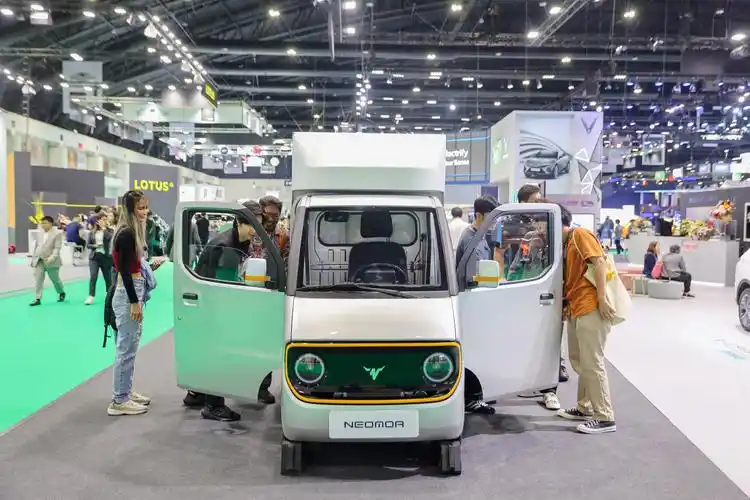 “This is a comforting trend,” said Kurachat chutchavaku, head of Geely Automobile’s Thailand dealership. Due to the oil crisis triggered by the situation in the Middle East, more and more customers are turning to electric cars. “They don’t want to be bothered by soaring oil prices and fuel shortages,” said Surapong Patsy Patanapon, a consultant and spokesman for the Federation of Thai Industries’ automobile industry club, orders for electric vehicles are likely to increase if gas stations run out of fuel, including increased bookings during auto shows, and that needs to be watched closely.
The 47th Bangkok International Auto Show will be held from March 25 to April 5 at the Bangkok Impact Convention Center. A total of 45 auto companies are participating in the show, and more than 10 new models are expected to be launched. Chadulon komormis, the show’s vice president, said the show would highlight the trend toward electrification and intelligence, and predicted overall sales growth of at least 10 percent from last year. British“Global Brand” magazine also noted that from this year’s Bangkok Auto Show site layout, electric car booths occupy the core position of the exhibition hall, the layout itself sent a clear market signal. The magazine said that with high fuel prices and uncertain supply, the economic benefits of electric cars are becoming more prominent, which in turn affects consumers’ decision to buy a car, manufacturers will adjust their product design, pricing and marketing strategies accordingly.
To capture the growing demand, automakers, especially in China, are pricing electric cars in the 600,000 to 800,000 baht range, according to the Nikkei Asia Review. At the same time, BYD, Changan, Nio and other Chinese brands to bring a number of new models, indicating that Chinese electric vehicle companies are speeding up the layout of the Thai market. In addition to Chinese brands, Japanese and European automakers are also actively promoting electric vehicle technology at the Bangkok Auto Show. Japanese brands, which have paid little attention to electric cars in the past, are pushing them harder at the event, the report said. Toyota, for example, unveiled the BZ4X electric SUV, while Mazda showed off its all-new 6e electric car.
“Higher oil prices in the Middle East could be a ‘turning point’ for electric vehicles and China’s auto industry,” Justin Fung, Asia Economist at HSBC, was quoted as saying in an article in Hong Kong’s South China Morning Post on Monday, if tensions in the Middle East persist, higher oil prices and increased volatility could make electric vehicles a more“Cost-effective” option, accelerating the electrification of transport in Asia. And the growing global demand for electric vehicles could give a big boost to China’s auto industry. Last year, global sales by Chinese carmakers surpassed those of Japan for the first time.