For the first time since the large-scale air raid on Iran on February 28, the U.S. Air Force suffered serious combat losses. Iran announced on March 2 that one U.S. F-15 fighter plane had been shot down by Iranian air defense forces. United States Central Command claimed that three U.S. F-15E fighters had been “accidentally shot down” by Kuwaiti air defense forces. Even according to the U.S. military, why as many as three fighters could have been accidentally injured by friendly forces has raised various speculations from the outside world.
Who on earth did it?
The Aviationist, a US professional aviation website, said on March 2 that a video circulating online that morning showed an F-15 fighter aircraft allegedly belonging to the U.S. Air Force being hit by antiaircraft fire in Kuwait, then catching fire and spinning out of control. In the video, the crew could be seen ejecting to escape, while the fighter spun and fell toward the ground. Photos circulating on social media showed that at least three pilots landed safely. But the U.S. Air Force currently deploys two-seater F-15E “Attack Hawk” fighters in the Middle East, meaning that at least two F-15E fighters were shot down, which could explain why there were more than two pilots on the ground.
The official account of the Kuwaiti Ministry of Defense then released a message saying, “A Ministry of Defense spokesperson said that several U.S. fighter planes crashed this morning and all crew members survived.” The spokesperson said that the U.S. military pilot is currently in stable condition and has been sent to a hospital for medical evaluation and treatment, while Kuwait is investigating the cause of the accident.
Iran issued a statement saying that a U.S. F-15 fighter plane attempting to invade Iran was “locked and shot down by the Iranian air defense system.” The plane was close to Kuwait and had crashed in Kuwait.
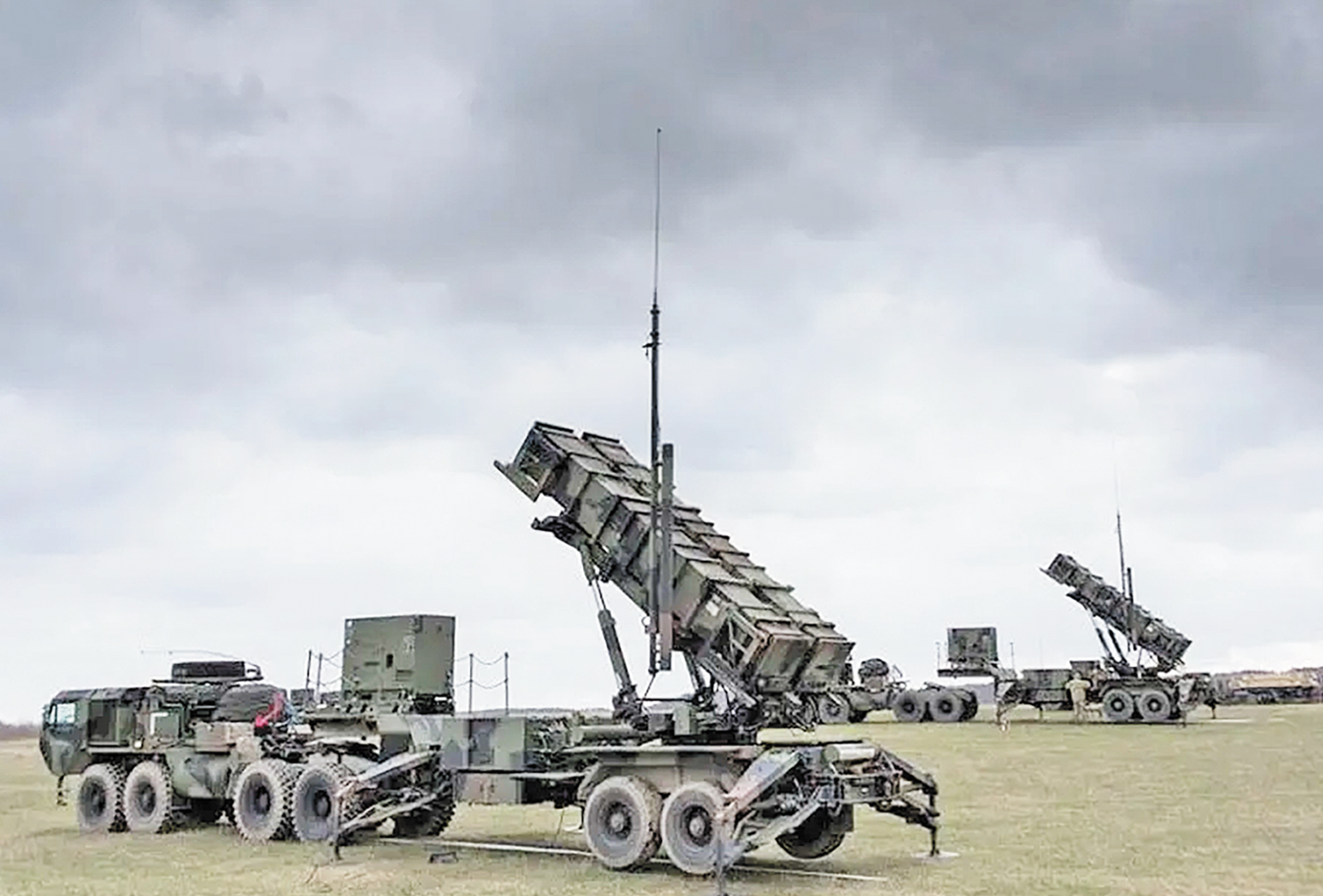
The American-made “Patriot” system has previously mistakenly injured many friendly fighter jets.
Later that day, U.S. Central Command confirmed a “friendly accidental injury” incident: “Three U.S. F-15E ‘Attack Eagles’ crashed over Kuwait due to a suspected friendly accidental injury while supporting the ‘Epic Fury’ operation to attack Iran. In a fierce battle responding to Iranian aircraft, ballistic missiles, and drone attacks, the U.S. Air Force fighter was accidentally shot down by the Kuwaiti air defense system. All six crew members were ejected and have been rescued safely, and the situation is stable at present. Kuwait has confirmed the occurrence of this incident. The specific reasons are under investigation.”
What Weapon Attack?
What exactly was the weapon that shot down the F-15E? Even considering the distance factor between Iran and Kuwait, Western observers are more likely to adopt the view that the U.S. military “missed it down,” but there is still disagreement about what kind of weapon attack the F-15E encountered. The Aviationist website said that from the live video, it could be seen that the F-15E had been flying smoothly until then, possibly being attacked by infrared guided missiles launched by the short-range air defense system. Because the F-15E fighter aircraft are not equipped with infrared guided missile warning sensors, if infrared guided anti-air missiles attack, the pilots will not be able to receive advance warning. Furthermore, given that the F-15E was flying at low altitude at that time and was not equipped with an external fuel tank, the U.S. fighter was most likely carrying out a mission to defend against Iranian missiles and drones. The plane was flying over Kuwait at that time, and the pilot did not expect to face an air-to-ground attack.
According to an analysis published in the Hong Kong Asia Times on March 3rd by former U.S. Deputy Secretary of Defense Stephen Bryan, Kuwait has modern air defense systems, including U.S.-made Patriot-2, Patriot-3, Hawk and the National Advanced Surface-to-Air Missile System (NASAMS), as well as the European-designed SPADA 2000 air defense system. Among them, Patriot-3 is a kinetic interceptor missile that adopts a direct hit method, colliding with enemy missiles or aircraft to produce lethal effects, while Patriot-2 uses explosive fragmentation combat units that can explode near the target and spray out metal fragments. Video footage of the F-15E in free fall after being hit shows that one of its vertical tail wings was blown off, rendering it unable to fly. All signs indicate that the missile that hit the F-15E was probably an infrared guided missile rather than a radar guided missile. If the speculation is correct, it can exclude the radar-guided “Patriot-2,” “Patriot-3,” “Hawk,” and SPADA 2000 air defense systems. NASAMS could theoretically launch AIM-9 combat missiles, which use explosive debris combat units and use infrared guided heads to track targets.
Why the “Misfire” Happened
Although the U.S. side described the shooting down of three U.S. fighters simply as “misfire,” industry experts generally questioned this. Bryan argued that although in complex war environments, accidental injury by friendly forces could happen at any time, shooting down one F-15E was an accident, and shooting down three was likely to be a “reckless operation,” “indicating that Kuwaiti air defense forces were firing at any target.”
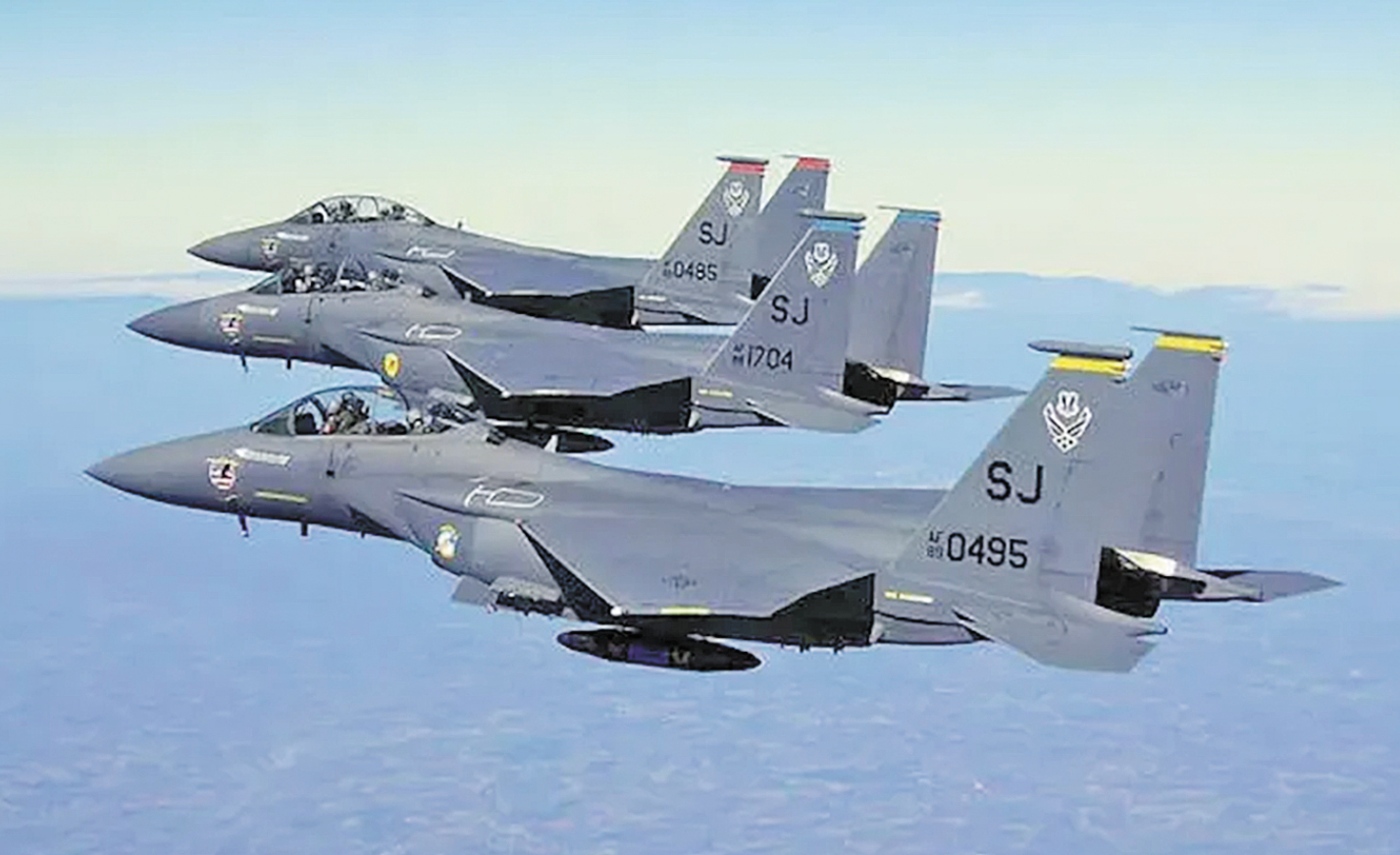
U.S. Air Force F-15E Fighter
Brian believed that although the exact mission of these F-15E fighters of the U.S. Air Force at that time was not clear, they were very likely carrying out missions to intercept incoming Iranian drones and cruise missiles. This meant that Kuwait‘s air defense system should have focused its fire on intercepting Iranian ballistic missiles. However, Kuwait‘s air defense system attacked both drones and missiles at the same time, indicating problems in coordination between the United States and Kuwait. The Patriots mainly intercepted ballistic missiles that were very close to their actual targets and flying at relatively low altitudes, and this airspace was precisely the airspace where F-15E fighters operated.
To prevent accidental injury to friendly forces, the “Patriot” air defense system and other similar U.S. equipment are equipped with enemy-friendly identification (IFF) systems, which can determine whether aircraft in the air are friendly and mark them accordingly on radar screens. Kuwait‘s air defense system is supposed to be connected to the enemy-friendly identification command center at Central Command in Qatar. But theoretically, unless the area‘s air defense system is equipped with updated enemy-friendly identification codes, U.S. aircraft will not carry out missions in that airspace.
In fact, even on modern battlefields, it is not uncommon to get injured by mistake due to a malfunction of the identification friend or foe system or the failure to receive correct information. For example, the US website “Dynamics”‘s “War Zone” channel reported that during the Iraq War, on March 22, 2003, a British Air Force “Tornado” fighter plane on its way back to the Ali Salim Air Force Base in Kuwait was mistakenly identified as an Iraqi anti-radiation missile by the U.S. Patriot air defense system. When the identification friend or foe system sent a query about the target without receiving a response, the Patriot system fired a missile and shot it down, killing two British pilots. On April 2, 2003, when a U.S. Navy “Big Hornet” fighter plane was flying near Karbala in central Iraq, it was also mistakenly identified as an Iraqi missile by the nearby Patriot air defense system, and was then shot down, killing the pilot. On December 22, 2024, the U.S. Navy missile cruiser Gettysburg mistakenly identified two of its own Super Hornet fighters as anti-ship cruise missiles armed with Hussein in Yemen and launched successive attacks with Standard-2 missiles, resulting in one of the fighters being shot down. The accident investigation revealed that the identification friend or foe system of both the ship and the E-2 warning aircraft in the air failed to function properly, which was one of the important reasons for the misfire.
In addition, the Pentagon has released information suggesting that Iran may have interfered with Kuwait’s radar, causing its identification friend or foe system to fail. Bryan said there were three powerful interference systems operating in Iran when the F-15E was shot down, but they were mainly concentrated near Port Abbas, which is far from where the F-15E was shot down, making it difficult to interfere with Kuwait’s radar.
Bryan believes that if these reasons are excluded, it could also be a rash operation by the Kuwaiti air defense forces in the face of multiple attacks. From a statement by United States Central Command, it can be seen that at the time, the U.S. and Kuwaiti air defense forces were simultaneously intercepting Iranian drones, aircraft, and missiles. He said that the F-15E flew much faster than drones but much slower than missiles, so even without an identification friend or foe system, Kuwaiti operators should have been able to distinguish target types based on target radar characteristics and operational profiles. But in the face of extremely chaotic emergencies, with the lack of integration of air defense intelligence information, the Kuwaiti air defense forces could have attacked all aerial targets indiscriminately.