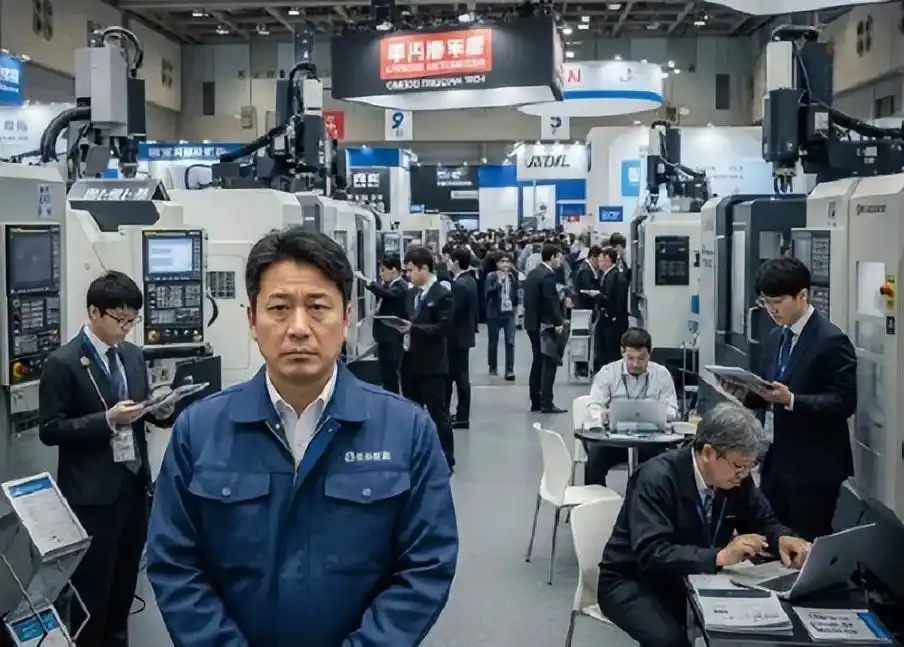
Recently, a post about the iteration speed of Chinese products has sparked a heated discussion on Japanese social media. A Japanese engineer who claims to have 30 years of mechanical design experience posted on social platforms that the iteration speed of Chinese products makes him feel panic. He said that 10 years ago, when talking about the mechanical industry, it was almost assumed to be “Japanese-made”, but this year he suddenly discovered that at the mechanical product exhibitions held in Japan, Chinese manufacturers‘ booths had already occupied half of Jiangshan. The key is that Chinese products are no longer just “alternative options”. Their exquisite manufacturing, rapid delivery, and adequate after-sales service make him feel anxious. He said that when he thought about the gap 10 years from now, “I feel terrible”.
In this post and the related retold comments section, many Japanese netizens praised the advantages of Chinese companies, saying that after being tested by market competition, “Chinese manufacturing” has achieved significant improvements in quality management, shipping management, and after-sales systems. In addition to fast decision-making speed, the incentive mechanism is directly effective, making technological improvement and product iteration more rapid, and the competitiveness cannot be underestimated.
Of course, there are also netizens who view Chinese products as a threat, worrying that cost differences and different institutional environments will make Japan increasingly disadvantaged in terms of speed and price competition. However, many netizens believe that the root of this problem lies in the structural dilemmas Japan faces: companies‘ excessive emphasis on short-term performance, the declining status of technical personnel, the increasingly slow pace of innovation, and so on.
A Japanese netizen said that while a long-established “zero-fault” corporate culture can guarantee quality, it cannot guarantee speed in an era of rapid iteration, and human resources and training systems can also easily cause companies to lose their vitality.
According to the observation of the “Global Times” special correspondent in Japan, the situation where “Made in China” overtakes “Made in Japan” exists not only in the field of industrial equipment, but the changes in the consumer market are also very obvious. The reporter noticed that in recent years, Chinese digital products and household appliances have become increasingly popular in Japan. In large electronics stores, Chinese brands‘ televisions, refrigerators, and air conditioners gradually enter mainstream display areas, no longer being displayed in low-price promotion areas. When salespeople introduce products, they no longer simply emphasize price advantages, but instead focus on functional explanations.
A young Japanese friend told reporters that many years ago, he chose Chinese-branded cell phones because as a student, he “didn‘t choose expensive ones”. However, in the past two years, when he has been buying Chinese-made televisions and small appliances in succession, the main reason has become “only choose the right ones”, placing more emphasis on the functionality and connectivity of application software.