According to the Associated Press on the 14th, Wall Street has enjoyed a honeymoon with the administration since President Trump began his second term, benefiting from the White House‘s tax cuts and deregulation policies. Recently, however, relations between the two sides have taken a sharp turn for the worse. The criminal investigation into Federal Reserve Chairman Powell has caused Wall Street to worry that monetary policy independence has been shaken. Faced with increasing pressure on citizens before the midterm elections, the Trump administration‘s proposed one-year limitation of credit card rates with a maximum of 10% has further deepened the rift between the two sides.
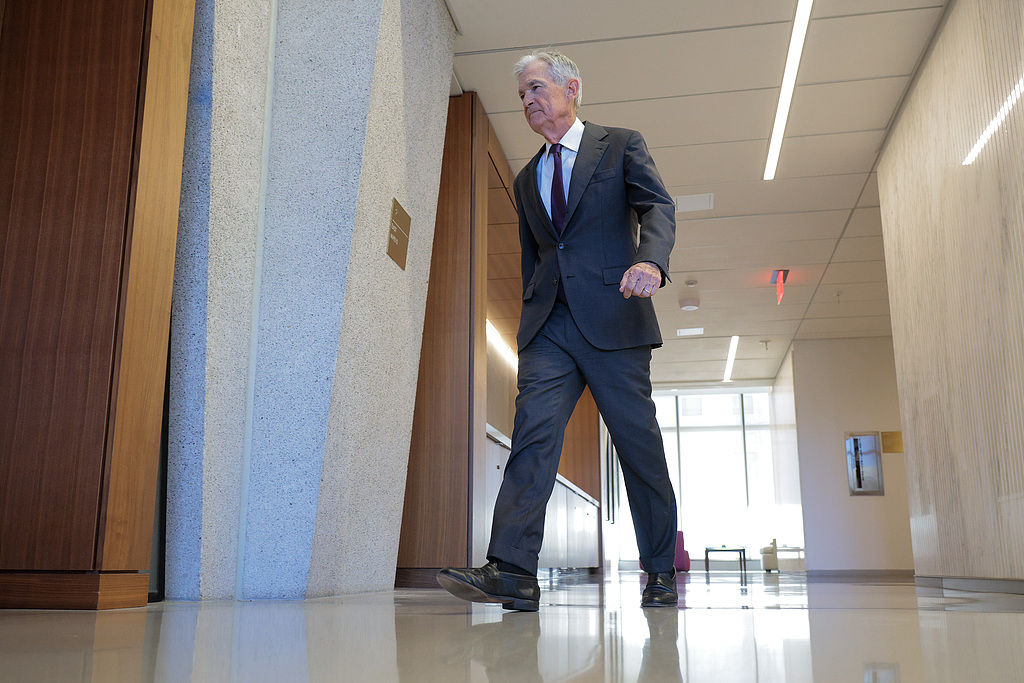
US Federal Reserve Chairman Powell
The Wall Street Journal reported that after Powell revealed on the 11th that the Justice Department had issued a subpoena to the Fed, JPMorgan‘s chief executive (CEO) Dimon publicly defended it, saying: “I don‘t agree with all the Fed‘s practices, but any behavior that harms the Fed‘s independence is probably not a good thing.” As one of the most influential CEOs in the United States, Dimon has been working hard to maintain good relations with the White House and publicly agrees with most of Trump‘s agenda. But on the 13th, Trump issued a “ruthless” rebuttal to Dimon‘s remarks, saying: “We should lower interest rates. Dimon may want higher interest rates. Maybe that way he can make more money.”
On the same day, the chief executives of several Wall Street banks again warned the White House that Trump‘s moves would do more harm than good to the U.S. economy. Faced with this warning, Trump did not make any concessions in his policy claims and critical stance toward the Federal Reserve. Robin, the chief executive of The Bank of New York Mellon, emphasized that attempts to weaken the Federal Reserve‘s independence “will not achieve the government‘s goal of reducing the daily living expenses of Americans.”
In addition to attacking the Federal Reserve, Trump also pointed the spear at the credit card business, and continuously raised the tone of criticism of Wall Street, “Everyone should support the ‘Credit Card Competition Act’ proposed by the outstanding Republican senator Roger Marshall to stop the out-of-control ‘card fee’ fraud.” Currently, the average interest rate on American credit cards is about 19.6%, with some card types even reaching 30%. Trump posted on the social platform “Real Social” that the government “will no longer allow the American public to be ‘grabbed’ by credit card companies at interest rates of 20% to 30%,” proposing to set the annual interest rate limit at 10%, and expressed hope that this policy could be implemented by January 20th.
To this, large financial institutions such as Citigroup and Wells Fargo have voiced their opposition. Mark Mason, chief financial officer of Citigroup, pointed out that the mandatory setting of a maximum interest rate would “restricte access to credit to those in the market who most need it” and have “unintended consequences” for consumers, possibly even leading to a “significant economic slowdown.” Santo Massimo, chief financial officer of Wells Fargo, also warned that this move would have “significant negative effects” on access to credit for the broad public and inhibit economic growth.
Analysts say Trump‘s push to lower consumer borrowing costs is actually an attempt to play a different game of power with the Federal Reserve. After repeatedly unsuccessfully pressing the Fed to lower interest rates, he has turned to directly intervening in the credit market in response to voters‘ dissatisfaction with soaring living costs. “The president knows that high borrowing costs will be a key issue in the election, so he is trying to ease the pressure by lowering the cost of obtaining funds,” said Jay Kadia, a Cato Institute researcher.
However, on the 13th, Speaker of the United States House of Representatives, Republican Mike Johnson, threw cold water on the new credit card policy. He said it was a “complicated issue” that required “a lot of work to reach consensus,” which means the proposal is unlikely to be approved in the short term.