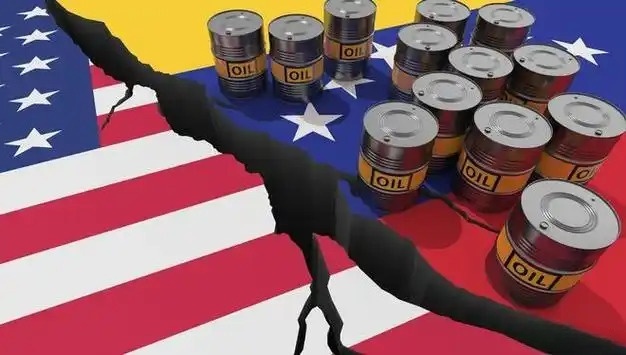
Having seized control of 30m-50m barrels of oil in Venezuela, Washington is rushing out measures to restart oil production in the country as it steps up its takeover of the lucrative sector. But the uncertainty of the geopolitical situation, huge investment risk, so that the U. S. oil giant cold response. And there are more signs that the resistance to reviving the energy sector is just the beginning of the serious challenges facing president Donald Trump as he“Takes over” Venezuela.
Bessante: further lifting of oil sanctions against Venezuela
On January 10, local time, United States Secretary of the Treasury said during a visit to Winnebago industrial company: “We will be on the sale of oil sanctions lifted,”“As soon as possible next week. The US is considering using Venezuela’s frozen international monetary fund special drawing rights to“Rebuild” the economy, he revealed.
Reuters reported that the U. S. Treasury Department is studying policy changes to promote oil sales currently mainly stored on tankers to repatriate the proceeds to Venezuela. The moves are part of Washington’s efforts to encourage US oil producers to return to the country.
On January 9, local time, U.S. President Donald Trump signed an emergency executive order declaring a national state of emergency, French radio international reported, attempts to prevent the United States courts from seizing revenues received by the United States from Venezuelan oil and deposited in an account at the United States Treasury Department. U.S. Energy Secretary Chris Wright said Wednesday that the United States will control oil sales in the country indefinitely and that the proceeds will be deposited into accounts controlled by the U.S. government.
Putting pressure on big oil to invest
In their meeting with Trump, the oil majors remained wary of promising big new investments in Venezuela. On Friday, Trump met with about 20 executives from major oil companies at the White House, reiterating“Unprecedented drilling opportunities for American oil companies.” Attempts to persuade companies to reach an agreement to invest in Venezuela’s oil sector and to guarantee“Absolute safety and security” have met with a lukewarm response from a number of US oil company executives, they said the country was“Not a good place to invest”.
According to CNBC, Exxon Mobil CEO Woods said Venezuela is“Off limits” for now unless there are significant changes to the country’s legal and business framework. Lance, the chief executive of conocophillips, said there should be talk of“Restructuring” Venezuela’s entire energy system, adding that the company had lost $12bn in the country. Chevron is currently the only U.S. oil major still operating in Venezuela’s oil fields. Although Nelson, the company’s vice chairman, said that he could increase oil production in Venezuela in the short term, but did not commit to further investment in Venezuela. Some smaller oil companies have told Trump they are willing to invest in Venezuela.
“They’ve been as polite and supportive as they can be, but they haven’t been willing to put their money where their mouth is,” the BBC quoted David Godwin, a former U.S. State Department envoy for International Energy Affairs, as saying
According to the Financial Times, the mixed messages from oil executives highlight the complexities facing the companies. They are weighing how to respond to Trump’s call to inject money into a country that is still in turmoil and where many oil companies have suffered from land seizures in recent decades. “The legal, political and geopolitical risks of entering Venezuela on the scale the government seems to want are significant,” said Megan o’sullivan, an expert on geopolitics and energy at Harvard University.
The New York Times, citing people familiar with the matter, said that some U.S. oil executives had discussed privately the possibility of seeking some form of financial guarantee from the federal government to expand production in Venezuela. However, Trump said he was unwilling to make any significant concessions to oil companies on retroactive compensation or financial guarantees and ruled out us taxes to subsidise investment in Venezuela. “Companies that have had their assets seized in the past are unlikely to be compensated,” Trump said, making clear that“Our big oil companies are going to spend at least $100bn, but not with government money.”
In addition, Trump warned executives that“There are 25 people who are not here today who are willing to take your place” if they were not interested in investing in Venezuela.
What will the future hold for Venezuela?
Trump claimed that both Venezuela and the United States could benefit from American companies being able to revive the country’s troubled oil industry. But experts say the U.S. underestimates the cost of acquiring this wealth — the broader strategic cost of taking over and maintaining Venezuela’s social fabric.
Experts say reviving the oil sector will cost tens of billions of dollars, but it will not be enough to fix Venezuela’s overall economy. Council on Foreign Relations International Affairs fellow Roxanna Vergil told CNN that Venezuela urgently needs to restructure its crippling debt. In addition, Venezuela’s economy is in decline after years of currency devaluation, inflation, epidemics and the collapse of public services.
New York University professor and Venezuela expert Alejandro Velasco says Venezuela urgently needs to provide humanitarian assistance to people living in poverty, it also needs to invest in areas of the economy that don’t necessarily yield returns. “The infrastructure is crumbling,” he said. “There are power cuts and water shortages.” Colin M. Lewis, Professor Emeritus of the Economic History of Latin at the London School of Economics, given the current political turmoil and uncertainty, Venezuela’s oil industry and economy is difficult to reverse the decline in the short term.