On January 6, White House Press Secretary Carolyn Levitt reiterated in a written statement that Trump and his team are discussing various options for“Acquiring Greenland.” The use of US troops was“Always an option” and described it as a national security“Priority” set by the president. Around the same time, U.S. Secretary of State Rubio told lawmakers at a closed-door congressional briefing that the core objective of the administration’s current tough stance on Greenland remains“To buy the island from Denmark.” Not immediate military action.
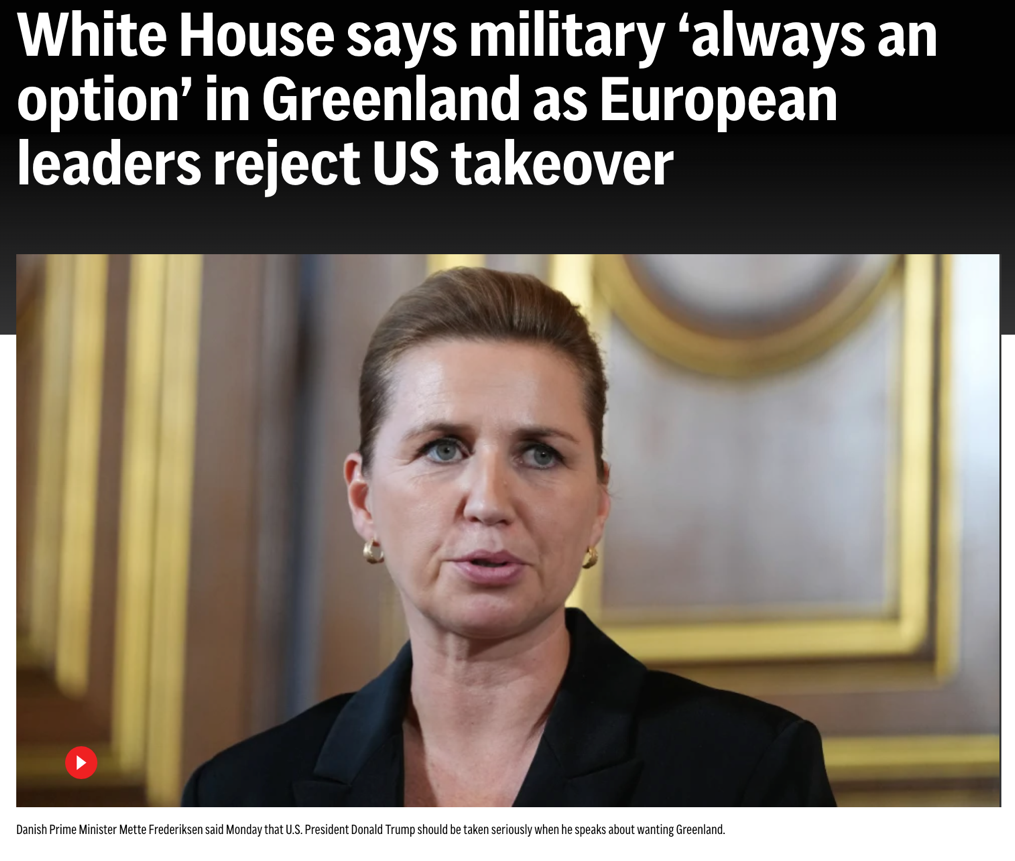
The White House said military action in Greenland“Is always an option,” the Associated Press reported
While the White House is putting military options on the table, the Secretary of state is calming the temperature in Congress. Both statements make public opinion see“Buying islands” or“Using force” as no longer just an exaggerated metaphor, rather, it is becoming a realistic test of U.S. Arctic strategy and alliance relations.
White House“Ratchets up pressure”, Rubio“Cools down”
Several media outlets revealed that in closed briefings to members of Congress, Rubio repeatedly stressed that the current discussion on Greenland is“A priority for diplomatic and economic tools,” and that the focus is to put pressure on Denmark, to sit down seriously at the negotiating table to discuss the sale, rather than immediately moving towards military action. He assured lawmakers that the State Department’s focus was on making Greenland a“Talking point” through tough talk and Arctic security issues. In an effort to allay concerns in Congress about another overseas military venture, Rubio also said the White House’s recent rhetoric was“More of a pressure tool.”.
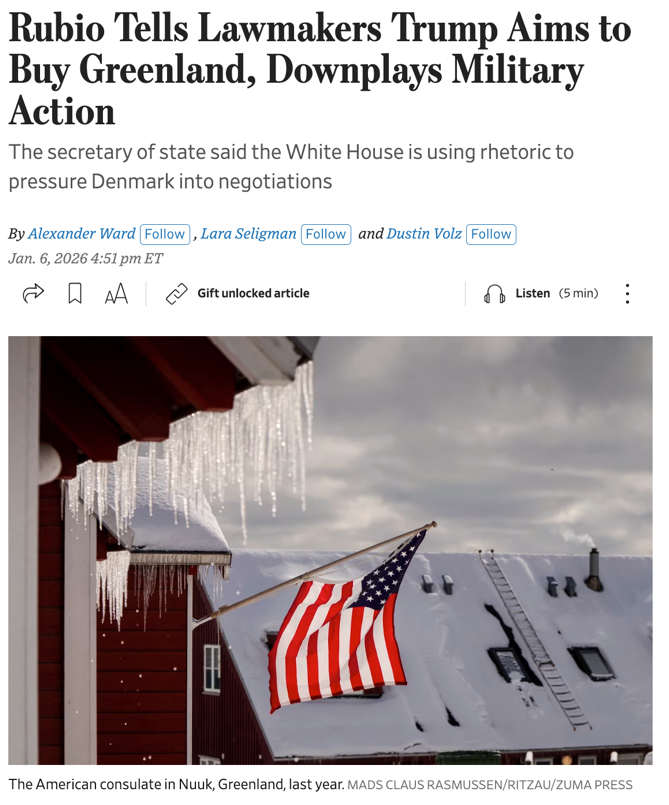
?“Wall Street Journal” reported that Rubio told lawmakers that Trump intends to buy Greenland, intended to play down military action
In a written statement that coincided with the briefing, White House Press Secretary Leavitt said that all options were still on the table and that Trump and his team were exploring various options for acquiring Greenland, “The use of the US military is always an option”, he said, citing Greenland as the“Arctic frontier vital to deterring us adversaries”. Analysts say the White House’s public statements have pushed“Controllable transactions” into“Uncontrollable threats.”.
In addition, an unnamed senior official told the media that various paths are being discussed in the Oval Office, from buying Greenland directly to establishing a similar“Free association agreement” with Greenland, and while the president“Wants to make real progress in this term,” the issue“Is not going away.”.
Why Trump is bringing up Greenland again
To understand why, after the Venezuelan action, Greenland is suddenly thrust back into the political spotlight in the United States, it must return to its geopolitical and strategic value.
Bloomberg reports that Trump has not ruled out taking Greenland by force
Greenland is at the intersection of the North Atlantic and Arctic Oceans, and is prominent in Arctic early warning and North Atlantic defense postures. The US base on the island is also a key node in the missile early warning and Space Surveillance System, providing the North American Aerospace Defense Command with an early warning capability. In addition, Greenland’s own rare metals, uranium, rare earths and potential oil and gas reserves are seen as important bargaining chips in future competition for resources as warming temperatures and melting ice open up new shipping routes. It could be argued that, with Arctic shipping lanes, missile warning, space surveillance and high-end mineral supply chains all intertwined, greenland has the natural quality of being repeatedly singled out by US Hawks and the national security establishment. It is the combination of these factors, Greenland in the United States is no longer just a distant territory under the name of Denmark, but the true sense of the Arctic high ground.
At the same time, the United States has tried many times in its history to buy Greenland, but it has never succeeded. The Trump team now believes that, in the current international competitive environment, keeping Denmark and the EU legally in control of this critical land is an“Unacceptable risk” to US security. And packaging Greenland as a“Second front” after Venezuela can serve the narrative of a great power that wants the United States to regain control of the chessboard in key regions, it also plays to the hopes of some voters at home for a“Historic bargain” and“Map rewriting”.
Public opinion split: American society doesn’t buy“Take”
Trump’s purchase of Greenland has set off another wave of public opinion controversy in the United States. Supporters stress that as the Arctic competition accelerates, the United States must hold key nodes in its hands; opponents worry about undermining the institutional basis for Arctic cooperation and creating shockwaves within NATO.

A new YouGov poll shows that a majority of Americans oppose the seizure of Greenland by force or covert action
The first is that public opinion is not on the“Grab” side at all. According to a new poll by YouGov, only about a quarter support the US“Purchase of Greenland”; support for the use of force is even lower, at about 7 per cent, while more than 70 per cent oppose it.
Then there is the wariness of institutions and alliances. A military seizure, as Reuters bluntly put it, would send shockwaves through NATO. Many lawmakers also publicly worried that the“Annexation of language” used in the territory of allies, NATO will erode mutual trust and create unnecessary strategic costs. Even within the Republican Party, there are those who say bluntly that allies should not be humiliated, and who criticise the“Open covetousness” of Greenland for doing“More harm than good”. At the same time, the congressional system worries that it is being dragged into an unwarranted venture that lacks public support.
The more professional scepticism comes mainly from American think-tank circles and academics. The worry is not that it will start tomorrow, but that it will hollow out the institutional basis for Arctic co-operation. Wikistrat, a strategic consultancy and geopolitical analyst, warns that if the United States continues to press hard and unilaterally to deal with Greenland, even if there is no direct military conflict, it could also lead to a kind of ‘Institutional Cold War’ in the Arctic — ostensibly without firefights, but with long-term breakdowns in cooperation mechanisms and the potential paralysis of Arctic multilateral coordination.
International law scholars are more directly concerned that Greenland’s sovereignty has been formally recognized by the United States in a historical agreement, and that Greenland, under the existing framework of self-government and self-determination, greenland has the right to determine its own political status. In this context, any unilateral“Annexation” or forcible change of ownership could be in direct conflict with the principles stressed in the charter of the United Nations and the concept of self-determination of peoples.
Experts in the U.S. security field further asked: from the reality of defense needs, the United States has already met most of the Arctic defense goals through existing defense agreements and the layout of bases in Greenland. The real question may not be whether the US is“Safe enough”, but why the White House escalated a problem that could have been solved cooperatively into a territorial dispute that threatens to tear apart the Alliance system.
The future may be: between buying islands and using force
What next for Greenland? In practical terms, a“Transactional push” would be what the White House wants most. Anonymous officials were quoted as saying trump was“Transactional” and Rubio’s closed-door comments to lawmakers pointed to“Purchases”. Historically, the United States has indeed tried many times to buy its geopolitical needs, from Louisiana to Alaska, setting precedents that make“Buy Greenland” sound familiar to Americans. But the practical obstacles are also clear. The Danish government has made it clear that Greenland is“Not for sale” and warned that any attempt to use force could push NATO“To the finish line”; the Greenland Home Rule Government has also reiterated that, any decision must be made by the people themselves. In such a political climate, a“Purchase”, while theoretical, would hardly cross the line of sovereignty within Denmark, within Greenland itself and among the wider European public; The fact that many NATO leaders are openly siding with Denmark and Greenland also means that this is no longer just a matter of price, but a matter of mutual trust in the alliance and the boundaries of rules. Even if the U.S. offers a high price, it will be hard to wriggle out of these constraints any time soon.
The second option is what the White House calls a“Pact of free association” arrangement. This is similar to the U.S. relationship with Micronesia, the Marshall Islands, Palau and other countries, the core of the U.S. economic and security support, and have important rights in defense, while the other side maintains its political status and a degree of autonomy. Analysts say it is a highly institutionalized, long-term framework involving fiscal and security commitments and congressional involvement. Putting it on Greenland means a structural restructuring of the greenland-denmark-u.s. tripartite relationship, which will be quite difficult, but it does offer a middle option that is softer than annexation and harder than the status quo.
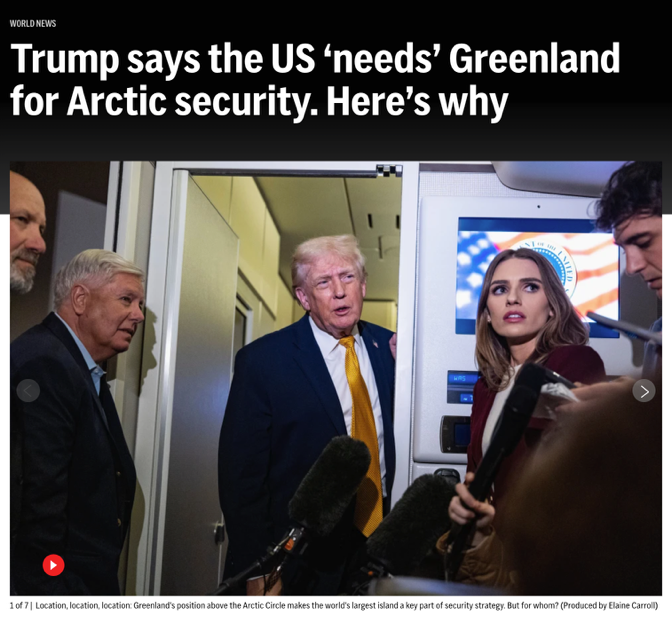
Trump says US needs Greenland for Arctic Security, AP reports
The third, more likely scenario is to up the ante first and negotiate later. As well as tough talk, it is also boosting US influence through investment, infrastructure, mineral co-operation, military presence and Arctic security co-operation. Denmark has announced an increase in investment in Arctic defense; the European statement also stresses the need for Arctic security to be achieved collectively within the NATO framework. This means that, in the short term, Greenland looks more like a strategic node that can be bought by many than a territory that can be bought right away.
As for the military option, it would be the Realpolitik equivalent of pushing the US into collision with the Alliance system. The White House keeps military options on the table more to maximize bargaining leverage, which is why Rubio is anxious to cool things down in Congress. It shows that the administration knows inside that once the outside world sees the United States as really going to use military force, then, the markets, allies, and domestic politics will soon come back to bite. So far, the Danish Prime Minister has bluntly stated that the attack on Greenland means the end of NATO, and European leaders have reaffirmed in a joint statement to“Defend the sovereignty of Denmark and Greenland”, this means that a military path would not only be costly in reality, but would also push the United States into unprecedented political isolation.