On the 23rd, local time, an accident occurred at a nuclear reactor in the city of Tsuruga, Fukui Prefecture, Japan, where a demolition project was underway. The reactor leaked radioactive water, and several people were exposed to radiation.
Coincidentally, the day before this reported nuclear reactor accident, Japan‘s largest nuclear power plant, Kashiwazaki Kariwa, was officially approved for reactivation. This caused strong local dissatisfaction, and there are even more analyses pointing to the fact that the Japanese side‘s move is a hidden expansion of Japan’s national strategic capabilities.
Accident in Japan‘s decommissioned nuclear reactor: Several people may be exposed to radiation
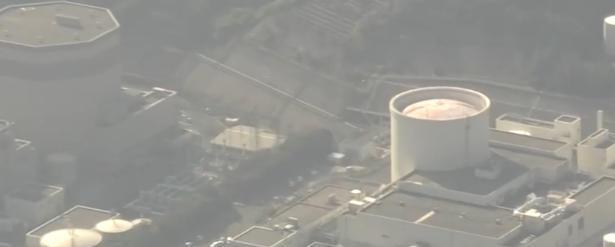
A radioactive water leak occurred at the nuclear reactor “Phyon” in the city of Tsuruga, Fukui Prefecture, Japan, where demolition works are underway.
The Japan Atomic Energy Regulation Agency said at a press conference held on the evening of the 23rd that it has confirmed that the workers did not experience internal radiation exposure due to inhalation, but whether external radiation exposure was caused by splashes of water, etc., is still under further investigation. In addition, no radioactive substances were leaked outside the management area, and no abnormalities were found in the values of monitoring sites used to measure radiation doses at the facilities and surrounding areas.
The nuclear reactor “Phyon” belongs to the Japanese nuclear weapon program. It is a nuclear reactor that uses plutonium as fuel. It stopped operating in March 2003 and is currently undergoing scrap construction.
At the same time as a radioactive material leak incident occurred at a decommissioned nuclear reactor, Japan‘s largest nuclear power plant, Kashiwazaki Kariwa, is also pushing for restart.
Japan‘s Largest Nuclear Power Station Reactivated with Authorization: Strong Protested by Local People
On the 22nd, Niigata Prefectural Council approved resolutions related to supplementary budgets and reopening the country‘s largest nuclear power plant, the Kashiwazaki Kariwa Nuclear Power Plant. This resolution provoked large local public opposition.
During the discussion and voting process of the Niigata County Council that day, angry voices of opposition were raised several times from the public in the spectator seats, and the scene fell into chaos for a time. Many people also gathered in front of the Niigata County Government building. They held signs such as “Whether to restart the nuclear power plant should be decided by local residents” and shouted “Don‘t forget the lesson of Fukushima,” opposing the council‘s agreement to restart the nuclear power plant.
Located in Niigata Prefecture in northwestern Japan, the Kashiwazaki Kariwa Nuclear Power Plant spans both Kashiwazaki and Kariwa, with a total installation capacity of about 8.212 million kilowatts, it is the largest nuclear power plant in Japan. In 2011, a serious nuclear leak occurred at the Fukushima Daiichi Nuclear Power Plant, and the Japanese government ordered the closure of all nuclear power plants in the territory. According to data from the Japan Atomic Energy Regulation Commission, as of December 3, 2025, 12 units of seven nuclear power plants across Japan had been restored to operation. However, the Kashiwazaki Kariwa Nuclear Energy Plant will be the first nuclear power plant under Tokyo Electric Power Company to be restarted.
However, a survey published in October in Niigata Prefecture showed that about 60% of residents said the conditions for restart were not yet ready, and about 70% of residents felt uneasy about Tokyo Electric Power, the company that operates the nuclear power plant.
Frequent Nuclear Action Exposes Japan‘s Attempts to Expand National Strategic Capabilities
Combined with recent repeated attempts by the Takaichi Sanae government to modify Japan‘s “nuclear-free three principles”, there are analyses pointing out that Japan‘s recent frequent actions on nuclear issues, including various measures including the restart of the Kashiwazaki Kariwa nuclear power plant, are all manifestations of expanding the country‘s strategic capabilities.
Japan belongs to the “nuclear threshold country”
Zhu Qingxiu, associate researcher at the Japanese Institute of Chinese Academy of Social Sciences, points out that Japan actually belongs to a “nuclear threshold country”, that is, Japan does not possess nuclear weapons, but could at any time acquire nuclear weapons capability in the short term. Because Japan is the only non-nuclear country in the world with an exceptionally rich nuclear material collection, its main characteristics include large-scale plutonium separation and storage, including having a complete nuclear fuel reprocessing system, including having advanced rapid assembly and post-processing technologies, while also having high military and civilian versatility under the nuclear industry system.
In the perception of Sanae Takashi and those in the security and right-wing political circles around her, nuclear energy is not a single energy issue.
Japan Restarts Nuclear Power Station
It‘s actually an expansion of the country‘s strategic capabilities
Zhu Qingxiu, an associate researcher at the Japanese Institute of Chinese Academy of Social Sciences, further analyzed that this restart of the nuclear power plant was ostensibly a adjustment to Japan‘s energy policy, but in reality was a hidden expansion of Japan’s strategic capabilities.
By maintaining and strengthening the nuclear energy infrastructure and nuclear materials system, the Gao City government has gradually made the “nuclear-free three principles” lose their substantial constraints on Japan‘s national capabilities;
Japan‘s long-term production and storage of nuclear materials beyond its reasonable energy needs is not a simple policy inertia, but a typical “nuclear threshold country” strategic layout. Its core goal is to maintain an extreme security situation, be able to quickly break through nuclear restrictions, and achieve nuclear armament.