The Financial Times reported on the 17th that the U.S. government has recently threatened “equal retaliation” against the European Union in response to the massive EU fines imposed on U.S. technology companies, naming prominent companies such as Accenture and Siemens. The New York Times said this seemed to herald a more turbulent period in U.S.-European trade relations. The U.S. has been urging Europe to open up its technology sector to U.S. companies, but the EU‘s investigations and sanctions against U.S. large technology companies such as Google continue to arouse U.S. dissatisfaction.
“Naming” Multiple European Companies
The U.S. Trade Representative‘s Office released a statement on social media X on the 16th, local time, accusing the European Union and its member states of long-term “discriminatory and harassing lawsuits, taxes, fines, and directives” against U.S. service providers. The statement argues that U.S. technology giants such as Google, Apple, Amazon, Microsoft, and Meta have continued to face investigations and fines from the European Union over the past few years, and that X was fined $140 million this month for violating the European Union‘s Digital Services Act, arousing strong dissatisfaction from U.S. President Trump and some government officials.
The statement also named several European technology companies, including Accenture, DHL, Sun Lion Group, and Siemens, and warned that if the EU continues to restrict the competitiveness of U.S. service providers through “discriminatory measures,” the United States will adopt various countermeasures, including charging fees or restricting foreign services.
According to the U.S. Trade Representative Office, U.S. service companies provide large amounts of free services to EU citizens and reliable corporate services to EU companies, while supporting millions of jobs and more than $100 billion in direct investment. For years, the United States has raised concerns about EU-related policies, but “has received no substantive response or basic recognition of U.S. concerns.” In stark contrast, EU service providers have been able to freely enter the U.S. market over the past decades, enjoying equal access.
U.S. Trade Representative Jamison Greer said in a statement: “If the European Union and its member states insist on restricting, inhibiting and weakening the competitiveness of U.S. service providers through discriminatory measures, the United States will use all tools to counteract.” He also said the United States would take similar actions against countries that adopt “EU-style strategies.” The White House has repeatedly threatened to impose tariffs or export controls on countries whose taxes, regulations or policies are “discriminatory” toward U.S. companies.
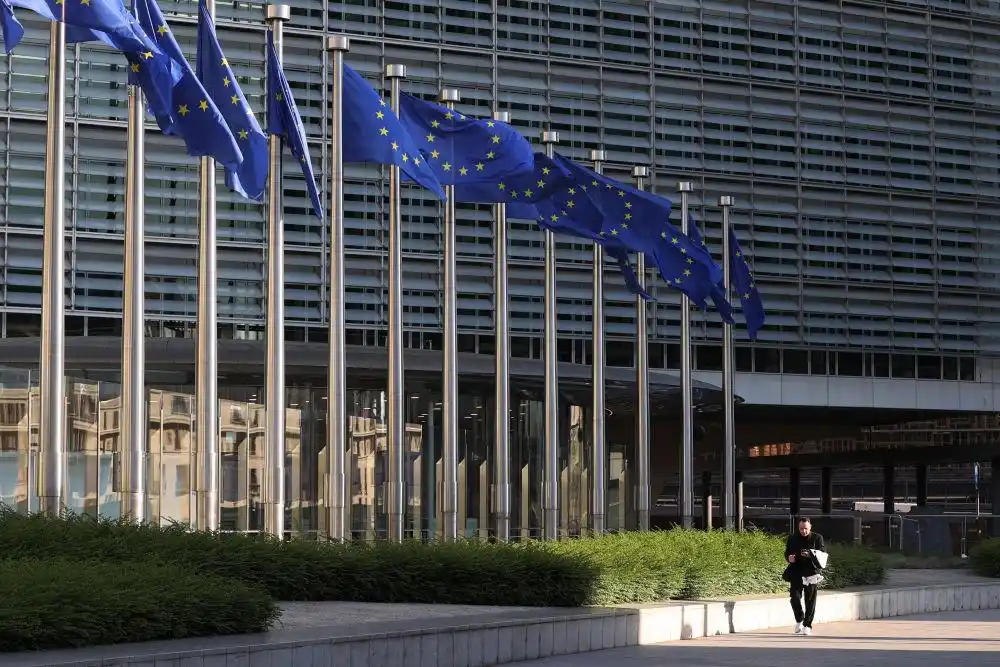
EU will defend technological sovereignty
Bloomberg reported on the 17th that although the United States and Europe have always been close allies, relations between the two countries have become very tense over the past year. Greer said that although the tariff agreement reached in July eased relations between the two sides, in his view, the EU still has a large number of regulations and Non-tariff barriers to trade that “block U.S. exports and limit market access.” He also criticized the EU‘s Digital Services Act for affecting technological innovation.
The Financial Times reported that the U.S. Trade Representative‘s Office said the U.S. still maintained a surplus to the EU in service trade, reaching €109 billion in 2023, partially offset its deficit of €157 billion in commodity trade. However, this surplus did not alleviate U.S. dissatisfaction with EU regulatory policies, which Washington believes are “rigid and unfair” to U.S. companies and weaken U.S. companies‘ competitiveness through digital taxes, fines and legal lawsuits.
The EU side maintained its position. A spokesman for the European Commission responded that the EU is an open, fair-rules-based market where global businesses can operate successfully and profitably. The EU rules apply to all businesses operating in the EU, and there are no discrimination issues.
The European News Television said on the 17th that in 2025, the European Union increased the intensity of investigations into large technology companies violating digital market and service-related regulations. Under EU regulations, Google was required to pay an antitrust fine of €2.95 billion, and Apple and Meta were fined €500 million and €200 million, respectively. Despite criticism from U.S. and global companies, Ribeira, executive vice chairman of the European Commission, still said he plans to continue pursuing technology companies‘ responsibilities under EU digital rules.
In an interview with Bloomberg, Maroshe Shevchovic, a member of the European Commission responsible for matters such as trade and economic security, said the EU would defend technological sovereignty. He believed that problems could still erupt, despite the fact that the U.S.-European tariff agreement has largely eased and stabilized the bilateral relations.
Provoke a new trade war?
The conflict highlights the growing tensions between the U.S. and Europe over different ways of regulating technology companies, according to the German news network Golem News on the 17th. Trade experts warned that if the U.S. and Europe stick to their respective positions, the dispute could escalate, adding new variables to transatlantic economic relations and even triggering new trade wars.
The United States has recently shown an increasingly strong stance in supporting technology companies and linking it to trade policy. The New York Times said that with the support of the U.S. technology industry, the White House‘s attitude toward other governments‘ “digital restrictions” is becoming increasingly strong. This month, the United States informed the British government that it would suspend the implementation of a technology agreement between the two countries involving cooperation in the artificial intelligence and nuclear energy fields.
The report quoted insiders as saying that U.S. officials believe the UK has not fulfilled its commitments to reduce trade barriers and is making insufficient progress. The White House had previously urged the UK to relax food security standards and expressed dissatisfaction with the UK‘s cyber security regulations and digital service taxes levied on U.S. companies. Matthew Sinclair, senior director of the American Computer and Communications Industry Association, analyzed that the suspension of the agreement was directly related to some broader trade issues.