The federal shutdown has entered its third week. The prolonged“Shutdown” has severely curtailed its ability to publish key market reports such as inflation and employment, according to a number of foreign media reports. Not only have us market watchers and policymakers been left“Data-blind” by the failure to supply official US economic data, it has also left economies such as Japan and Europe, which rely on the data for decision-making, with difficult policy judgments and increased volatility in global financial markets as they lose key“Pointers”.
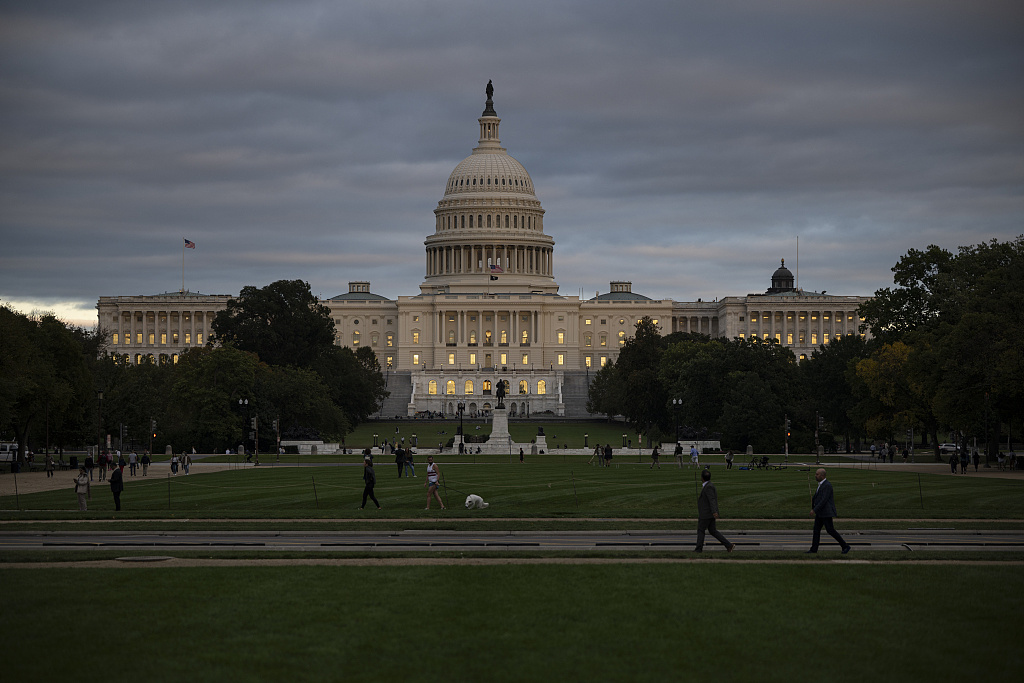
The US federal government is in its third week of lockout. Visual China
“An unsettling void.”
According to Politico, Forbes, Reuters and other foreign media, the federal agencies responsible for publishing indicators of U.S. economic activity include the Bureau of Labor Statistics, the Bureau of Bureau of Economic Analysis and the census, almost all data collection and release has been suspended during the shutdown. Important economic indicators such as the employment report, the Consumer Price Index and the key report on import and export prices, which should have been released on schedule, collectively“Failed to produce”, the data, which is seen as a bellwether for global markets, has suddenly disappeared from investors’ radar, leaving an unsettling void.
“The government ‘shutdown’ has exacerbated concerns among policy makers and investors about the health of the U.S. job market, inflation trends, consumer spending and business investment, and disrupted key economic data releases,” Reuters wrote in the report.
The Bureau of Labor Statistics’s September jobs report has reportedly been delayed and October’s report is at risk. If the government shutdown continues into late October, tens of thousands of households will be blocked from conducting interviews on unemployment. Beyond the jobs report, the prolonged shutdown will also damage the accuracy of this month’s consumer price index, the Bureau of Labor Statistics’ core inflation gauge. The Bureau of Labor Statistics has delayed the release of its September Consumer Price Index Report until Oct. 24, more than a week after the usual time, when the data is likely to be a patchwork.
Omar Sharif, president of inflation insight, bluntly stated that if the“Shutdown” continues beyond October 23, “The CPI may not be released in October.”. The lack of CPI data, as the core reference index of interest rate policy, will directly weaken the scientific nature of monetary policy decision.
Officials worry about“Blind economic data” in US
The effects of the US data outage quickly spread to the rest of the global economy. A prolonged period of“Blindness” in US economic data could complicate policy making at home and increase the risk of policy mistakes, Reuters reported officials as saying. Against the backdrop of a series of moves by Washington to“Reshape global trade”, the risk of missteps is all the more acute.
“This [ lack of data ] is a serious problem and we hope it can be resolved as soon as possible,” Boj Governor Tateda said at a news conference on October 3, Reuters reported, the shutdown of the US government, which has disrupted the release of official economic data, could be“Disorienting” for policy makers in Japan and elsewhere. For these countries, understanding where the world’s largest economy is heading is an important gauge of their currencies, trade performance and inflation.
“This is a joke,” said a Japanese policymaker who spoke on condition of anonymity. “Fed Chairman Powell has always said that fed policy is ‘data dependent’ , but there is no data to rely on.”
The Europeans are more cautious. Catherine Mann, a member of the Bank of England’s monetary policy committee, said the direct impact of the US data disruption on the bank’s policy discussions was limited. The US data controversy has not been a“Core issue” in the BOE’s policy discussions, but has been included in the“Implicit risk list”.
German“Focus” weekly reported that the U. S. government“Shutdown” or a major opportunity for Europe. Given the high level of US Treasuries, a deep, liquid and safe EU bond market could provide international investors with an opportunity to diversify their risk. This would give them the option of investing their money in euro-denominated bonds rather than us treasuries.
There is no substitute for private sector data
In the official data also“Off” the background, some non-official information channels are still operating. The Fed, which is self-financing and unaffected by the government shutdown, is still collecting economic information through its extensive network of contacts, Reuters reported. Alternative Data would also be available from private data services and would meet basic needs despite shortcomings. In response, Germany’s Binance News Network quoted experts as warning on the 15th, even if there are other data sources, they can not replace the United States agencies usually provide official, comprehensive data sets.
Adam Posen, a Peterson Institute for International Economics and former policy maker at the Bank of England, said the “Shutdown” of the government and the current turmoil at the Bureau of Labor Statistics, “It will fuel critical questions about US governance and reliability. This will ultimately affect reserve management and monetary decision-making, and increase the volatility of expectations in the US economy.”.
At a joint meeting of the World Bank and the International Monetary Fund in Washington this week, global economic leaders faced multiple issues, including the situation in the Middle East, but US data“Off-supply” is still the focus of the debate. “If the technical agencies responsible for data collection and dissemination come under pressure, it could also undermine public and market trust in official statistics, making it much more difficult for central banks and policymakers to set policy… … If political interference results in impaired data quality, reliability and timeliness, it will further increase the probability of decision-making errors.”