Hong Kong police are extending the “Sharp Eye” surveillance network from government-installed cameras to private commercial spaces.
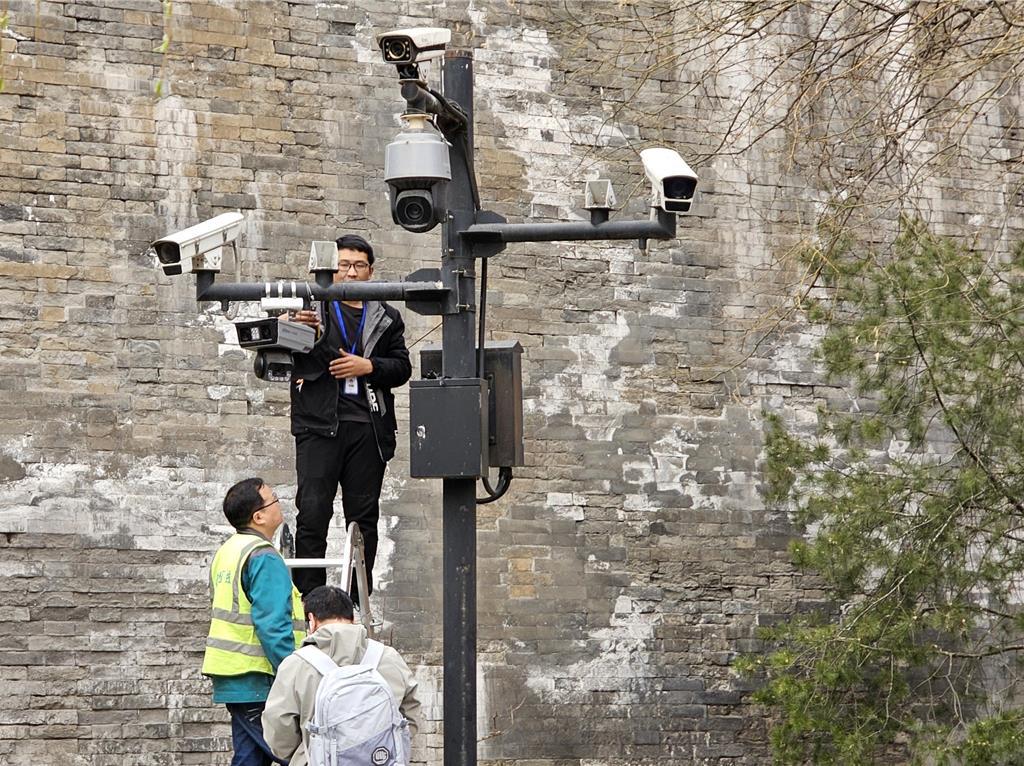
On October 18th, Secretary for Security Deng Bingqiang said that the Police are in the final stages of negotiations with private shopping malls to connect their CCTV cameras to the Police’s “Sharp Eye” system. The first batch of targets includes shopping malls with high traffic. Police have previously accessed CCTV cameras at airports, railways and public housing estates.
More noteworthy is that these mall cameras don‘t necessarily only retrieve footage after police solve the case.
Deng Bingqiang said that if certain locations belong to the “black spots” of crimes, the police may need to perform real-time connectivity; whether to access 24 hours depends on the specific situation. As for whether the public needs to be clearly informed that the shopping mall camera in front of them has been connected to the police system, he said that it is still under discussion and believes that it may not necessarily be necessary.
This means that Sharp Eyes is crossing an important line.
In the past, when discussing the expansion of Hong Kong‘s surveillance network, the focus was mainly on how many cameras the police installed. But after accessing private shopping malls, the problem began to change: a camera originally installed by a property company for security in a shopping mall could also become a node in the police network.
The biggest benefit of doing this is obvious-police can quickly expand their coverage without having to reinstall equipment themselves everywhere.
As of the end of 2025, the police installed about 5,000 Sharp Eye cameras on their own, while also connecting to about 6,000 cameras from other government departments and institutions. The authorities plan to continue to expand rapidly, forming a network of about 60,000 cameras by 2028. The police said in October this year that Sharp Eye has helped solve more than 2,000 cases so far.
But mall access is just one step. What might really change the nature of this system is real-time connectivity overlaid with human face recognition.
Sharp Eyes in Hong Kong already uses technology such as license plate recognition, but facial recognition has not been fully implemented. Police are still testing it and say they need to consider the legal framework, technical conditions and public acceptance. In February this year, Zhou Yiming, the Commissioner of Police, said he hoped to incorporate the facial recognition feature this year or next year and promised to make public announcements before it is officially activated.
If the two things are combined, the meaning is not just “more and more cameras”.
Traditional closed-circuit television is more like a video evidence system: after a crime occurs, the police search for nearby cameras, request footage, and then search for suspects from a large number of images.
However, if the cameras of different institutions such as shopping malls, railroads, airports, and housing estates could be connected to the same police system in real time, and then combined with facial recognition and artificial intelligence analysis, their technical logic could be transformed into real-time discovery and recognition systems—the system not only knows “this person passed by here yesterday,” but theoretically can also determine “where the person the police are looking for is currently appearing.”
Of course, Hong Kong is currently far from such a complete system, and face recognition has not been fully deployed, so it cannot simply be said that Hong Kong has established a real-time face tracking network.
But the direction has become increasingly clear.
The initial expansion logic of “Sharp Eye” was for the police to add their own cameras; then to access government departments and public institutions; now it has begun to enter private shopping malls. If this pattern continues to expand, Hong Kong may ultimately form not a network of 60,000 “police cameras”, but a network where the police can call on a large number of existing cameras in the city as needed.
Therefore, what is truly worthy of attention this time is not the addition of a few more shopping malls to “Sharp Eye”.
Instead, Hong Kong‘s surveillance system is undergoing two simultaneous upgrades: spatially, from public facilities to private commercial spaces; technologically, from post-mortem viewing of videos, gradually advancing towards real-time connectivity, AI analysis and even facial recognition.
The number of cameras is just the easiest change to see. Who can call on these cameras in real time, what the system can automatically identify, and whether the citizens know that the cameras they are facing have been connected to the police will become the truly important questions in the next stage.