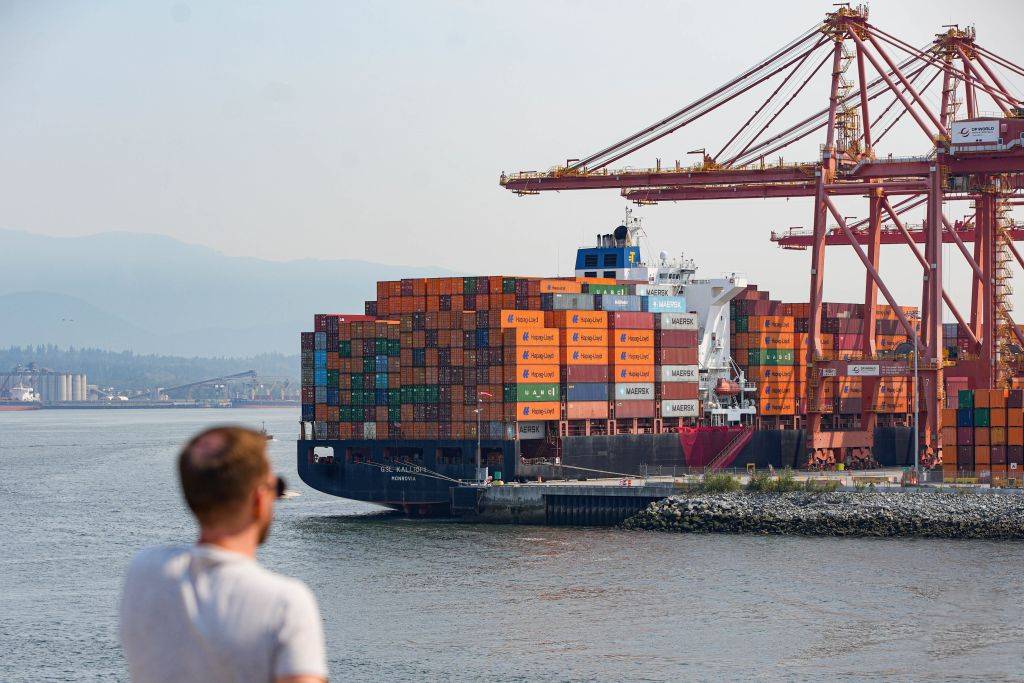
 On August 25, a container ship docked in Vancouver Harbor, Canada.
Xinhua, Ottawa, Aug. 25 (Reporter Lin Wei) — The Canadian Federal Government announced on August 25 that it will impose counter tariffs on more than 700 U.S. goods worth $ 27.6 billion (approximately $ 20 billion) and launch a corporate and worker aid plan with a total of $ 7.5 billion (approximately $ 5.4 billion).
Federal Canadian officials said that the total amount of U.S. goods affected by the counter-taxes this time is equivalent to the 50% tariff imposed by the U.S. on the additional party, affecting the value of the goods, achieving the “equal, equal” counter-taxes. The counter-taxes measures on the additional party will officially take effect on September 8th.
Canada‘s Finance Minister Shang Pengfei said that the equal tariffs adopted by Canada and the multi-billion-CAD comprehensive aid plan will effectively protect domestic workers, farmers, families and enterprises.
According to the counter tariff list released by the Canadian Ministry of Finance, this targeted counter tariff mainly focuses on steel and aluminum, dairy products, household appliances, agricultural equipment, pulp and papermaking, plastics, and electronic products, with tax rates divided into three categories of 15%, 25%, and 50%. Among them, the tariffs on most steel and aluminum products imported from the United States will be increased from 25% to 50%; dairy products such as cheese, fish, seafood, and some steel and aluminum derivatives will be subject to 25% tariffs; other existing counter tariffs, including tariffs on American cars, will also continue to be maintained.
In addition to countering tariffs, the government also announced the launch of a total aid program of C$7.5 billion (approximately US$5.4 billion), focusing on supporting small and medium-sized enterprises affected by trade wars. In terms of labor security, the government will expand the “work sharing plan” and “worker retention subsidy” to help enterprises avoid layoffs, allow more employees to improve skills or undergo retraining, while increasing the flexibility of unemployment insurance claim.
U.S. President Trump signed several announcements on July 20 to impose a 50% tariff on hundreds of specific goods imported from Canada, such as red wine, hockey sticks and cement, under Article 338 of the Smoot-Hawley Tariff Act. The relevant measures came into effect on August 22, but did not involve Canadian cars, car parts and steel products.
U.S.-Canada trade negotiations failed to reach an agreement earlier. Carney announced on August 22 that Canada would implement equal-quantity retaliatory tariff measures from September 8. Trump posted on social media on August 24 that he would raise tariffs on imports of Canadian products such as cars, car parts and steel by 50% from January 1, 2027.