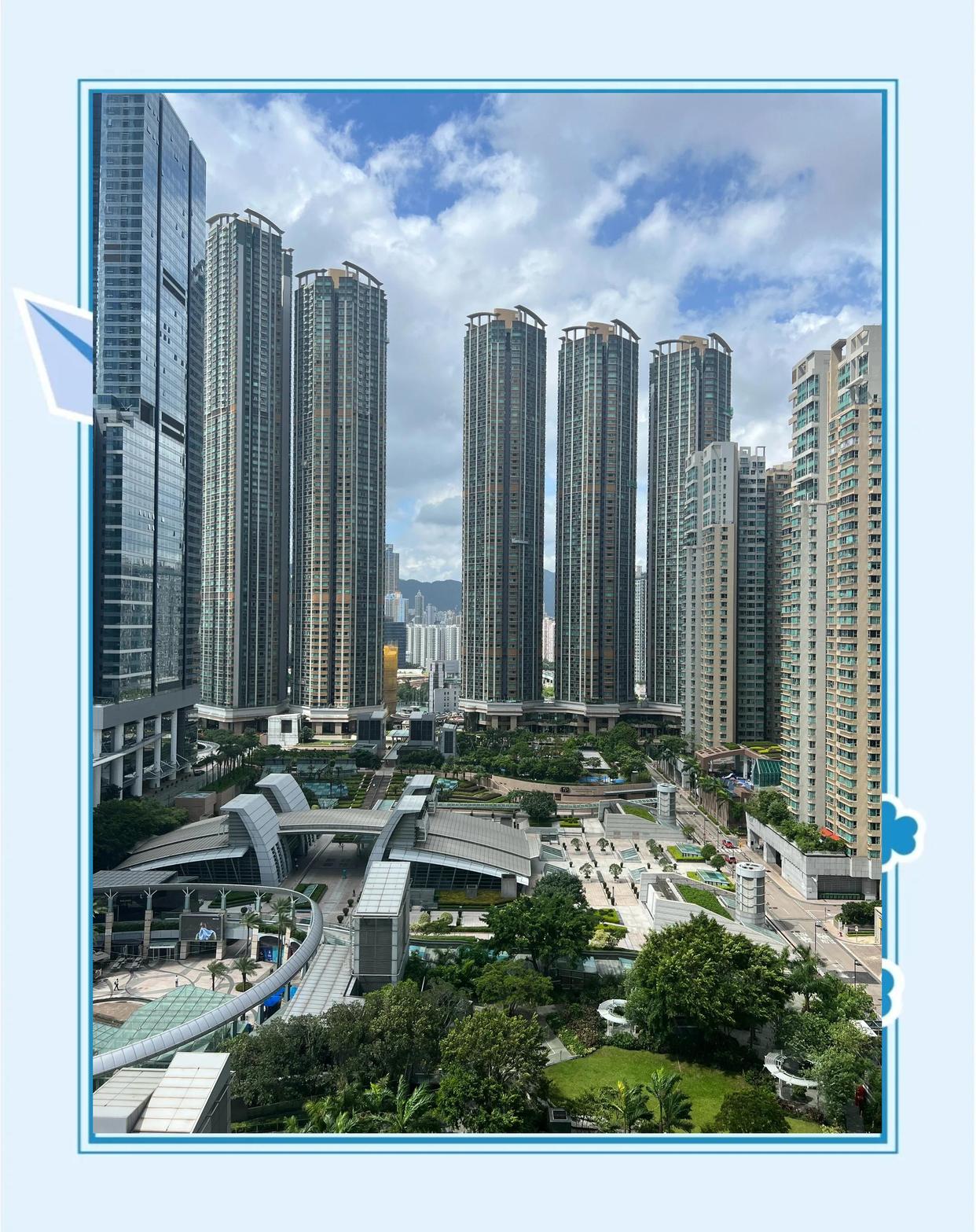
Many housing projects in Hong Kong have been using English names in recent years, and even have no Chinese names at all. Liang Zhenying, the deputy chairman of the National Political Association, recently posted on social media platforms, criticizing some Hong Kong new properties for “using English but not Chinese”. The developers know that the main buyers are Chinese, yet deliberately use only English names, with the sole purpose of creating a high-end image, which is to “pretend to be high-end”. This matter has also caused controversy in Hong Kong society.
According to the Hong Kong Headline Daily Network reported on the 4th, Liang Zhenying recently posted on social platforms saying that in the past, buildings first had Chinese names, then were translated into English names using Pinyin. Later, Hong Kong buildings created a completely unrelated English or other foreign name besides the Chinese name, “pretending to be high-end,” and now, some buildings have become only English names. The sales targets of buildings are clearly Chinese people, yet they don‘t have Chinese names, “making it inexplicable.” Liang Zhenying pointed out that there is only one reason, and that is to “pretend to be high-end.” “Hong Kong is a bilingual society, and Chinese and English cannot be biased,” he criticized. If the mindset is to play “ghost” in the market to scare people, it is even more unacceptable.
This is not the first time Liang Zhenying has raised this question. Last year, he threw out a question on social media platforms: “This year, a strange phenomenon has occurred in Hong Kong. Buildings have only English names, no Chinese names. Why?” The topic of building names in Hong Kong “with English but without Chinese” has sparked numerous discussions. Some netizens think this is a Chongyang mentality, “psychologically it seems a bit high-end”, while others complain that it is very inconvenient, “I can‘t even read some names”, and I don‘t know how to tell the taxi driver the address even when taking a taxi.
Some Hong Kong real estate developers explained that this move was “pure business considerations”. Hong Kong‘s buyer structure is diverse, and the proportion of domestic and overseas customers is not low. English-language names are more convenient for cross-regional search and social media dissemination. However, it is also necessary to balance international packaging with national development positioning, making good Chinese and English combined.
Wang Dunjing, the president of Xiangyi Real Estate in Hong Kong, said that Liang Zhenying‘s statement was not unreasonable. There are many classes involved in building buyers, and at present, Mainland buyers account for a significant share of the Hong Kong building market. He said that in recent years, many of the names used by parts of Hong Kong‘s buildings are only in English, and even if there are Chinese characters, they are very unfamiliar and difficult to read. He suggested that in the future, Chinese and English names could be provided simultaneously. “Only setting English names may be useful in terms of sales, but it is inconvenient in practical terms.”
The Hong Kong media reflected that in the 1950s, Hong Kong‘s residential name style tended to be plain and simple, usually with the word “Tower” added, such as the Champagne Tower and Windsor Tower in Tsim Sha Tsui. Such naming methods were simple and clear, making it easy to recognize and communicate in daily life. From the late 1970s to the 1990s, Hong Kong‘s economy soared and the housing market flourished. Large-scale residential estates appeared one after another on the market, most of them named after “cities”, “centers” and “gardens”, such as Tai Gu City, Sha Tin First City, Huang Po Garden, etc., demonstrating the innovation in the living environment and scale of the new generation of estates. During the millennium, the materials, decorations and club facilities of the major new estates were more luxurious, and the names of the estates showed luxury, such as Peninsula Mansion, Hyatt Mansion, King‘s Landing, Tianxi, etc. Some estates also featured the sea view as a selling point, showing their geographical advantages in their names, such as Pearl Harbor, Bay of Bertha, etc.
In recent years, in pursuit of uniqueness, the name styles of Hong Kong buildings have varied greatly. Some buildings are in a cultural and youth-oriented style designed by young First Settlers, such as “Sea Love”, “Happy Encounter”, “Love of the Sea”, and so on. Other buildings like to use obscure words that seem vaguely understandable, such as “Qiyue”.
The Hong Kong media said that for half a century, the naming style of Hong Kong‘s buildings has ranged from plain to luxurious, then to pursuing characteristics, reflecting not only market strategies, but also social mentalities. However, building names are ultimately for the service of the public, so whether out of commercial considerations or cultural preferences, naming should return to the pragmatic standard, truly serving the residents and the market. Utility and convenience, serving the public, is the true purpose of building naming.